
Meet Shannon Reilly
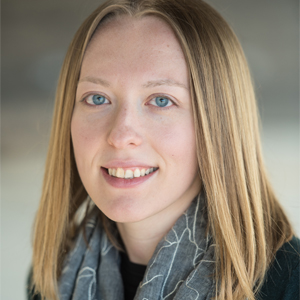
Shannon Reilly had an ambitious goal — curing AIDS. As a teenager, she thought it would be as simple as changing a component in the blood. She quickly learned that it was not that simple, but this early curiosity helped propel her into a career in science.
“My number one objective has always been to have a positive impact on the world,” Reilly said. “That goal, combined with a deep curiosity about the biological basis of life, naturally led me toward basic science research with translational potential.
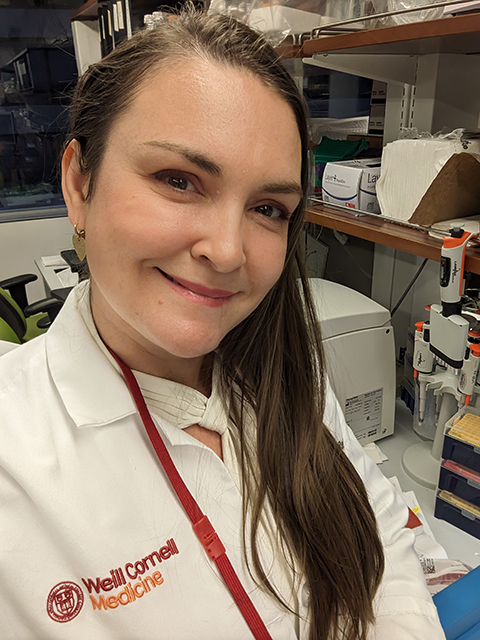
Reilly’s first research experience at Mount Holyoke College sparked a passion for research, which grew after she transferred to UMass Amherst. There, she became interested in linking bench research with public health. This led her to pursue a Ph.D. at the Harvard T.H. Chan School of Public Health, where she combined wet lab training with courses in epidemiology, biostatistics and nutrition.
“This interdisciplinary training environment allowed me to bridge basic mechanistic research with clinical and population-level perspectives,” Reilly said. “Since metabolic diseases are so complex, the school of public health gave me broader perspectives than traditional research programs. I gained valuable insights into the complexity of the diseases I was studying.”
Following her graduate work, Reilly completed a postdoctoral fellowship in the lab of Alan Saltiel. Reilly is now an assistant professor of metabolic health and medicine at Weill Cornell Medical School, where she studies adipocytes, or fat cells.
The human body contains two types of adipocytes — white and brown. Brown adipocytes help maintain the bodily energy balance by producing heat, a process known as thermogenesis that occurs by uncoupling the electron transport chain from adenosine triphosphate production. This helps burn a large amount of stored fat for heat production. Conversely, white adipocytes had been thought to primarily store energy rather than participate in this overall energy balance through uncoupling. However, Reilly’s research has helped show that white adipocytes do participate in this process. Reilly’s work is focused on studying these adipocytes to better understand how the body decides between storing fat, or lipogenesis, and breaking it down, or lipolysis.
“In obesity, it’s not the adipocytes themselves that are harmful, but rather the overburdening of these cells that leads to dysfunction and contributes to disease,” Reilly said. “Unfortunately, societal narratives have framed obesity as a result of laziness or lack of discipline. In reality, obesity is a complex disease, not a personal failing, and people living with obesity deserve the same respect and compassion as anyone else.”
Reilly’s future directions will explore the downstream signaling involved in the balance between energy storage versus consumption. Her work could reveal novel insights into energy expenditure and adipocyte metabolism, which could lead to better strategies to prevent and treat metabolic diseases like obesity and cachexia.
“Given the sheer volume of white adipose tissue (in obese individuals), even modest increases in their energy expenditure could offer transformative potential for obesity treatment.” Reilly said.
Reilly also uses her experience in obesity and lipid metabolism in her role as a junior associate editor for the Journal of Lipid Research.
The American Society of Biochemistry and Molecular Biology initiated the junior associate editor program in 2019 to help train the next generation of journal leaders and help reveal the behind-the-scenes of the peer-review process. Reilly said the program has helped her better understand publishing and peer review.
“It’s interesting to be on the editor side at the same time that I'm responding to my own reviews,” she shared. “You think you understand what it's like on the other side (of a manuscript submission). Then you do it, and think, ‘OK, this is different (than what I thought). No one is trying to be mean.’ People are stressed; they might not understand something. Being on (the reviewer) side has shifted my perspective in important ways.”
Enjoy reading ASBMB Today?
Become a member to receive the print edition four times a year and the digital edition monthly.
Learn moreGet the latest from ASBMB Today
Enter your email address, and we’ll send you a weekly email with recent articles, interviews and more.
Latest in People
People highlights or most popular articles
de la Fuente honored for AI research
The award will support the development of an AI system called ApexMol, a 3D structure–informed, agentic large language model designed to create new biomolecules.
In memoriam: Peter Roepstorff
He was a leading researcher in biological mass spectrometry, mapped protein function in living organisms and was an ASBMB member for 19 years.
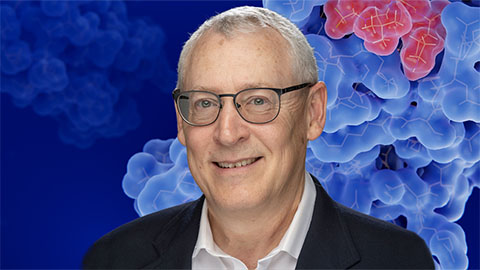
Flipping lipids and slime molds
A dull first job nearly pushed JBC associate editor Todd Graham out of science. Then a slime mold project changed his path. Now, he studies membrane biology and reflects on discovery, persistence and mentoring through uncertainty.
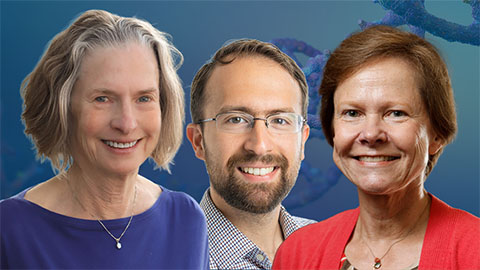
ASBMB members receive RNA Society awards
The RNA Society awards Brenda Bass, Can Cenik and Karin Musier–Forsyth for their achievements in RNA research and innovation. Winners will be recognized at the closing awards ceremony of the RNA 2026 annual meeting.
In memoriam: Richard L. Cross
He studied the enzymatic mechanisms of ATP synthase and served on the editorial board of the Journal of Biological Chemistry for 24 years.
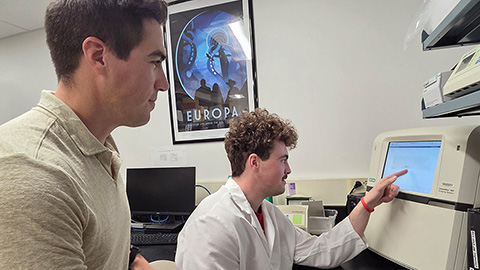
A chance encounter with the lab
Payton Stevens never planned to become a pancreatic cancer researcher. A temporary job set him on a path from rural Kentucky to leading research on Wnt signaling and metastasis, where he now pairs discovery with mentorship and science advocacy.