
Mapping proteins, one side chain at a time
As a college student, Roland L. Dunbrack Jr. began his research career at the lab bench, but it was the numbers — not the pipettes — that captured his imagination.
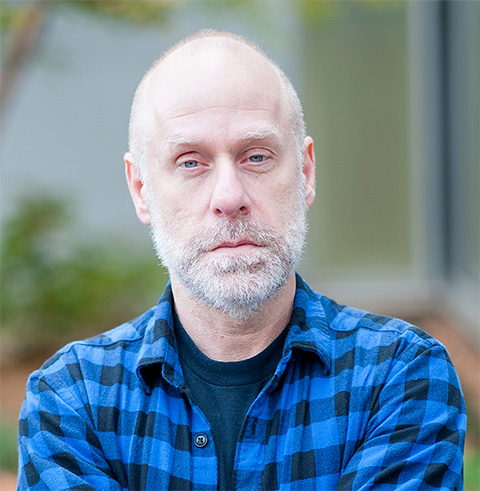
He loved how computation delivered results fast and how debugging a stubborn code felt like solving a puzzle. That curiosity became a calling. Over the next several decades, Dunbrack reshaped how scientists model protein structure.
As a Ph.D. student, Dunbrack made a breakthrough in understanding how proteins fold. While fitting molecular dynamics parameters for the amino acid proline and developing an algorithm for protein structure prediction, he discovered that a protein’s backbone conformation, especially its dihedral angles, determines the positioning of its side chains.
“It turned out there was a very clear pattern to it, that as you changed each of the backbone dihedrals, the populations of the three chi1 rotamers of each amino acid changed in a similar way,” Dunbrack said.
He went on to build the first backbone-dependent rotamer library, a reference that predicts likely side-chain positions based on backbone geometry.
“This work is effectively a Ramachandran map for protein side chains, making it fundamental to understanding protein conformations,” Helen M. Berman wrote in her nomination letter. “And (it) is included in some textbooks on protein structure and computational biology.”
As a postdoctoral fellow, Dunbrack refined the library using Bayesian statistics, boosting its accuracy and utility. Since then, labs worldwide have relied on it to predict side-chain placement, analyze protein folds and design new proteins.
“All the way up through the beginning of AlphaFold, the rotamer library played a big part in a lot of protein structure prediction and protein design programs that people developed,” he said.
Among those users was David Baker’s lab, later recognized with the Nobel Prize in chemistry.
“I think it was pretty key to the first design of a de novo design of a protein,” Dunbrack said.
For his pioneering computational tools that have advanced structural biology, Dunbrack has received the 2026 ASBMB DeLano Award for Computational Biosciences.
Currently, Dunbrack is a professor at Fox Chase Cancer Center, where he leads the molecular modeling facility. His team builds structural models that help researchers visualize how proteins function and how they can be targeted in disease.
Recently, his group has focused on analyzing more than 10,000 kinase structures in the Protein Data Bank and using AlphaFold to model all 493 human kinase domains, work that could reveal how these key drug targets shift between active and inactive states to guide cancer therapy development.
“We provide an analysis of proteins that are targets for drug development, and we hope that what we provide helps people either in industry or academia to develop drugs,” Dunbrack said.
At the 2026 ASBMB Annual Meeting, Dunbrack will discuss structural bioinformatics in the AlphaFold era, his rotamer library’s impact, his team’s work on cancer-related proteins, and how experimental data refine predicted models. He will also speak about his advocacy for the LGBTQIA+ community.
“(I want) to make sure young queer people know there are experienced scientists who are out in our jobs and still have our careers,” he said. “We're still successful and respected.”
Enjoy reading ASBMB Today?
Become a member to receive the print edition four times a year and the digital edition monthly.
Learn moreFeatured jobs
from the ASBMB career center
Get the latest from ASBMB Today
Enter your email address, and we’ll send you a weekly email with recent articles, interviews and more.
Latest in People
People highlights or most popular articles
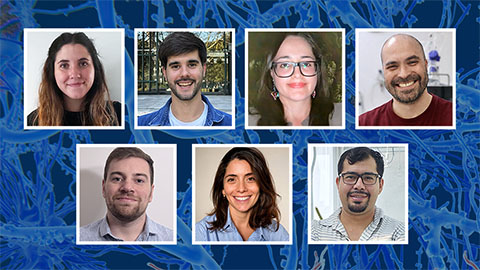
2026 PROLAB awardees announced
Each of the seven awardees will work in labs across Canada and the United States and will receive $7,000 to fund travel and living expenses.
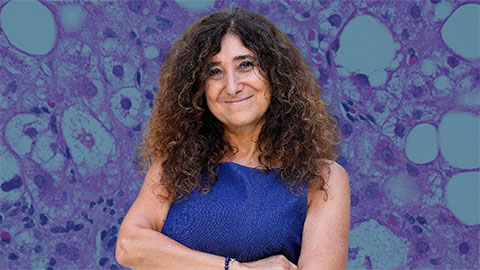
Uncovering the molecular roots of fatty liver disease
Physician–scientist Silvia Sookoian discusses her path from hepatitis C care to MASLD research, her use of multi-omics to study steatotic liver disease, and how lipid metabolism and genetics are reshaping understanding of MASH and liver health.
Kimble honored for lifetime achievement in genetics
She received the 2026 Thomas Hunt Morgan Medal and will be honored with a dedicated online profile and seminar.
Janetka named distinguished professor
Washington University awarded him the inaugural Carl Frieden Distinguished Professorship.
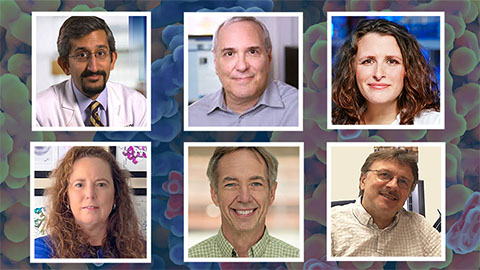
ASBMB members receive ASPET awards
The American Society for Pharmacology and Experimental Therapeutics awards Simone Brixius–Anderko, Paul Insel, Sudarshan Rajagopal, Emily Scott, Alan Smrcka and Jürgen Wess for their excellent research and mentoring work in pharmacology.
Kozul honored by Washington University
She received the 2025 Elliot L. Elson Education and Training Award.