
Designing life’s building blocks with AI
What if biochemists could design functional proteins from scratch, without mutating existing ones or running endless experiments? Using artificial intelligence, or AI, trained on a blueprint of millions of known protein sequences and structures, researchers can now generate de novo proteins that never existed before.
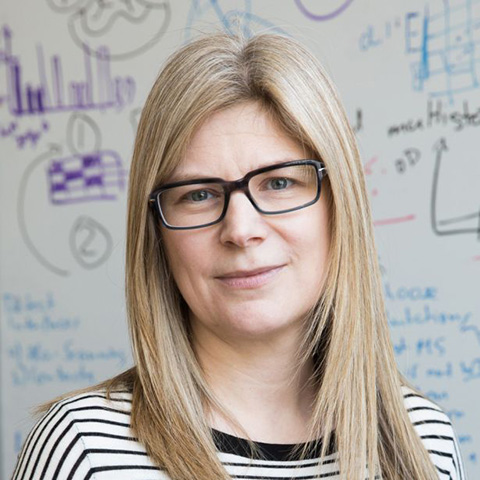
Tanja Kortemme, professor and vice dean of research in the department of bioengineering and therapeutic sciences at the University of California, San Francisco, uses AI to turn that vision into a reality.
At the 2026 American Society for Biochemistry and Molecular Biology Annual Meeting, just outside Washington, D.C., she will share how AI is reshaping protein engineering in her plenary talk, I, biochemist: Automation & AI in the lab.
Designing proteins with computational precision
Kortemme began her computational work using Rosetta, an open-source macromolecular software for protein design, structural analysis and docking. Its open-source codebase allows labs worldwide to add new features and expand its capabilities.
The Kortemme lab’s contributions include code that extracts ligand binding sites from the Protein Data Bank and compares them to engineered protein structures. The lab also created the Protein Feature Analyzer that extracts, analyzes and visualizes features from protein structure data.
More recently, the Kortemme lab has focused on AI and machine learning to engineer de novo proteins.
Building on this computational foundation, the lab now uses AI and machine learning to move beyond prediction toward de novo design. One recent advance is Frame2seq, a masked language model that designs protein sequences from structural data. Unlike most protein design methods, which try to mimic natural sequences, Frame2seq generates novel, folded and soluble proteins with low similarity to any known sequence.
Building proteins from scratch
Kortemme’s team is now testing how these digital proteins behave in real life.
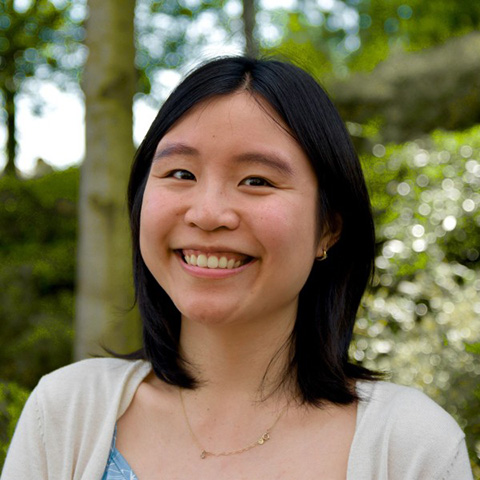
Former graduate student Amy Guo led a recent study using deep learning to design a protein that changes shape in response to calcium. “We can start to engineer complicated functions, not just stability,” Guo said.
The design was first modeled with AlphaFold and then validated through nuclear magnetic resonance spectroscopy, confirming both its predicted shape and its dynamic function. These results show how AI can help build proteins that sense and respond to their environment, a step toward creating molecules with truly programmable behavior.
From prediction to generative design
Kortemme’s lab now uses generative and deep-learning algorithms to design and evaluate proteins computationally before investing in synthesis.
“Generative approaches from deep learning offer the possibility, in principle, of designing structure, sequence, and function (of proteins) at the same time,” Kortemme wrote in a Cell Perspective article about protein design.
Traditional protein design once relied on incremental mutation and laborious testing to understand function.
“Deep-learning methods have revolutionized structure prediction and sequence design by learning patterns from existing sequence–structure information,” Guo said. “They are also increasingly useful in predicting and generating proteins with desired functional or biophysical properties.”
In practice, de novo proteins could be tuned to perform complex signaling behavior within patients, triggered by ions such as calcium or even by shining a light on the targeted area. Therapeutic antibodies could also be designed and produced more quickly for rare diseases or viral outbreaks.
By merging computation, molecular biology and creativity, Kortemme and her team are redefining how researchers understand and design the molecules of life.
Enjoy reading ASBMB Today?
Become a member to receive the print edition four times a year and the digital edition monthly.
Learn moreFeatured jobs
from the ASBMB career center
Get the latest from ASBMB Today
Enter your email address, and we’ll send you a weekly email with recent articles, interviews and more.
Latest in People
People highlights or most popular articles
Uncovering the molecular roots of fatty liver disease
Physician–scientist Silvia Sookoian discusses her path from hepatitis C care to MASLD research, her use of multi-omics to study steatotic liver disease, and how lipid metabolism and genetics are reshaping understanding of MASH and liver health.
Kimble honored for lifetime achievement in genetics
She received the 2026 Thomas Hunt Morgan Medal and will be honored with a dedicated online profile and seminar.
Janetka named distinguished professor
Washington University awarded him the inaugural Carl Frieden Distinguished Professorship.
ASBMB members receive ASPET awards
The American Society for Pharmacology and Experimental Therapeutics awards Simone Brixius–Anderko, Paul Insel, Sudarshan Rajagopal, Emily Scott, Alan Smrcka and Jürgen Wess for their excellent research and mentoring work in pharmacology.
Kozul honored by Washington University
She received the 2025 Elliot L. Elson Education and Training Award.
de la Fuente honored for AI research
The award will support the development of an AI system called ApexMol, a 3D structure–informed, agentic large language model designed to create new biomolecules.