
Women’s health cannot leave rare diseases behind

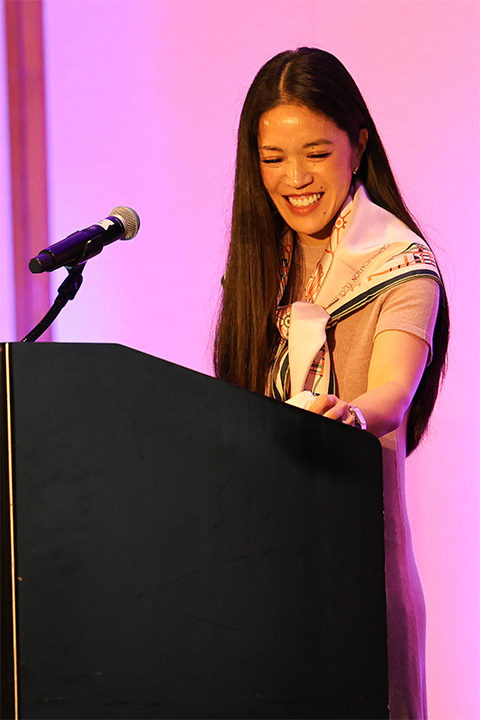
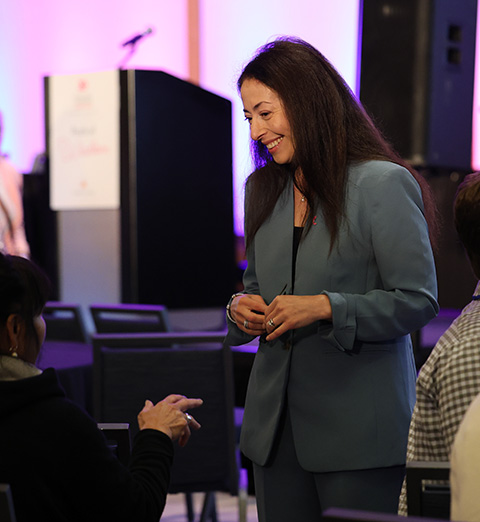
After my talk at a conference that brought physicians and patients together, a woman who shared my diagnosis took my hands and looked me in the eyes. “Thank you,” she said, her voice breaking. Tears filled both of our eyes. As both a physician-scientist and a lymphangioleiomyomatosis patient, I felt gratitude and heartbreak at once — and the rare tenderness of being understood without explanation. I also felt the gap clearly: women’s health is gaining attention, yet many women living with rare diseases remain unseen.
Lymphangioleiomyomatosis, or LAM, is a rare, progressive, estrogen-dependent lung disease that overwhelmingly affects women. Yet, it is largely absent in women’s health narratives, research agendas or funding priorities.
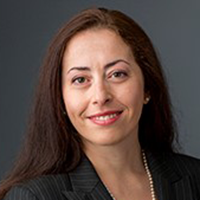
We are working to close that gap from two sides: One of us lives with LAM, diagnosed while practicing anesthesiology and now helping lead the LAM Foundation’s mission strategy. The other comes to LAM as a basic scientist, helping guide research toward a cure. We met in late-night emails, marked-up drafts, grant proposals dissected line by line and hard conversations about what to prioritize when resources are limited.
Journalist and women’s health advocate Maria Shriver has argued the U.S. is finally waking up to women’s health after decades of underinvestment. But, this moment is colliding with a period of tightening federal support for science. For women with rare diseases, the bar is higher: funders want measurable plans, and scientists need accessible, usable data and trial-ready milestones.
LAM has already shown what is possible when basic science and clinical translation align with a committed community. It is among the small fraction of rare diseases with an FDA-approved therapy, sirolimus, an mTOR inhibitor originally developed as an immunosuppressant. But, the postapproval era is not a victory lap. There is still no cure, and responses to treatment vary. Some stabilize. Others continue to lose lung function or progress to lung transplantation.
The questions now are harder and more human. What comes next after first-line therapy? Which endpoints detect meaningful change before irreversible lung loss? How do reproductive transitions and social context shape the natural history of disease? We eventually arrived at a shared realization. Women’s rare diseases need patient-driven translational tools that measure outcomes across contraception, pregnancy, menopause and long-term medication exposure, and a research agenda that reflects women’s lives.
That is where LAM-PREP came in. LAM-PREP, or the LAM Patient Research Priorities survey, asked our community what questions matter most. Patients and physicians told us that the daily burden is not only breathlessness. It is uncertainty, the weight of life-altering decisions made with too little evidence. For scientists, LAM-PREP turns that urgency into a signal. It clarifies which hypotheses are worth testing, which outcomes matter enough to measure, and which projects are most likely to justify the next stage of investment.
LAM-PREP also revealed a truth that rare disease fields cannot avoid, especially now. We cannot pursue everything. We have to earn progress in stages, de-risk the next step, and keep the path to the next trial visible. In practice, this means using infrastructure that already works, partnering for resources we cannot sustain alone, comparing multiple models instead of chasing a single perfect one, and keeping the early-career pipeline viable through mentorship and real on-ramps.
If you are a basic or translational scientist, here is our ask: help us compress time for women with rare diseases. Validate a biomarker. Pressure-test an endpoint. Design an assay that can travel across sites. Share a model. Join a multisite collaboration.
Beyond the urgency, rare disease research offers something rare in science itself: proximity. When you work alongside the community you are trying to help, the questions sharpen and the work stops being theoretical.
Weeks after the conference, we learned the woman who held my hands had been called for a lung transplant and the transplant did not move forward. I replay that exchange often. It is a stark reminder of what invisibility can cost when women’s rare diseases remain a blind spot in women’s health.
Enjoy reading ASBMB Today?
Become a member to receive the print edition four times a year and the digital edition monthly.
Learn moreGet the latest from ASBMB Today
Enter your email address, and we’ll send you a weekly email with recent articles, interviews and more.
Latest in Opinions
Opinions highlights or most popular articles
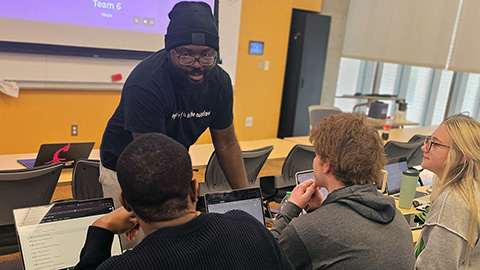
Learning can be fun: Gaming anatomy and physiology
Instructors explore how gamification and active learning transform student engagement and retention. They convey how emotion, interaction and design can make even rigorous subjects more effective and memorable.
Mentorship and uncertainty: Lessons from Telemachus
A biochemistry educator reflects on mentorship through the Greek story of Telemachus, showing how embracing uncertainty, failure and curiosity can transform teaching.
Embracing the twists and turns along the educator pathway
A biochemistry educator reflects on the challenges of early faculty life, describing how evidence-based teaching, cross-disciplinary collaboration and classroom challenges shaped her growth.
Redesigning with students in mind
Assistant professor reflects on how the shift to online teaching revealed gaps in points-based grading and led to a redesign centered on transparency and student growth.
Teaching beyond information transfer
Educator reflects on moving beyond lectures to create a biochemistry classroom centered on engagement, transparency and student ownership, showing how small shifts like “student hours” and active learning can transform understanding.
Mayday! Lessons from cellular dysfunction and group work dynamics
An upper-level biology course revealed that strong science doesn’t guarantee strong teamwork. One instructor shares how failed group dynamics reshaped their approach, leading to more structured, collaborative and effective student learning.