
Making my spicy brain work for me
In graduate school, I learned that psychiatric hospitals do not give frequent flyer points — just stigma for three admissions in three years. I was saddled with an alphabet soup of acronyms representing the mental illnesses that had turned my once dependable brain into a volatile blob of gray matter that I began to refer to as being “spicy.”
Because my brain ranked so high on the Scoville scale of spiciness throughout graduate school, I transitioned from wet-lab molecular biology to a computational thesis after my lab rotations. This was not a part of my carefully constructed master plan to be what I thought of as a “real” scientist. It was incredibly difficult watching my cohort progress on projects I could only dream about undertaking if my brain ever decided to cooperate.
I tried to stay optimistic, reminding myself that despite everything, I was still earning my degree. That changed the day a principal investigator told me that, to graduate, I was aiming for a “different” bar. In what world didn’t that mean a “lower” bar, I’m still not sure.
Utterly deflated, I gave up on a future in research. I figured if I wasn’t truly cut out for graduate school, I was certainly too inadequate for a postdoc.
After graduation, I took a job in program management at a nongovernmental organization and missed genetics every single day. All I wanted was that embroidered lab coat that would make me a “real” scientist. But my shame lingered over the concessions that were apparently made for me to graduate.
Still, the pull towards molecular genetics was strong, and eventually I began the search for a postdoctoral lab. My brain had cooled down to a manageable level, and I wanted my chance to prove that I was capable of being a successful scientist.
After being accepted into an experimental-based postdoc, my brain skyrocketed to new levels of spiciness, and I stepped out of the wet lab again. I felt like I had failed once more — like I’d lost my opportunity to be considered equal.
I still secretly hoped for a free checked bag to anywhere but inside my head, or maybe a coupon for a free latte, as hospitalization number five came and went. Alas, only more stigma.
During this time, my lab and the postdoctoral fellowship that funded me worked incredibly hard to salvage my career. They thought I deserved to be there, and I was starting to think so too.
It’s a testament to my incredible lack of patience that I sat down in front of a computer and decided to try something resembling science. Documents had to be signed, and paperwork submitted by my institution, but I just started doing anything and everything I could to figure out a new trajectory.
The way forward? Bioinformatics.
Did I have any idea what the difference between a FASTA and a FASTQ file was? Absolutely not. But Google exists, and if this was going to be my life, I sure as heck was going to have some fun along the way. Bioinformatics was far more conducive to my disability and learning on the fly put me in contact with many fascinating people.
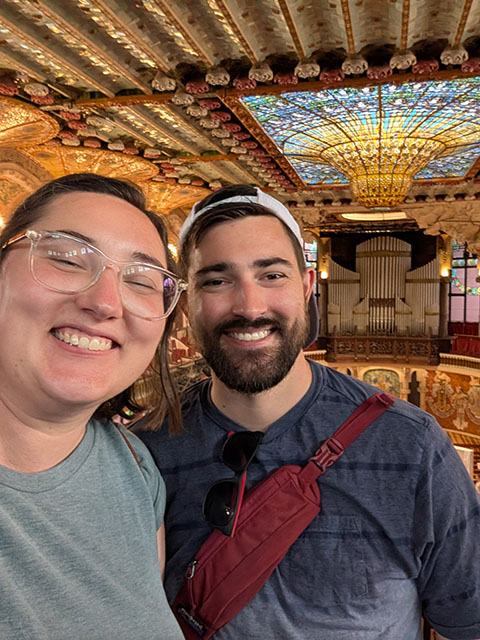
That is how I ended up on a second postdoctoral fellowship in Barcelona, Spain, researching a bioinformatics project of my own creation. I wasn’t working for science; I made science work for me. My brain still doesn’t have it together, but as someone who was told that electroconvulsive therapy was my only hope at leading a normal life, the ability to keep dreaming is pretty incredible.
I was privileged to write about my story in a 2024 issue of ASBMB Today, and I ended the article by admitting that I had no clue what my next step was or whether could succeed in science.
In a few months I’ll take a flight from Barcelona back to my hometown of Kalamazoo, Michigan, for a brief visit — ironically, using my frequent flyer miles. I’ll return to the very special Kalamazoo Area Mathematics and Science Center where my former physics teacher, to this day, tells me how proud the school is of me.
Not because I’ve become successful by some arbitrary academic standards or because I’ve done well for someone with a chronic illness, but because I took science and made it my own adventure — and that’s valuable.
Sharing my escapades and scientific shenanigans has allowed me to show others that science can be more flexible than it seems — and capable of fulfilling the dreams we’ve held onto since picking up our first pipette. That, to me, is the success I’ve been searching for.
Enjoy reading ASBMB Today?
Become a member to receive the print edition four times a year and the digital edition monthly.
Learn moreGet the latest from ASBMB Today
Enter your email address, and we’ll send you a weekly email with recent articles, interviews and more.
Latest in Opinions
Opinions highlights or most popular articles
Learning can be fun: Gaming anatomy and physiology
Instructors explore how gamification and active learning transform student engagement and retention. They convey how emotion, interaction and design can make even rigorous subjects more effective and memorable.
Mentorship and uncertainty: Lessons from Telemachus
A biochemistry educator reflects on mentorship through the Greek story of Telemachus, showing how embracing uncertainty, failure and curiosity can transform teaching.
Embracing the twists and turns along the educator pathway
A biochemistry educator reflects on the challenges of early faculty life, describing how evidence-based teaching, cross-disciplinary collaboration and classroom challenges shaped her growth.
Redesigning with students in mind
Assistant professor reflects on how the shift to online teaching revealed gaps in points-based grading and led to a redesign centered on transparency and student growth.
Teaching beyond information transfer
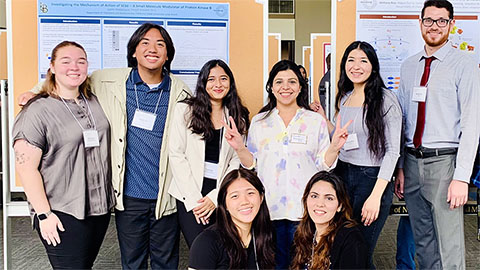
Educator reflects on moving beyond lectures to create a biochemistry classroom centered on engagement, transparency and student ownership, showing how small shifts like “student hours” and active learning can transform understanding.
Mayday! Lessons from cellular dysfunction and group work dynamics
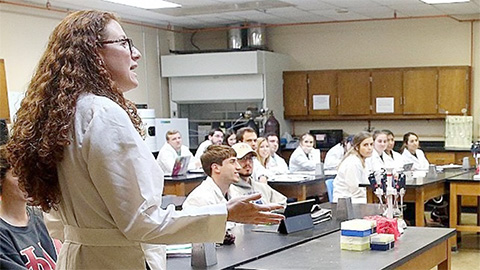
An upper-level biology course revealed that strong science doesn’t guarantee strong teamwork. One instructor shares how failed group dynamics reshaped their approach, leading to more structured, collaborative and effective student learning.