
The tortoise wins: How slowing down saved my Ph.D.
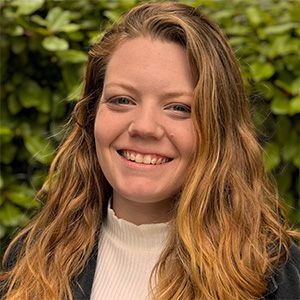
Just as I was becoming a Ph.D. candidate, my body forced me to shift my mindset from a speedy hare to a slow and steady tortoise.
Burning out as the hare
Early in graduate school, I prided myself on keeping up with the whirlwind pace. I pushed through late nights and early mornings, convinced that speed and productivity were the only paths to success. The evening after I passed my candidacy exam, I should have been celebrating months of hard work, but instead, I felt a tightness in my back and chest.
I brushed it off as fatigue, but weeks later, the discomfort persisted. After multiple doctor visits, chest X-rays and blood tests, I was told nothing was wrong.
Months dragged on, and the pain continued. I developed jaw pain known as temporomandibular joint, or TMJ, disorder and recurring stomach issues. I stopped seeing friends, abandoned hobbies and struggled to work at the bench.
Finally, one doctor asked if I was often stressed. I laughed and told them I was a biochemistry Ph.D. candidate. Stress was my life. That conversation revealed the culprit: stress-induced irritable bowel syndrome, or IBS.
I felt defeated, like I couldn’t cut it as a scientist. Graduate students were “supposed” to be stressed, but my body was screaming at me to slow down. So, I did — and the outcome surprised me.
Becoming the tortoise
With the support of my principal investigator, I began to prioritize a more balanced workflow in the lab. Mondays became planning days. I outlined experiments, broke tasks into daily chunks and shifted experiments when days became full. Delaying experiments was one of the hardest changes. I had a habit of trying to do everything immediately, but waiting a week rarely mattered in the long run.
Knowing that deadlines triggered my IBS flare-ups, I prepared early instead of pushing myself to the brink. I broke big deadlines into smaller, manageable steps, such as writing a first draft, storyboarding a slide deck or drafting bullet points for a paper.
Slowly, my mindset shifted. I stopped overbooking my schedule. Instead, I used incubation times to read papers, maintain my lab notebook and take walks when my focus lagged. I even carved out time for therapy each week.
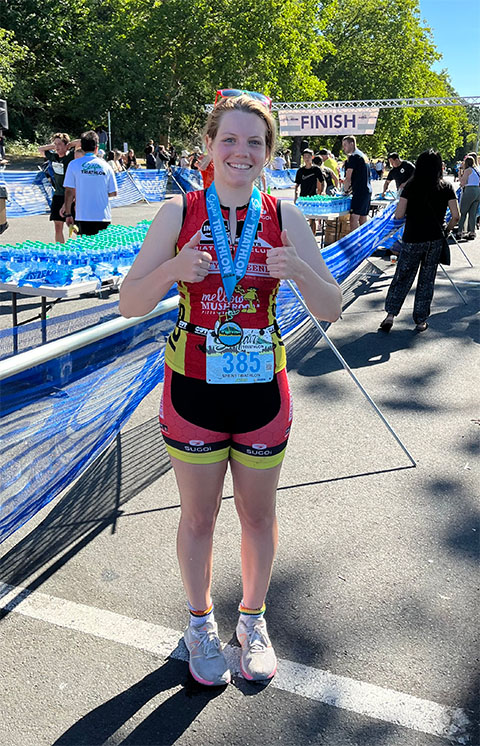
After a year of retraining my habits, I am more productive than ever. I make fewer mistakes and generate more reliable data. Time I once used for redoes or extra experiments is devoted to planning, reading and writing. I prioritize my weekends and evenings. I play soccer again and even train for triathlons. I have energy again — for myself, my friends, my family and my thesis.
I still experience flare-ups, but now I know how to manage them. I’ve learned that to do well, you must first be well.
As Aesop’s fable of the tortoise and the hare reminds us, “the race is not always to the swift.”
In graduate school, I’ve learned that the race is won by those who slow down enough to prioritize their well-being.
Enjoy reading ASBMB Today?
Become a member to receive the print edition four times a year and the digital edition monthly.
Learn moreGet the latest from ASBMB Today
Enter your email address, and we’ll send you a weekly email with recent articles, interviews and more.
Latest in Opinions
Opinions highlights or most popular articles
Learning can be fun: Gaming anatomy and physiology
Instructors explore how gamification and active learning transform student engagement and retention. They convey how emotion, interaction and design can make even rigorous subjects more effective and memorable.
Mentorship and uncertainty: Lessons from Telemachus
A biochemistry educator reflects on mentorship through the Greek story of Telemachus, showing how embracing uncertainty, failure and curiosity can transform teaching.
Embracing the twists and turns along the educator pathway
A biochemistry educator reflects on the challenges of early faculty life, describing how evidence-based teaching, cross-disciplinary collaboration and classroom challenges shaped her growth.
Redesigning with students in mind
Assistant professor reflects on how the shift to online teaching revealed gaps in points-based grading and led to a redesign centered on transparency and student growth.
Teaching beyond information transfer
Educator reflects on moving beyond lectures to create a biochemistry classroom centered on engagement, transparency and student ownership, showing how small shifts like “student hours” and active learning can transform understanding.
Mayday! Lessons from cellular dysfunction and group work dynamics
An upper-level biology course revealed that strong science doesn’t guarantee strong teamwork. One instructor shares how failed group dynamics reshaped their approach, leading to more structured, collaborative and effective student learning.