
Make your abstract stand out
Scientists don’t usually think of themselves as marketers — but promoting your work is essential to building a successful career.
Your resume sells your skills. Your grant proposal sells your ideas. And your abstract? It sells your science.
A well-written abstract draws readers to your paper, poster or presentation. Here’s how to make your abstract not just informative, but captivating, both in writing and in-person at the meeting.
Quality over quantity
- A clear, engaging premise captures attention far better than lengthy paragraphs. Keep your abstract concise and compelling. For more tips read: “How to write a killer abstract in 10 sentences.”Submit your abstract to the correct category to align it with others in your field. For example, when submitting an abstract for the 2026 ASBMB Annual Meeting, you will be asked to select the poster topic category most relevant to your area of research. To help you make your selection, browse abstracts submitted to each category in previous years or ask colleagues which category they picked
- Large conferences like the ASBMB Annual Meeting draw researchers across disciplines, sectors and specialties. When submitting your abstract, you will need to home in on one field, but once you’re on site and presenting your research, you can capture a broader audience. Keep this opportunity in mind when writing your abstract and use language that will attract attendees from multiple fields. For example, artificial intelligence, or AI, concerns environmental scientists, ethicists, sociologists and biochemists all at once.
Word choice
- Titles that include basic findings make conference attendees curious about the experimental journey. Which title piques your interest more: “Investigating structure function relationships of RNA” or “5’-end RNA stabilization improves potency of mRNA therapeutics”?
- Include relevant background information that sets the stage for your investigation. Then, focus on summarizing your methods, new findings and study significance.
- Reduce scientific jargon and avoid overly long explanations. For example: “nuclear envelope” rather than “the lipid bilayer that separates the cytoplasm and genetic material.”
Maximize promotional opportunities in advance of the conference
Use your social media accounts to share your abstract and other previews of your research, notify your network that you’ll be at the meeting and encourage them to visit your poster or attend your talk in person, long before the conference begins. For more specific guidance and examples, check out this social media toolkit for the 2026 ASBMB Annual Meeting. When your colleagues and associated universities or companies share posts about your abstract on their accounts, your abstract and research will be seen by more people and can lead to higher talk attendance.
- Include keywords and hashtags relevant to the conference and your field of study to improve the visibility of your posts. For example, if your research is related to artificial intelligence, you can include AI and expand with distinctive contributions and word choice. All abstracts and projects related to AI will contain the acronym “AI,” but including additional keywords like “deep learning” or “high throughput” will help your work standout.
- Contact your supervisors and ask them to share the news about your abstract and conference attendance in digital communications from your institution, such as on lab or departmental news websites, newsletters or email blasts. This will boost awareness about your abstract.
Things to avoid
- Programs such as ChatGPT tend to insert words like heighten, hinder and unparalleled in generated abstracts and papers. Descriptive and exaggerated words are inappropriate for abstracts, and waste space that could be used for more relevant information. If you use programs like ChatGPT, always review your text.
- Avoid being technical or detailed about procedures, methods and experiments. Exact numbers, including percentages, should be avoided if possible.
Present your research alongside other outstanding scientists who are driving research forward at the 2026 ASBMB Annual Meeting, which will be held March 7–10, at National Harbor, just outside of Washington, D.C. Submit your abstract and apply for travel awards by Nov. 17!
Enjoy reading ASBMB Today?
Become a member to receive the print edition four times a year and the digital edition monthly.
Learn moreFeatured jobs
from the ASBMB career center
Get the latest from ASBMB Today
Enter your email address, and we’ll send you a weekly email with recent articles, interviews and more.
Latest in Careers
Careers highlights or most popular articles
Upcoming opportunities
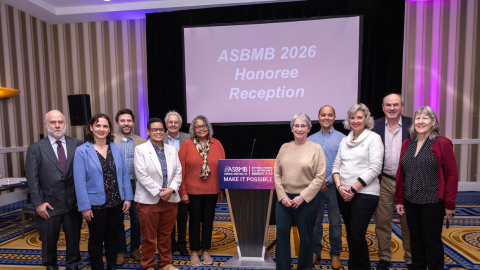
The ASBMB Annual Awards celebrate researchers, educators and leaders whose work advances science and strengthens the field through innovation, mentorship, teaching and service. 📅 Nominations close June 8.
Upcoming opportunities
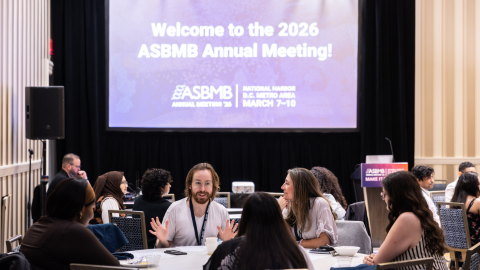
🗨️ Shape the conversation at ASBMB 2027 in Boston! ASBMB is seeking proposals for sessions and events that will foster collaboration, highlight exciting science and support career development across the molecular life sciences.
Upcoming opportunities
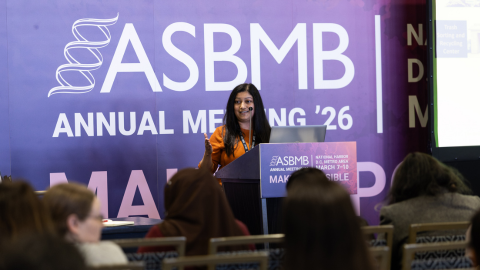
Registration is now open for this summer's Art of Science Communication course! Build your science communication skills in this 8-week online program. ➡️ Registration deadline: May 6.

Upcoming opportunities
The American Society for Biochemistry and Molecular Biology is accepting applications for the Marion B. Sewer Distinguished Scholarship for Undergraduates. Apply by April 30, 2026.
Designing scientific careers, not just experiments
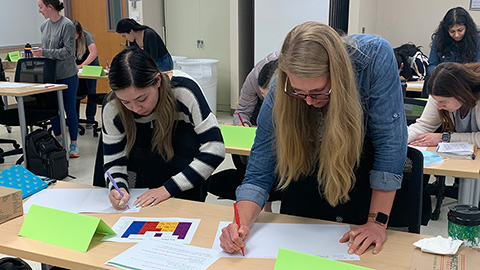
Universities are rethinking how they prepare scientists for careers beyond the bench. From myIDP to Vanderbilt’s Career Architect, programs help trainees clarify values, explore options and build intentional paths forward.
Upcoming opportunities
Dive into the world of lipids! Join the ASBMB Lipid Research Division Seminar Series on April 9, 12–1 p.m. ET to hear early-career researchers explore lipid metabolism and mitochondrial biology.