
Study of chlorinated lipids could lead to better sepsis treatment
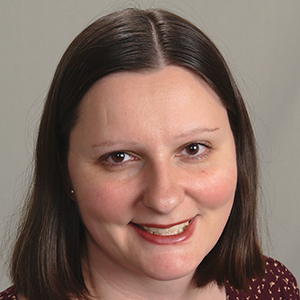
After a young friend died of cancer, Daniel Pike’s interest in science developed into a path focused on both treating disease and studying it.
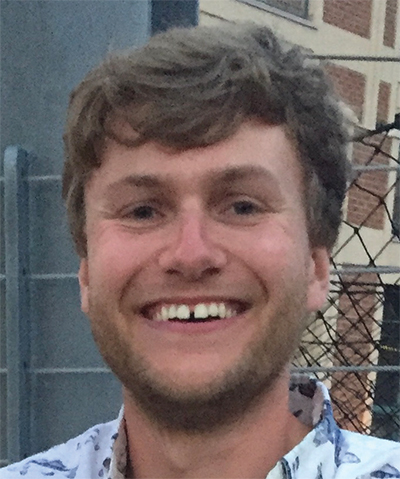 Daniel Pike is doing research with rats to learn how chlorinated lipids might predict and mediate the severity of sepsis.
“Before he died, he talked about how he wanted his doctors to do whatever they wanted to, because what they learned would help the kids that came after him,” Pike said. “That really resonated with me and ultimately inspired me to pursue a career in biomedical research.”
As an undergraduate at Saint Louis University, Pike enjoyed biology and chemistry, he said, “with an emphasis on applications in medicine.” After earning a bachelor’s degree in biochemistry, he applied to M.D./Ph.D. programs and began his studies at the SLU School of Medicine. He spent two years in medical school and then started working in David Ford’s lab in the department of biochemistry and molecular biology.
Pike was attracted by Ford’s “good track record as a mentor, the focus on lipids and the translational aspect of the research that could be applied to a health problem.” His goal is to work in an academic hospital integrating medicine and research.
“Daniel is a bright, hard-working student,” Ford said, “and his basic science research efforts in the field of sepsis and lipid biochemistry may lead to better treatments for this ever-growing public health problem.”
One initial sticking point for Pike was working with animals, in particular with rats.
“I was never particularly nervous around handling them or anything,” he said. “It was more the practical aspects … I had never worked with animals before, so I had to learn a bunch of new techniques and figure out how to get them to work in our model.”
Outside of the lab, Pike enjoys cycling and playing trumpet in the pep band for the SLU basketball team. “This is actually my ninth year doing it,” he said, “so I’ve sort of become an old vet of the trumpet section.”
Translational research in platelet-activating factor and lipids
A major goal of the Ford lab is to understand the dynamics between bioactive lipids and sepsis. Chlorinated lipids, a species of bioactive lipids discovered by the lab, are produced through white blood cell activation.
The lab published a study in the Journal of Clinical Investigation Insight demonstrating the involvement of chlorinated lipids in sepsis. Chlorinated lipids measured in plasma samples taken from sepsis patients on the day of admission to the ICU predicted mortality 30 days out. They found that mortality was largely due to lung failure in these patients.
Additionally, chlorinated lipids can cause a pro-inflammatory change in endothelial cells. The endothelial cells display an increase in permeability, an increase in the surface expression of adherence molecules, such as P-selectin, and an increase in the release of von Willebrand factor and angiopoietin-2, both of which are involved in the endothelial inflammatory response.
Expanding upon these results, Pike is using a rat model of sepsis in the lab to better understand the role of chlorinated lipids in predicting and mediating the severity of sepsis.
Enjoy reading ASBMB Today?
Become a member to receive the print edition four times a year and the digital edition monthly.
Learn moreGet the latest from ASBMB Today
Enter your email address, and we’ll send you a weekly email with recent articles, interviews and more.
Latest in Science
Science highlights or most popular articles
Glaucoma model links immune signaling to disease progression
Researchers at Duke University determine genetic variations that could increase the risk of developing glaucoma.
Uncovering the molecular roots of fatty liver disease
Physician–scientist Silvia Sookoian discusses her path from hepatitis C care to MASLD research, her use of multi-omics to study steatotic liver disease, and how lipid metabolism and genetics are reshaping understanding of MASH and liver health.
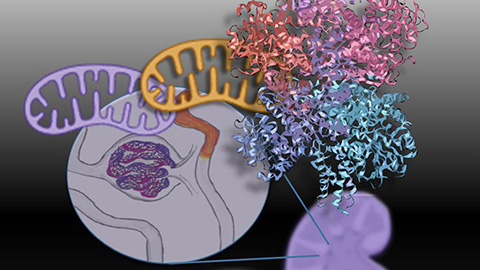
Mitochondria shape kidney cell function
Researchers at the University of Washington, Seattle present the first quantitative comparison of mitochondrial interactomes between two epithelial cell types in the kidney.
Long-chain polyunsaturated fatty acids linked to postoperative delirium risk
Researchers show that altered lipid metabolism may contribute to postoperative delirium, a condition linked to increased risk for long-term cognitive decline. The study explores potential disease mechanisms, which have yet to be understood.
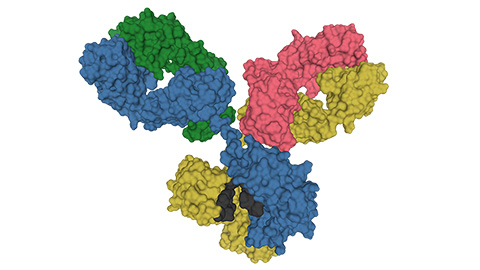
Glycosylation patterns across antibody isotypes distinguish tuberculosis states
Researchers at Taipei Medical University present the first site-specific glycosylation analysis of immunoglobulins in elderly tuberculosis patients.
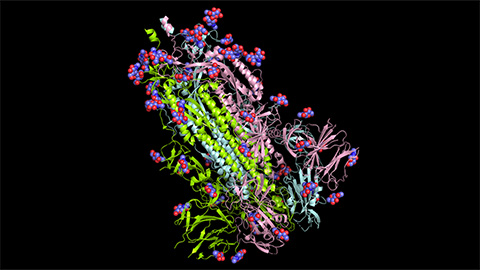
Blood glycome possibly predicts lifespan
Researchers at the University of Santiago de Compostela show that total serum N-glycome can predict mortality independent of traditional risk factors.