
Breaking through limits in kinase inhibition

Protein kinases, enzymes that add phosphate groups to other proteins, are often dysregulated in diseases. This makes kinase inhibitors popular drugs, although they often target things they aren’t supposed to. To mitigate these off-target effects, scientists like Paul Shapiro are finding ways to target specific functions of a kinase, rather than inhibiting the whole enzyme.

Shapiro was the first speaker on ASBMB Breakthroughs, a new webinar series highlighting research from ASBMB journals. He is a professor in the department of pharmaceutical sciences at the University of Maryland School of Pharmacy and associate editor at the Journal of Biological Chemistry, or JBC. In his talk, sponsored by JBC, Shapiro discussed taking ideas and discoveries from basic science research toward clinical applications.
The most common types of kinase inhibitors, known as Types 1 and 2, compete with ATP binding and lock kinases in either an active or inactive conformation, respectively. On the other hand, Type 3 kinase inhibitors are not ATP competitive. They prevent enzymatic reactions by binding to a catalytic site adjacent to the ATP pocket.
Shapiro works with what he calls Type 4 kinase “modulators.” Instead of targeting the ATP binding or catalytic sites, these modulators target regions involved in a kinase’s interaction with its substrates.
“We call them modulators because they don’t inhibit all enzyme activities,” Shapiro said.
He explained how kinases often have both a “pro” and “anti” function. For example, a kinase can be “pro” proliferation or inflammation, but also modulate these “pro” functions through “anti”, or negative feedback.
“Type 4 modulators allow us to selectively target signaling functions that we want to inhibit while preserving other potentially beneficial functions,” he said. “Think of it as targeting the gas and keeping the brake.”
Shapiro’s work focuses on mitogen-activated protein kinases, or MAPKs, specifically p38α and extracellular signal-regulated kinases, or ERKs. MAPKs have regions known as D- and F-recruitment sites, or DRS and FRS, that recognize D- and F-sites on substrates, respectively. Based on what researchers knew about how MAPKs recognize substrates, Shapiro teamed up with Alex MacKerell to use computer-aided drug design to identify compounds that have shown efficacy in pre-clinical studies and have advanced to clinical testing.
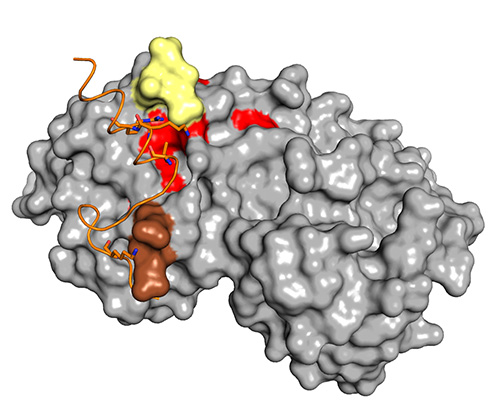
Shapiro and his collaborator, David Wiest at the Fox Chase Cancer Center, study ERK substrate specificity in myeloproliferative disorders, a type of blood cancer in which the bone marrow produces too many blood cells. They found that D-site substrates of ERK are more involved in disease progression and F-site substrates more in disease attenuation. Shapiro, Wiest and their colleagues showed that compounds that specifically target ERK’s DRS can mitigate overactive proliferation in myeloproliferative disorders.
“This is a unique example of how ERK can have pro and anti functions depending on its docking site,” Shapiro said.
In another project, Shapiro works with Deepak Deshpande at Thomas Jefferson University. Their team developed a compound that targets a region near ERK’s FRS and showed it can reduce airway remodeling, a process in asthma that leads to thickened airway walls and narrowed airways, in mice treated with dust mites to produce symptoms mimicking human asthma.
Shapiro also collaborates with Jeffrey D. Hasday, a University of Maryland colleague, on a compound that targets the inflammatory role of p38α in acute respiratory distress syndrome, or ARDS.
“p38 inhibitors have been around for 30 years,” Shapiro said. “But none of them have made it into the clinic because most of them target both the α and β isoforms.”
p38α is more involved in pro-inflammatory functions, while p38β typically has a more protective role in cells. In addition to this difference, even the p38α isoform alone has both “gas” and “brake” functions.
“The goal was to primarily target the gas functions,” said Shapiro. “In p38α, that involved substrates that utilize the DRS.”
The modulator Shapiro’s team developed, called UM101, targeted p38α’s pro-inflammatory function, sparing the β form and preserving p38α’s “brake.” Researchers recently reported an optimized version of UM101; it is currently in a clinical trial testing its safety and efficacy in human ARDS patients.

Up next
Lipidomics, shotgun lipidomics and functional lipidomics for Alzheimer’s researchFeb. 12, 2025 12:15–1 p.m. Eastern
Xianlin Han of the University of Texas Health Science Center will present his research on the use of shotgun lipidomics in biological and biomedical contexts.
Register for the whole ASBMB Breakthroughs webinar series
Enjoy reading ASBMB Today?
Become a member to receive the print edition four times a year and the digital edition monthly.
Learn moreGet the latest from ASBMB Today
Enter your email address, and we’ll send you a weekly email with recent articles, interviews and more.
Latest in Science
Science highlights or most popular articles
Glaucoma model links immune signaling to disease progression
Researchers at Duke University determine genetic variations that could increase the risk of developing glaucoma.
Uncovering the molecular roots of fatty liver disease
Physician–scientist Silvia Sookoian discusses her path from hepatitis C care to MASLD research, her use of multi-omics to study steatotic liver disease, and how lipid metabolism and genetics are reshaping understanding of MASH and liver health.
Mitochondria shape kidney cell function
Researchers at the University of Washington, Seattle present the first quantitative comparison of mitochondrial interactomes between two epithelial cell types in the kidney.
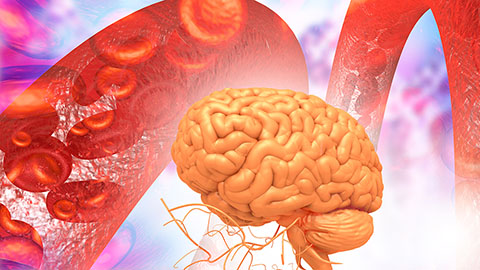
Long-chain polyunsaturated fatty acids linked to postoperative delirium risk
Researchers show that altered lipid metabolism may contribute to postoperative delirium, a condition linked to increased risk for long-term cognitive decline. The study explores potential disease mechanisms, which have yet to be understood.
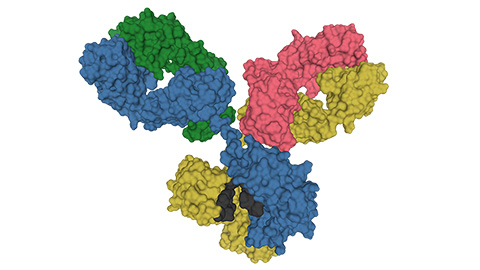
Glycosylation patterns across antibody isotypes distinguish tuberculosis states
Researchers at Taipei Medical University present the first site-specific glycosylation analysis of immunoglobulins in elderly tuberculosis patients.
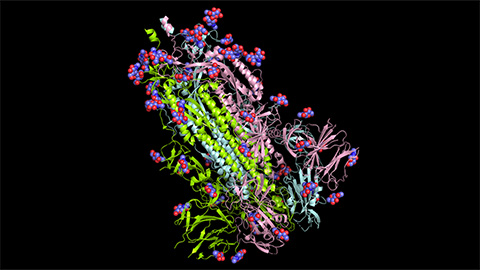
Blood glycome possibly predicts lifespan
Researchers at the University of Santiago de Compostela show that total serum N-glycome can predict mortality independent of traditional risk factors.