
From the journals: JBC

Histone demethylase inhibited by own sequence. MicroRNA reduces cell cycle–related apoptosis. Multipurpose antibiotic takes on staph infections. Read about papers on these topics recently published in the Journal of Biological Chemistry.
Histone demethylase inhibited by own sequence
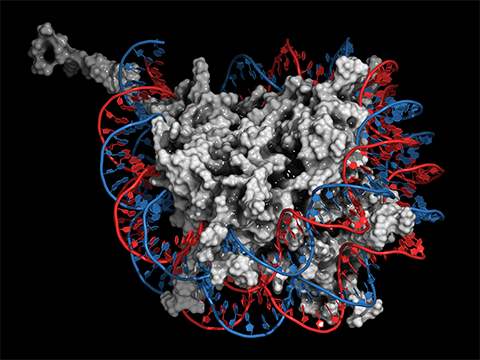
Enzymes that alter histone methylation affect gene activation or repression and genomic stability. One such enzyme, lysine-specific demethylase 1, or LSD1, removes methyl groups from histones and interacts with numerous transcription factors and elements involved in gene regulation. Cancer stem cells feature dysregulated LSD1 activity and interaction networks. LSD1 contains an intrinsically disordered N-terminal region unnecessary for catalysis in a dish. Yet, this region serves as the center of the LSD1 protein–protein interaction network, holds the nuclear localization signal and includes multiple post-translational modifications. Dulmi Senanayaka, Danyun Zeng and a team of scientists from Marquette University and Vanderbilt University wondered if this N-terminal region impacts LSD1’s demethylation activity. They published their findings in the Journal of Biological Chemistry.
The authors performed kinetic analyses with full-length and truncated LSD1 and determined that the nuclear localization signal portion of the N-terminal region can act as a competitive autoinhibitor and block demethylation. They suggested that this segment mimics LSD1’s histone tail substrate. They also found that the post-translational modifications of the N-terminal region play a role. The researchers swapped out LSD1 threonine and serine residues to aspartate, to mimic phosphorylation, near the nuclear localization signal which restored demethylation activity. Thus, an autoinhibitory mechanism regulates LSD1 function, and it may be phosphorylation dependent.
The researchers also used biophysical techniques to determine that a portion of the N-terminal domain forms a transient α-helix, but they do not know the function. Overall, the authors suggested that their model of LSD1 autoinhibition will provide a framework for studying nuclear localization signals in other proteins and developing inhibitors to curtail LSD1 functions in cancer stem cells.
MicroRNA reduces cell cycle–related apoptosis
Neurodegenerative diseases, such as Alzheimer’s disease, or AD, feature neuronal cell death, which can occur through abnormal cell cycle initiation. For example, previous studies showed that the Aβ42 amyloid peptide that forms plaques in AD can trigger differentiated neurons to aberrantly re-enter the cell cycle, which leads them to undergo apoptosis. Scientists want to understand the mechanism behind neuron cell cycle suppression because these insights could inform future AD treatment.
Monika Chauhan and a team of researchers from the National Institute of Immunology in India recently published a Journal of Biological Chemistry article, in which they investigated microRNA and cell cycle–related neuronal loss. MicroRNAs are small noncoding RNAs that regulate messenger RNA expression and the cell cycle, among other processes. The authors used RNA sequencing of neurons from an AD mouse model and identified microRNAs with altered expression, such as downregulated miR-449a. Inhibiting miR-449a expression in neurons led to increases in cell cycle activity and apoptosis markers, indicating that miR-449a suppresses the cell cycle. The researchers suggested that miR-449a saves neurons from apoptosis caused by irregular cell cycle activation in AD models. When they overexpressed miR-449a in the brains of AD mice, they reversed learning and memory impairments.
As a follow-up to this study, the researchers will investigate whether other differentially expressed microRNAs from this study relate to cell cycle regulation, apoptosis and neurodegeneration. Future directions will explore the possibility of a miRNA-based strategy for overcoming AD.
Multipurpose antibiotic takes on staph infections
Staphylococcus aureus causes diverse conditions such as skin infections and heart valve inflammation and can resist common antibiotics, such as methicillin. Therefore, scientists are investigating new antibiotic compounds that attack S. aureus in multiple ways. The antibiotic class thiosemicarbazones are metal chelators that flood bacteria with toxic concentrations of metals and may be effective against S. aureus. In a recent paper published in the Journal of Biological Chemistry, Avery Gaudreau from the University of Western Ontario and a team of international scientists screened a chemical library to find a thiosemicarbazone to combat S. aureus and investigated its mode of action.
The authors found that compound R91 showed activity against methicillin-resistant S. aureus and other Gram-positive bacteria. They performed RNA sequencing analysis on treated and untreated S. aureus cells and determined that R91 exposure induces copper detoxification genes. Furthermore, they found that S. aureus cells lacking genes important for managing oxidative stress are more sensitive to R91. In addition, the authors measured the biomass of an S. aureus culture pretreated with R91 and showed that R91 inhibits biofilm formation, a bacterial antibiotic resistance mechanism. Finally, R91 reduced S. aureus bacterial load in mice when administered prophylactically.
The researchers suggested R91 will be a promising initial chemical structure for antibiotic development given its multipronged approach against S. aureus. Future experiments will help pinpoint R91’s exact molecular target and whether R91 can therapeutically clear infections in mice and humans.
Enjoy reading ASBMB Today?
Become a member to receive the print edition four times a year and the digital edition monthly.
Learn moreGet the latest from ASBMB Today
Enter your email address, and we’ll send you a weekly email with recent articles, interviews and more.
Latest in Science
Science highlights or most popular articles
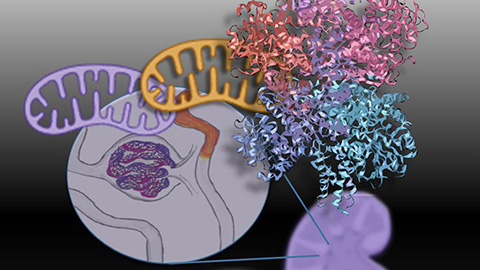
Mitochondria shape kidney cell function
Researchers at the University of Washington, Seattle present the first quantitative comparison of mitochondrial interactomes between two epithelial cell types in the kidney.
Long-chain polyunsaturated fatty acids linked to postoperative delirium risk
Researchers show that altered lipid metabolism may contribute to postoperative delirium, a condition linked to increased risk for long-term cognitive decline. The study explores potential disease mechanisms, which have yet to be understood.
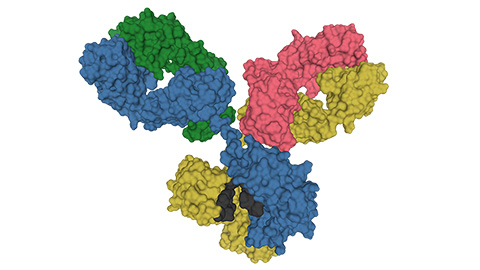
Glycosylation patterns across antibody isotypes distinguish tuberculosis states
Researchers at Taipei Medical University present the first site-specific glycosylation analysis of immunoglobulins in elderly tuberculosis patients.
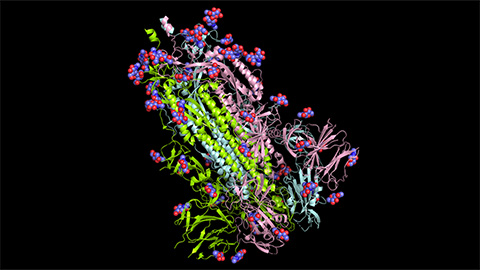
Blood glycome possibly predicts lifespan
Researchers at the University of Santiago de Compostela show that total serum N-glycome can predict mortality independent of traditional risk factors.
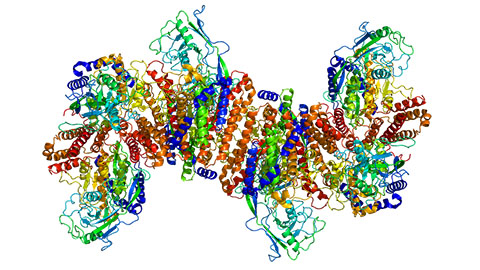
Building a better model for drug delivery across the blood–brain barrier
Industry and academic scientists collaborated to develop a rat with humanized iron-transport receptors, enabling research into iron homeostasis and drugs that cross the brain’s barrier.

Fat synthesis enzyme crucial for milk fat and newborn growth
Researchers found that a deficiency of the fatty acid synthesis enzyme stearoyl-CoA desaturase-1 reduced mammary gland function during lactation and caused low birth weight in newborns that were fed milk from enzyme-deficient glands.