
Orth a ‘scientific trailblazer’ in the field of bacterial pathogenesis
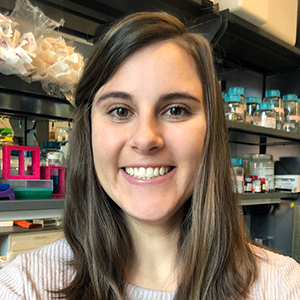
Kim Orth, a professor at the University of Texas Southwestern Medical Center and investigator for the Howard Hughes Medical Institute, has won the 2018 ASBMB–Merck Award for her outstanding contributions in the fields of biochemistry and molecular biology.
In the field of bacterial pathogenesis, Orth has worked to elucidate the activity of bacterial virulence factors on the molecular level, providing insights into how bacteria cause disease and how eukaryotic host cells signal in response to infection. In his letter nominating Orth, Eric Olson, also a professor at UT Southwestern, described her as “an exceptional investigator who has made major contributions to our understanding of the signaling mechanisms involved in bacterial pathogenesis.”
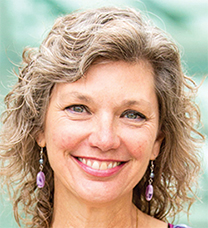
“I am extremely honored and thrilled to receive this prestigious ASBMB–Merck Award. To those that have supported my success, including my family, friends, current and former lab members, and colleagues, and to institutes that have so generously sustained our studies, I am deeply indebted. They have enabled me to investigate tools used by bacterial pathogens, aka, mother nature’s best chemists and biochemists.”
— Kim Orth
Orth’s research originally focused on Yersinia pseudotuberculosis, a bacteria related to the causal agent of the plague. Her work showed that a specific protein secreted by the bacteria is capable of modifying a eukaryotic host protein involved in the innate immune response. This modification promotes survival of the bacteria by blocking inflammation. Her lab also studied a similar protein that can produce the same inflammation-halting effect isolated from Vibrio parahaemolyticus, a bacteria endemic in Southeast Asia and the cause of gastroenteritis. Her findings demonstrated how a bacterial effector protein can act on evolutionarily conserved signal transduction pathways. In his letter, Olson described her work as truly groundbreaking.
Orth has characterized how bacterial effectors manipulate eukaryotic cells through post-translational modifications. She has described how different bacterial proteins can modify host proteins using acetylation, deSUMOylation and deamidation. In one case, she characterized a bacterial effector that acts as an inositol phosphatase to disrupt the host cell actin cytoskeleton connection to the cell membrane, leading to cell death.
While researching post-translational modifications caused by bacterial proteins, Orth discovered a novel activity of the metabolite adenosine monophosphate, or AMP. Her lab showed that proteins can be modified post-translationally with AMP, changing their activity. Orth and colleagues identified a family of bacterial enzymes that are capable of catalyzing this “AMPylation,” highlighting this as an evolutionarily conserved mechanism across pathogens and host cells. Her lab demonstrated that reversible AMPylation is used by host cells to maintain homeostasis. Her research into post-translational modifications has expanded the field of possibilities for regulation of cellular signaling.
Olson described Orth as “one of a diminishing breed of true biochemists able to rigorously dissect complex biological problems in biochemical detail.” Her application of traditional molecular and biochemical techniques to microbial pathogenesis research has yielded important insights. Orth is “an exceptionally talented biochemist, scientific trailblazer and role model for female scientists,” Olson wrote.
Orth earned her Ph.D. in biochemistry and molecular biology at UT Southwestern. She received the 2010 Norman Hackerman Award in Chemical Research from the Welch Foundation and was a 2011 recipient of the Edith and Peter O’Donnell Award in Science from the Texas Academy of Engineering, Science and Technology. She is a member of the American Academy of Microbiology and received the ASBMB 2012 Young Investigator Award.
Orth will receive her award during the 2018 ASBMB Annual Meeting, where she will deliver an award lecture titled “Black spot, black death, black pearl: tales of bacterial effectors.” The presentation will take place at 8 a.m. April 24 in Room 6B in the San Diego Convention Center.
Enjoy reading ASBMB Today?
Become a member to receive the print edition four times a year and the digital edition monthly.
Learn moreGet the latest from ASBMB Today
Enter your email address, and we’ll send you a weekly email with recent articles, interviews and more.
Latest in People
People highlights or most popular articles
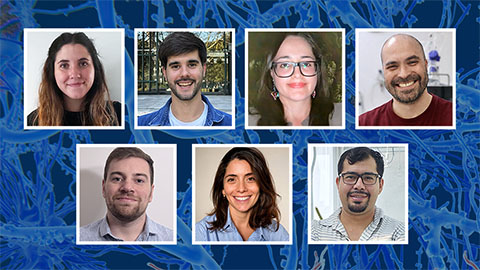
2026 PROLAB awardees announced
Each of the seven awardees will work in labs across Canada and the United States and will receive $7,000 to fund travel and living expenses.
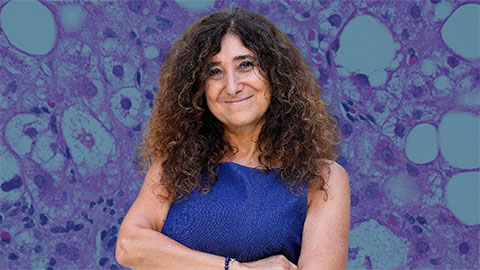
Uncovering the molecular roots of fatty liver disease
Physician–scientist Silvia Sookoian discusses her path from hepatitis C care to MASLD research, her use of multi-omics to study steatotic liver disease, and how lipid metabolism and genetics are reshaping understanding of MASH and liver health.
Kimble honored for lifetime achievement in genetics
She received the 2026 Thomas Hunt Morgan Medal and will be honored with a dedicated online profile and seminar.
Janetka named distinguished professor
Washington University awarded him the inaugural Carl Frieden Distinguished Professorship.
ASBMB members receive ASPET awards
The American Society for Pharmacology and Experimental Therapeutics awards Simone Brixius–Anderko, Paul Insel, Sudarshan Rajagopal, Emily Scott, Alan Smrcka and Jürgen Wess for their excellent research and mentoring work in pharmacology.
Kozul honored by Washington University
She received the 2025 Elliot L. Elson Education and Training Award.