
2026 PROLAB awardees announced

This year’s Promoting Research Opportunities for Latin American Biochemists, or PROLAB, travel grants have been awarded to seven early-career scientists from Mexico, Argentina and Chile. Awardees will work in labs across Canada and the United States. Participants will receive $7,000 to fund travel and living expenses, and they will get access to technologies and expertise that may not be readily available in their home countries.
PROLAB is a joint venture between the Pan-American Association for Biochemistry and Molecular Biology, the International Union of Biochemistry and Molecular Biology, and the American Society for Biochemistry and Molecular Biology. The program welcomes applicants from all countries active in the PABMB: Argentina, Brazil, Chile, Cuba, Mexico, Panama, Peru, Portugal, Spain and Uruguay.
The 2026 recipients are:
Inti Arroyo–Mosso
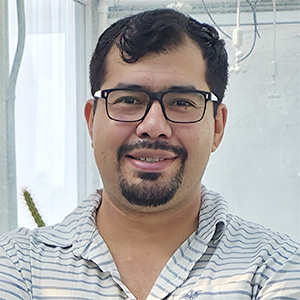
Project title: Molecular function of LEA proteins in glassy state stability and its relationship with seed longevity in Arabidopsis thaliana
Inti Arroyo–Mosso is a lecturer at Instituto Botticelli and an academic technician at the Institute of Biotechnology, Universidad Nacional Autonoma de Mexico. He researches how seeds transition into and stay in an intracellular glassy state in response to desiccation or dehydration stress. This glassy state is characterized by the formation of a highly viscous cytoplasmic matrix and is considered a major determinant of seed longevity. He works to identify the molecular mediators that allow seeds to achieve prolonged stasis and maintain viability in the dry state. Arroyo–Mosso obtained a bachelor’s degree in biology from UNAM, Facultad de Ciencias, and a master’s and Ph.D. in biochemical sciences from UNAM, Campus Morelos.
For his PROLAB award, he will conduct research with Thomas C. Boothby, an associate professor of molecular biology at the University of Wyoming. His lab focuses on how cells tune their molecular and biochemical states to enter a stable, dormant condition during drought.
Lucía Mariana Balsa
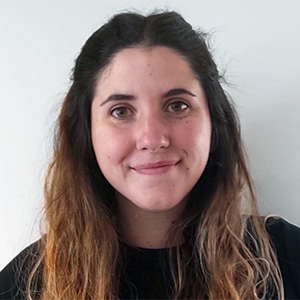
Project title: Targeting triple-negative breast cancer through copper complex–induced cuproptosis and immunogenic cell death
Lucía Mariana Balsa is a postdoctoral fellow at the Inorganic Chemistry Centre, or CONICET, a joint research institute between the National Scientific and Technical Research Council and the National University of La Plata, or UNLP. She also serves as a teaching assistant of biochemistry and pathophysiology at UNLP. She researches copper complex-induced cuproptosis, a form of regulated cell death that is triggered by excessive intracellular copper accumulation and has been increasingly associated with cancer cell proliferation and metastasis. She investigates the interplay between cuproptosis, immunogenic cell death and antitumor immune responses. Balsa obtained a master’s degree in biotechnology and molecular biology, and a Ph.D. in biological sciences from UNLP.
For her PROLAB award, she will conduct research with Teresita Padilla–Benavides, an assistant professor of molecular biology and biochemistry at Wesleyan University and a member of the ASBMB Maximizing Access Committee. Her lab investigates the biological roles of transition metals in mammalian development, metabolism and disease.
Maria Candelaria Diaz
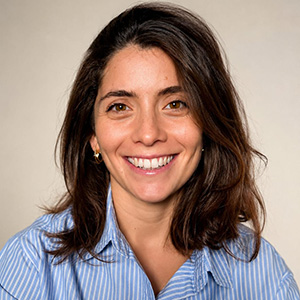
Project title: Condensates of the transcription factor SOX2: roles in chromatin organization and accessibility
Maria Candelaria Diaz is a Ph.D. student at the University of Buenos Aires, with a stipend scholarship granted by CONICET. She researches transcription factors that help maintain pluripotency in mouse embryonic stem cells. She focuses on how condensates of the transcription factor SOX2 modulate chromatin organization and assembly. She obtained a master’s degree in molecular biology from the Faculty of Exact and Natural Sciences at UBA.
For her PROLAB award, she will conduct research with Carlos Bustamante, a chair of biophysics and professor of molecular and cell biology, physics and chemistry at the University of California, Berkeley. He is also an investigator at the Howard Hughes Medical Institute. His lab develops and applies novel methods of single-molecule manipulation and detection, such as optical tweezers, nanopore, single-molecule fluorescence microscopy and ‘fleezers’, a fluorescence-force hybrid instrument.
Pablo Maturana
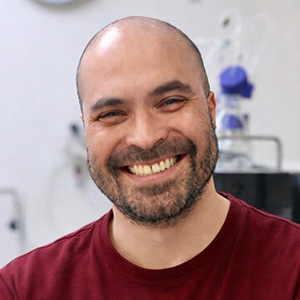
Project title: Structural basis of electron donor recognition by the Photosystem I supercomplex in giant kelp
Pablo Maturana is a postdoctoral researcher at the Faculty of Biological Sciences at Universidad de Concepción, Chile. He studies the structures of complexes involved in photosynthesis, particularly photosystem I, or PSI. He focuses on how electron donors interact with PSI in the brown alga commonly known as giant kelp. He obtained a bachelor’s degree in biochemistry, master’s in biochemistry and a Ph.D. in molecular, cellular biology and neurosciences from Universidad de Chile.
For his PROLAB award, he will conduct research with Christopher J. Gisriel, an assistant professor of biochemistry at the University of Wisconsin–Madison. His lab investigates the molecular mechanisms, diversity and evolution of the photosystems involved in photosynthesis.
Bárbara Maya
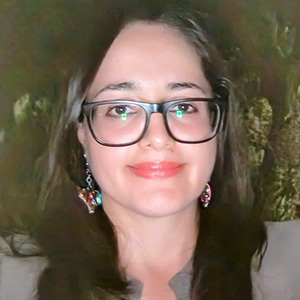
Project title: Tracing cellular metabolic responses to microbiome-derived metabolites
Bárbara Maya is a Ph.D. student in biomedical sciences at Tecnologico de Monterrey. She researches gut microbial metabolism. She studies how dietary substrates, including prebiotic fibers, modulate microbial metabolic outputs and cross-kingdom biological interactions. She obtained a bachelor’s degree in nutrition from the Autonomous University of the State of Mexico and a master’s in biotechnology from Tecnologico de Monterrey.
For her PROLAB award, she will conduct research with Christian Metallo, a chair and professor in the Metabolic Systems Biology Laboratory at the Salk Institute for Biological Studies. His lab investigates how metabolism regulates cellular function in health and disease. His work focuses on mapping interconnected metabolic networks to uncover disease-causing pathways.
Nicolas Gonzalez Perez
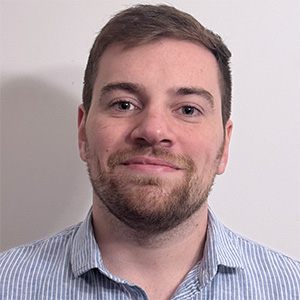
Project title: Metformin as a modulator of dark microglia and the integrated stress response in Alzheimer’s disease
Nicolas Gonzalez Perez is a Ph.D. student at the Neurobiology of Aging Lab, Institute of Biology and Experimental Medicine, CONICET. He researches the role of microglial stress responses in Alzheimer’s disease models and focuses on characterizing dark microglia and synaptic changes. Dark microglia are a highly active, stressed phenotype of microglia that exhibit high levels of oxidative stress and are associated with amyloid-beta plaques and synaptic loss, both of which are core features of Alzheimer’s disease. He is also focused on understanding how metformin, a standard treatment for metabolic disorders, modulates microglial stress responses. He obtained his licentiate in biological sciences from the School of Exact and Natural Sciences at the University of Buenos Aires.
For his PROLAB award, he will conduct research with Marie–Ève Tremblay, a professor and chair of neurobiology of healthy cognitive aging at the University of Victoria. Her lab investigates the significance of microglial remodeling of neuronal circuits and elimination of synapses in the pathogenesis of brain disorders.
Tomas Peters
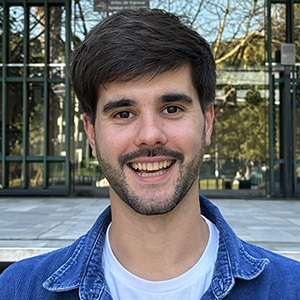
Project title: Deciphering RNA structure within biomolecular condensates by in vivo DMS MaPseq
Tomas Peters is a Ph.D. candidate at the Instituto Leloir. He researches the biological relevance and dynamics of ribonucleoprotein condensates, including stress granules. He focuses on understanding the structural remodeling of noncoding RNA that scaffolds different condensates. Peters obtained a bachelor’s degree in biotechnology and molecular biology at UNLP.
For his PROLAB award, he will conduct research with Silvi Rouskin, an assistant professor of microbiology at Harvard Medical School. Her lab investigates co-transcriptional RNA folding at splice sites in cells. For his studies, Peters will apply a novel strategy developed by the host laboratory, termed dimethyl sulfate mutational profiling with sequencing, or DMS MaPseq.
Enjoy reading ASBMB Today?
Become a member to receive the print edition four times a year and the digital edition monthly.
Learn moreGet the latest from ASBMB Today
Enter your email address, and we’ll send you a weekly email with recent articles, interviews and more.
Latest in People
People highlights or most popular articles
Uncovering the molecular roots of fatty liver disease
Physician–scientist Silvia Sookoian discusses her path from hepatitis C care to MASLD research, her use of multi-omics to study steatotic liver disease, and how lipid metabolism and genetics are reshaping understanding of MASH and liver health.
Kimble honored for lifetime achievement in genetics
She received the 2026 Thomas Hunt Morgan Medal and will be honored with a dedicated online profile and seminar.
Janetka named distinguished professor
Washington University awarded him the inaugural Carl Frieden Distinguished Professorship.
ASBMB members receive ASPET awards
The American Society for Pharmacology and Experimental Therapeutics awards Simone Brixius–Anderko, Paul Insel, Sudarshan Rajagopal, Emily Scott, Alan Smrcka and Jürgen Wess for their excellent research and mentoring work in pharmacology.
Kozul honored by Washington University
She received the 2025 Elliot L. Elson Education and Training Award.
de la Fuente honored for AI research
The award will support the development of an AI system called ApexMol, a 3D structure–informed, agentic large language model designed to create new biomolecules.