
Rossjohn named fellow; Decker joins science board; Gillaspy appointed dean

Rossjohn named Royal Society fellow
Jamie Rossjohn, a professor of biochemistry and molecular biology at the Biomedicine Discovery Institute, Monash University, Australia, is one of 60 scientists from around the world who were recently elected fellows and foreign members of the Royal Society.
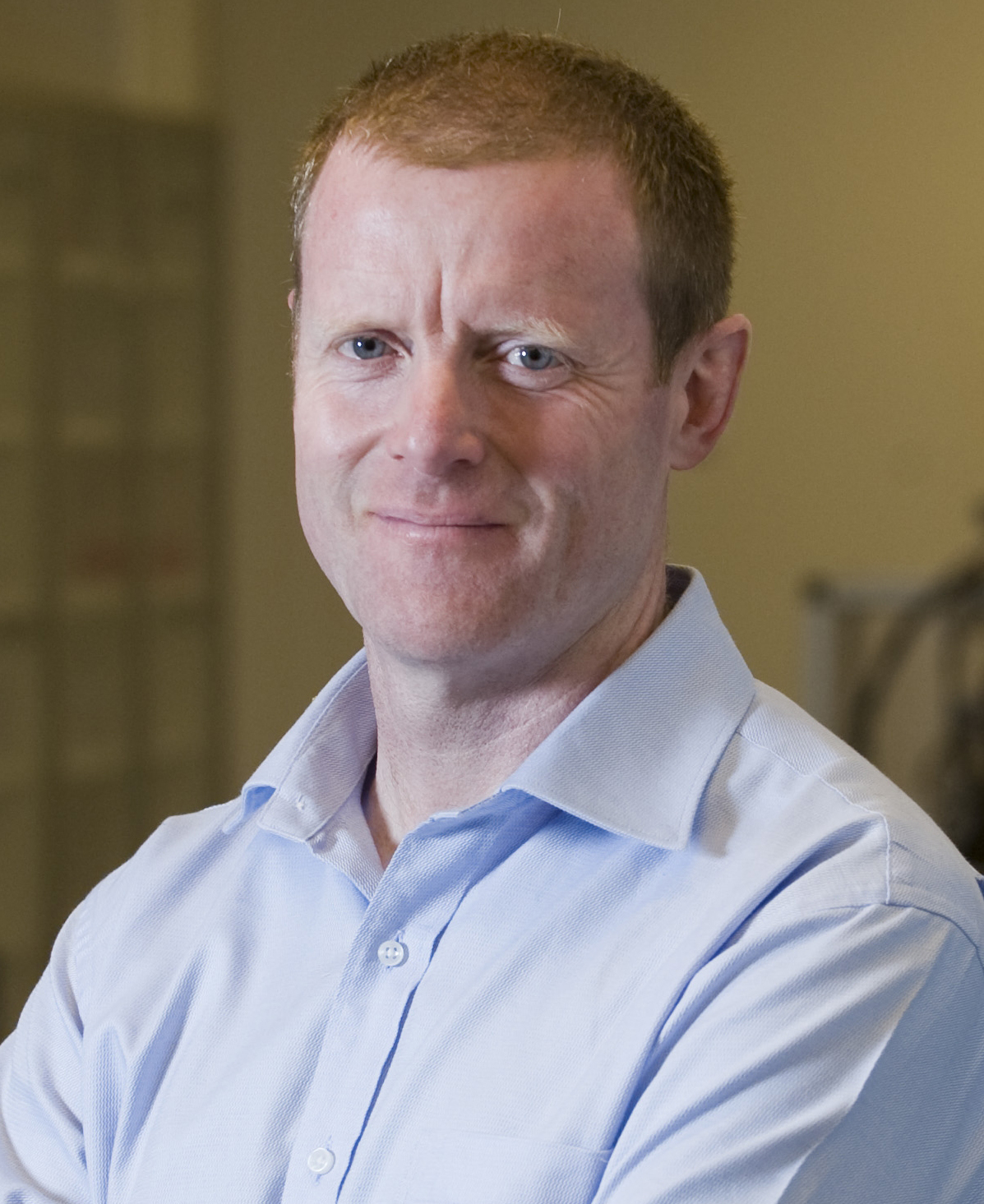
Rossjohn, a 2022 fellow, studies immunity, disease and the vertebrate host response. His lab has used structural biology to understand how T-cell receptors recognize peptides, lipids and metabolites. They have found structural mechanisms of major histocompatibility complex polymorphism that affect viral immunity, drug and food hypersensitivities, and T-cell–mediated autoimmunity. Rossjohn has pioneered molecular understanding of how T cells bind lipid-based antigens presented by the CD1 family and has provided a structural basis of how vitamin B metabolites can be presented and recognized by the immune system, revealing a new class of antigen.
Rossjohn has held research fellowships with the Australian Research Council and National Health and Medical Research Council. He is a fellow of the Australian Academy of Science, the academies of medical sciences in the UK and Australia, and the Learned Society of Wales. The work of his lab’s artist-in-residence, Erica Tandori, was featured in a 2021 ASBMB Today article on sensory science.
The Royal Society, founded in the 1660s, is the oldest continually existing scientific academy in the world, and the work of its fellows and foreign members spans many disciplines. “I am … pleased to see so many new fellows working in areas likely to have a transformative impact on our society over this century,” Adrian Smith, president of the Royal Society, said In a press release, “from new materials and energy technologies to synthetic biology and artificial intelligence.”
Gillaspy appointed dean at UW
The University of Wisconsin–Madison has named Virginia Tech biochemistry professor Glenda Gillaspy the next dean of the UW College of Agricultural and Life Sciences, effective Aug. 4.
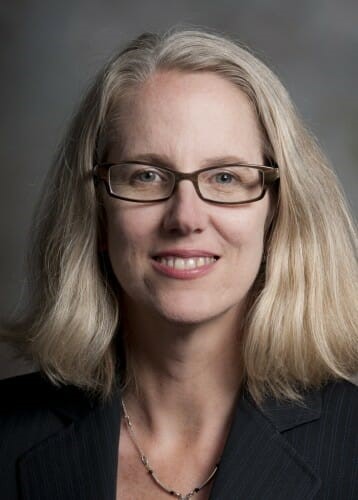
Gillaspy earned an undergraduate degree from Auburn University and her Ph.D. in biochemistry from Case Western Reserve University, and then was a National Science Foundation postdoctoral fellow at the University of California, Berkeley. She became a professor of biochemistry in the College of Agriculture and Life Sciences at Virginia Tech in 1998. After she was appointed head of the biochemistry department in 2015, the number of graduate students doubled, and she developed a mentoring program to attract and retain new faculty.
In Gillaspy’s lab, her research program focuses on the molecular pathways plants use to respond to the environment, an area important for developing strategies to increase crop yield and mitigate phosphate in the environment. One area of interest is a collaborative project on inositol pyrophosphate signaling molecules, which play a critical role in phosphate sensing. Her lab’s outreach programs have included a plant stress exercise for local fourth-graders and an authentic inquiry project with thousands of ninth grade students at James Madison High School.
Gillaspy is excited to join the UW community, she said in an article in the UW News, noting that the College of Agricultural and Life Sciences has a unique history and composition of departments and programs. “These qualities position the college to take a preeminent role in solving complex problems facing our society with respect to food, health and sustainability,” she said, “and to provide critical educational programs and experiential learning for our students.”
Decker joins Valneva science board
Thomas Decker, a member of the editorial boards of the Journal of Biological Chemistry and Molecular and Cellular Biology, has been appointed to the scientific advisory board of Valneva SE, a maker of specialty vaccines, the company announced recently.
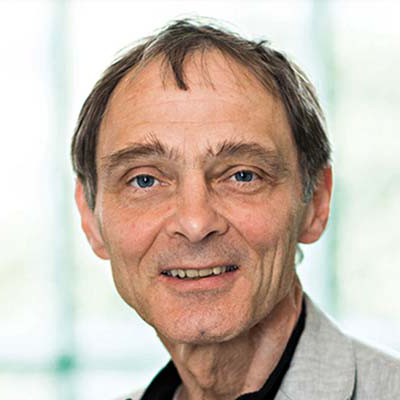
Decker is a professor of immunobiology at the Max Perutz Labs of the University of Vienna. He earned his Ph.D. at the Albert Ludwig University in 1986 and conducted postdoctoral research at the Fraunhofer Institute of Toxicology and Rockefeller University. After short stints on the faculties at the Fraunhofer Institute and the Karolinska Institute, he took a position at the University of Vienna in 1993, where he served as chair of the microbiology and genetics department from 2001 to 2009 and became a full professor in 2002.
Decker, an immunologist, studies signaling by a group of cytokines called interferons, which activate the innate immune system’s JAK-STAT signaling pathway to alter gene expression. For three decades, his lab has investigated the wiring of the JAK-STAT signaling pathway and other interferon responsive signal transduction cascades; immune cells’ transcriptional and chromatin responses to those signals; and how intracellular bacteria coopt host signaling pathways.
In addition to JBC and MCB, Decker has served on the editorial boards of the Journal of Clinical Investigation and the Journal of Immunology and as editor for Medical Microbiology and Immunology. He has been president of the European Society for Macrophage and Dendritic Cell Research since 2018.
Valneva is a multinational company focused on developing vaccines for infectious diseases with significant unmet medical needs, including Lyme disease, COVID-19 and chikungunya.
Enjoy reading ASBMB Today?
Become a member to receive the print edition four times a year and the digital edition monthly.
Learn moreGet the latest from ASBMB Today
Enter your email address, and we’ll send you a weekly email with recent articles, interviews and more.
Latest in People
People highlights or most popular articles
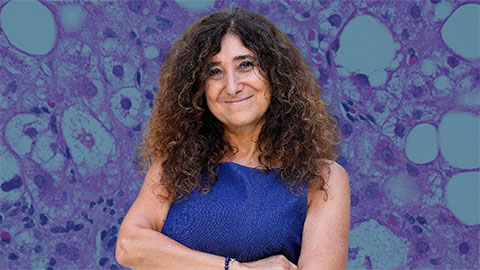
Uncovering the molecular roots of fatty liver disease
Physician–scientist Silvia Sookoian discusses her path from hepatitis C care to MASLD research, her use of multi-omics to study steatotic liver disease, and how lipid metabolism and genetics are reshaping understanding of MASH and liver health.
Kimble honored for lifetime achievement in genetics
She received the 2026 Thomas Hunt Morgan Medal and will be honored with a dedicated online profile and seminar.
Janetka named distinguished professor
Washington University awarded him the inaugural Carl Frieden Distinguished Professorship.
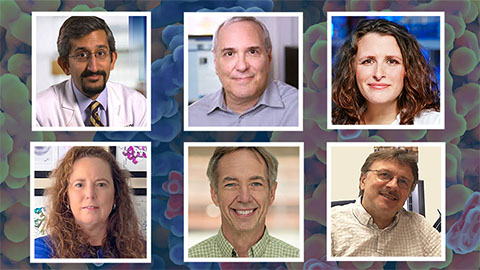
ASBMB members receive ASPET awards
The American Society for Pharmacology and Experimental Therapeutics awards Simone Brixius–Anderko, Paul Insel, Sudarshan Rajagopal, Emily Scott, Alan Smrcka and Jürgen Wess for their excellent research and mentoring work in pharmacology.
Kozul honored by Washington University
She received the 2025 Elliot L. Elson Education and Training Award.
de la Fuente honored for AI research
The award will support the development of an AI system called ApexMol, a 3D structure–informed, agentic large language model designed to create new biomolecules.