
Honors for Lemons, Silva and Brownlee

Lemons named university professor
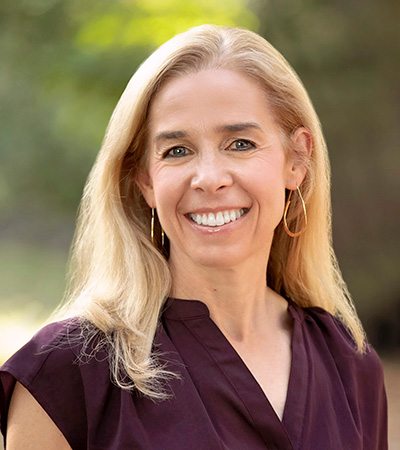
The University of Georgia named Paula Lemons a 2023-2024 University Professor in recognition of her influential vision and leadership. Lemons will receive a salary increase of $10,000 and yearly academic support of $5,000 while she holds this professorship.
Lemons is a professor of biochemistry and molecular biology and associate dean of Franklin College at UGA. In her lab, Lemons researches how to support college biology instructors who use reformed teaching strategies shown to improve student outcomes. She also studies problem solving among undergraduate biology and biochemistry students. Lemons created a guide to writing biology problems for teachers and an online problem-solving tutorial for students.
Lemons founded and served as the executive director of the Scientists Engaged in Education Research Center for seven years. She has also been involved in the Biology Education Research Interdisciplinary Group of the Integrated Life Sciences Graduate Program, which facilitates faculty and graduate student partnerships across departments to connect education and traditional researchers. In 2019, she was awarded the National Science Foundation’s Presidential Early Career Award for Scientists and Engineers.
“I cannot think of anyone else in our biology education disciplinary community who has taken their expertise and used it to make such a profound impact on their own institution’s teaching mission,” Elisabeth Schussler, professor of ecology and evolutionary biology at the University of Tennessee, Knoxville, said of Lemons in a news release.
Silva named emerging scholar
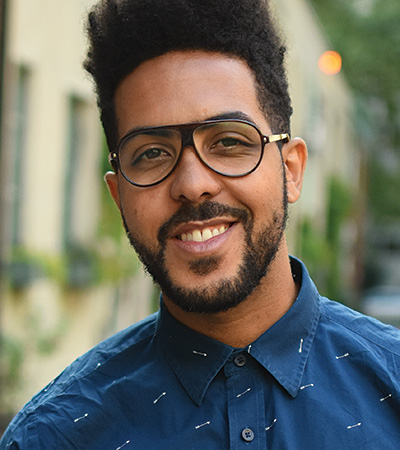
The biological chemistry department at Johns Hopkins School of Medicine has named Gustavo Silva a Paul T. Englund Emerging Scholar. This award recognizes scholars who have demonstrated potential to forge tomorrow’s scientific breakthroughs and to promote a creative, diverse and inclusive future in biochemical research.
Englund was a biochemist at Johns Hopkins and a longtime member of the American Society for Biochemistry and Molecular Biology; he is best known for studying glycosylphosphatidylinositol anchors and fatty acid metabolism in Trypanosoma parasites, which cause African sleeping sickness.
Silva is an assistant professor of biology at Duke University. The Silva lab is interested in how cells respond to stressors that are common in inflammation and diseases. The lab also studies how ubiquitin controls protein synthesis and degradation during stress as well as how mutations in ubiquitin can lead to impaired mitochondria function, cellular dysfunction and intellectual disabilities. In addition, Silva directs Black Think Tank, a program to support Black faculty at Duke.
In 2022, Silva received the Science Diversity Leadership Award from the Chan Zuckerberg Initiative and the National Academies of Sciences, Engineering and Medicine for his project on understanding the functional ubiquitinome in health and diseases. He received the 2023 Dean’s Award for Excellence in Mentoring at Duke University and was listed by CellPress among the 100 Inspiring Black Scientists in America. He is a member of the ASBMB Maximizing Access Committee and a coach for the ASBMB/NIH MOSAIC Program.
Silva received an honorarium and presented at the Johns Hopkins School of Medicine awards ceremony in April. His talk was titled “Thriving under pressure: Regulating protein dynamics under stress.”
Brownlee receives pioneer award
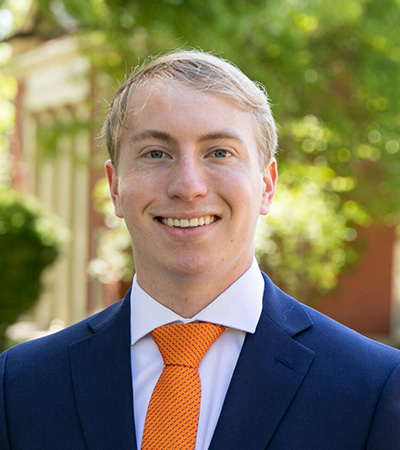
The Honor Society of Phi Kappa Phi, the country’s oldest collegiate honor society, has named Ryan Brownlee one of 50 inaugural recipients nationwide of the Pioneer Award.
This new award is designed to encourage and reward undergraduate members for developing the research, engagement and leadership skills needed to become a successful scholar. Brownlee, who joined Phi Kappa Phi in 2021, will receive a $1,000 prize.
Brownlee is an undergraduate at Mercer University studying biochemistry and molecular biology. He conducts research in the lab of Christy C. Bridges, interim chair and professor of biomedical sciences. His research focuses on the transport of toxic mercury.
In 2023, Brownlee received a Barry M. Goldwater Scholarship. Outside academic work, he is involved in Mercer’s student-run service leadership board, MerServe. He plans to continue his studies in biochemistry and molecular biology by conducting research while pursuing a graduate degree.
“Ryan is a dedicated and determined student who strives to get the most out of his education,” Bridges said in a press release. “He has worked in my laboratory for two years, and he is engaged and interested in the project. He has successfully presented his research findings in several forums across the Southeast. It has been a pleasure having him in my lab.”
Enjoy reading ASBMB Today?
Become a member to receive the print edition four times a year and the digital edition monthly.
Learn moreGet the latest from ASBMB Today
Enter your email address, and we’ll send you a weekly email with recent articles, interviews and more.
Latest in People
People highlights or most popular articles
de la Fuente honored for AI research
The award will support the development of an AI system called ApexMol, a 3D structure–informed, agentic large language model designed to create new biomolecules.
In memoriam: Peter Roepstorff
He was a leading researcher in biological mass spectrometry, mapped protein function in living organisms and was an ASBMB member for 19 years.
Flipping lipids and slime molds
A dull first job nearly pushed JBC associate editor Todd Graham out of science. Then a slime mold project changed his path. Now, he studies membrane biology and reflects on discovery, persistence and mentoring through uncertainty.
ASBMB members receive RNA Society awards
The RNA Society awards Brenda Bass, Can Cenik and Karin Musier–Forsyth for their achievements in RNA research and innovation. Winners will be recognized at the closing awards ceremony of the RNA 2026 annual meeting.
In memoriam: Richard L. Cross
He studied the enzymatic mechanisms of ATP synthase and served on the editorial board of the Journal of Biological Chemistry for 24 years.
A chance encounter with the lab
Payton Stevens never planned to become a pancreatic cancer researcher. A temporary job set him on a path from rural Kentucky to leading research on Wnt signaling and metastasis, where he now pairs discovery with mentorship and science advocacy.