
ASBMB names 2024 JBC/Tabor Award winners

The American Society for Biochemistry and Molecular Biology has announced the winners of the 2024 Journal of Biological Chemistry/Herbert Tabor Early Career Investigator Awards. All awardees are the first authors of standout JBC papers published the previous year.
The awards are named for the late Herb Tabor, who served as JBC’s editor-in-chief from 1971 to 2012 and upheld the journal’s mission to support the dissemination of science, enhance research visibility and promote scientific equity.
A committee of JBC associate editors selected the five award-winning first authors after carefully reviewing nominations from JBC readership, consulting experts in the field and evaluating the scientific quality and impact of nominated papers.
George DeMartino, a professor of physiology at the University of Texas Southwestern Medical Center and JBC associate editor, oversees the award selections.
“The awardees were all first authors of high quality, rigorous, impactful science that is the hallmark of JBC,” DeMartino said. “These papers are already receiving citations in the literature, and the topics display the breadth of work that is covered by the journal.”
“These early-career scientists represent the next generation of authors, who will undoubtedly continue to contribute knowledge to the scientific community.”
Learn more about these outstanding early-career scientists and their research below.
Jenny Hogstrom
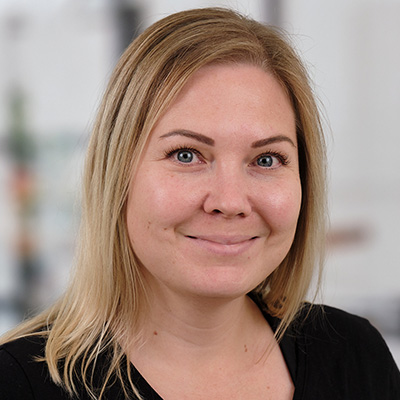
Jenny Hogstrom is a postdoctoral research fellow, working with Taru Muranen, an assistant professor of medicine at Harvard Medical School. In 2023, Hogstrom received the American Association for Cancer Research–AstraZeneca Breast Cancer Research Fellowship. Before moving to Boston, she completed her Ph.D. at the University of Helsinki. She was recognized for the paper “Simultaneous isolation of hormone receptor–positive breast cancer organoids and fibroblasts reveals stroma-mediated resistance mechanisms.” Hogstrom and her team developed a cell culture model of hormone receptor-positive, or HR+, breast cancer. They generated patient-derived organoids and matching cancer-associated fibroblasts from patient resections of primary and metastatic HR+ breast cancers. Finally, they showed that HR+ cancer-associated fibroblasts secrete cytokines that promote tumor growth and drive treatment resistance.
Hannah Kondolf
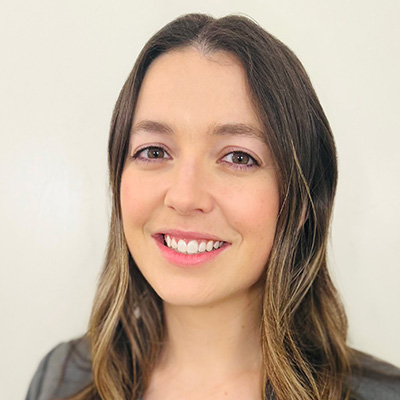
Hannah Kondolf is pursuing her M.D. and recently earned her Ph.D. at Case Western Reserve University School of Medicine. She performed research with Derek Abbot, a professor of medicine. Kondolf obtained her bachelor’s degree in human biology, health and society at Cornell University. She was recognized for the paper “Protein engineering reveals that gasdermin A preferentially targets mitochondrial membranes over the plasma membrane during pyroptosis.” This study shows that different gasdermin family members cause cell death via distinct mechanisms. Specifically, Kondolf and her team showed that gasdermin A preferentially targets mitochondria upon activation, unlike gasdermin D, which targets the mitochondria and plasma membrane equally.
Edwin Gabriel Peña Martínez
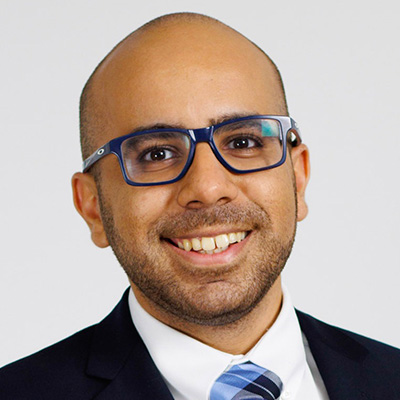
Edwin Gabriel Peña Martínez is a graduate student of biochemistry. He works in the lab of José A. Rodríguez-Martínez, an associate professor of biology at the University of Puerto Rico, Río Piedras. Peña Martínez was recognized for the paper “Prioritizing cardiovascular disease-associated variants altering NKX2-5 and TBX5 binding through an integrative computational approach.” Peña Martínez and his team used a machine learning model to identify and prioritize potential cardiovascular disease-causing single nucleotide polymorphisms, or SNPs. After identifying candidate non-coding SNPs using chromatin immunoprecipitation data of two cardiac transcription factors, NKX2-5 and TBX5, they found five variants that altered transcription factor binding and may cause cardiovascular disease.
Jianchao Zhang

Jianchao Zhang is a research assistant professor at the Southern University of Science and Technology in China. He received his Ph.D. in cell biology from Northeast Normal University and completed postdoctoral training at the Shenzhen Institutes of Advanced Technology. He was recognized for the paper “Single amino acid-based PROTACs trigger degradation of the oncogenic kinase BCR-ABL in chronic myeloid leukemia (CML).” Zhang and colleagues used single amino acid–based proteolysis-targeting chimera, or PROTAC, a system that targets harmful proteins for destruction by hijacking the ubiquitin-proteasome system, to degrade the proto-oncogene BCR–ABL. This fusion kinase drives the progression of chronic myeloid leukemia. This method successfully reduced tumor growth in mice with BCR–ABL positive tumors and could be adapted for broader applications in targeted protein degradation.
Gabriela Dias Noske
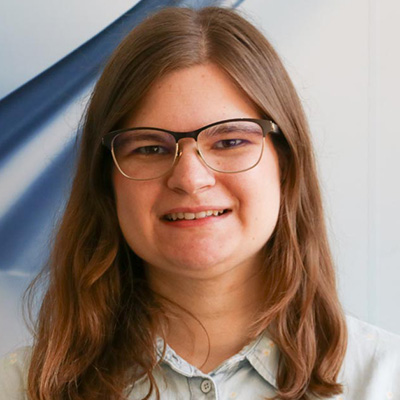
Gabriela Dias Noske is a cryogenic electron microscopy–associated researcher at the Brazilian Nanotechnology National Laboratory at the Center for Research in Energy and Materials. Recently, she completed her Ph.D. at the University of Sao Paulo, Brazil, under the guidance of USP professor Glaucius Oliva. Dias Noske completed her undergraduate degree at USP and has performed research on the structure and function of the yellow fever protease. She was recognized for the paper “Structural basis of nirmatrelvir and ensitrelvir activity against naturally occurring polymorphisms of the SARS-CoV-2 main protease.” In this study, she and colleagues characterized how clinically approved SARS-CoV-2 antivirals bind to their target, the viral protease, and how mutations in the protease affect their efficacy. Using X-ray crystallography, the team also showed that certain residues within the protease are critical for loss of antiviral potency.
Enjoy reading ASBMB Today?
Become a member to receive the print edition four times a year and the digital edition monthly.
Learn moreGet the latest from ASBMB Today
Enter your email address, and we’ll send you a weekly email with recent articles, interviews and more.
Latest in People
People highlights or most popular articles
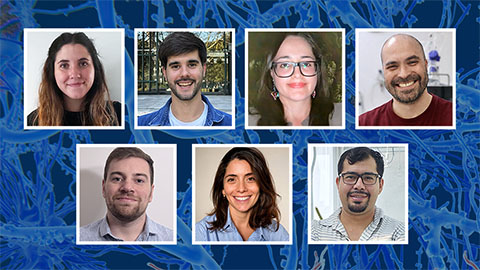
2026 PROLAB awardees announced
Each of the seven awardees will work in labs across Canada and the United States and will receive $7,000 to fund travel and living expenses.
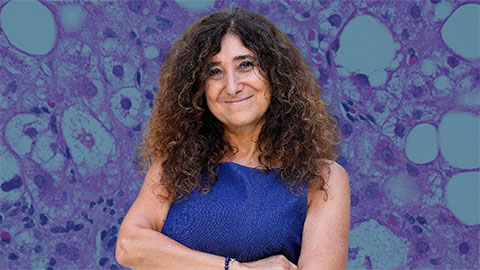
Uncovering the molecular roots of fatty liver disease
Physician–scientist Silvia Sookoian discusses her path from hepatitis C care to MASLD research, her use of multi-omics to study steatotic liver disease, and how lipid metabolism and genetics are reshaping understanding of MASH and liver health.
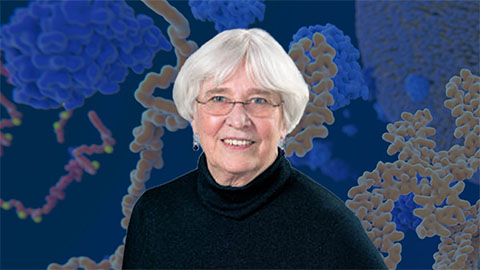
Kimble honored for lifetime achievement in genetics
She received the 2026 Thomas Hunt Morgan Medal and will be honored with a dedicated online profile and seminar.
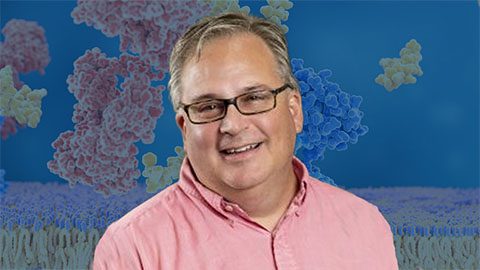
Janetka named distinguished professor
Washington University awarded him the inaugural Carl Frieden Distinguished Professorship.
ASBMB members receive ASPET awards
The American Society for Pharmacology and Experimental Therapeutics awards Simone Brixius–Anderko, Paul Insel, Sudarshan Rajagopal, Emily Scott, Alan Smrcka and Jürgen Wess for their excellent research and mentoring work in pharmacology.
Kozul honored by Washington University
She received the 2025 Elliot L. Elson Education and Training Award.