
In memoriam: Lucy Chang and Fred Bollum

Lucy Chang and Fred Bollum, personal and professional partners for more than four decades and longtime members of the American Society for Biochemistry and Molecular Biology, both died in the past year; Bollum on March 2 and Chang on Nov. 13. Bollum was 95, and Chang was 81.
Frederick James Bollum was born June 14, 1927, in Ellsworth, Wisconsin, the son of Frederick Edward and Helen (Bucholtz) Bollum. He started college at the University of Minnesota as a zoology major and graduated in 1956 with a Ph.D. in physiological chemistry. He conducted a U.S. Public Health Service postdoctoral fellowship at the University of Wisconsin. He then worked at the Oak Ridge National Laboratory, as a biochemistry professor at the University of Kentucky Medical School, and as chair and professor of biochemistry at the Uniformed Services University of the Health Sciences in Bethesda, Maryland.
Lucy Ming Shih Chang was born August 20, 1942, in China, to Timothy Y.N. Chang and Florence I.C. Chang. She earned a B.S. in chemistry at Case Western Reserve University in 1964 and a Ph.D. in biochemistry from Indiana University in 1968; she then pursued postdoctoral research at the University of Kentucky. She began her independent research career the University of Connecticut before serving as professor and department chair at USUHS.
Bollum joined the ASBMB in 1961, and Chang joined in 1974. Bollum was a member of the Journal of Biological Chemistry editorial board in the mid-1960s. During their joint research career, they conducted seminal work on DNA polymerases and discovered the mammalian terminal deoxynucleotidyl transferase, or TdT, a specialized DNA polymerase expressed in precancerous cells and acute leukemia and lymphoma cells.
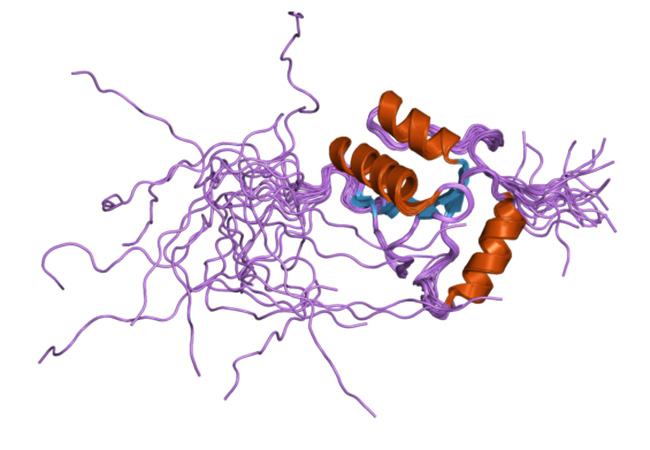
In 1982, Bollum and Chang founded Supertechs, Inc., a biotechnology firm in Rockville, Maryland, specializing in diagnostics for leukemia and apoptosis research. They worked to produce and market monospecific antibodies to TdT. Certain cancerous cells express abnormal concentrations of TdT, making high levels of TdT-positive cells in blood and bone marrow a symptom of disease. Together, Bollum and Chang developed numerous patents related to TdT and other related enzymes.
Bollum’s many interests included music (clarinet and guitar), radio-controlled plane and boat models, astronomy, sculpture and cabinetry. Chang enjoyed knitting. They both liked to travel and spend time at their house on the Chesapeake Bay where Bollum kept an eye on the wildlife and the heavens with his collection of telescopes and binoculars.
Enjoy reading ASBMB Today?
Become a member to receive the print edition four times a year and the digital edition monthly.
Learn moreGet the latest from ASBMB Today
Enter your email address, and we’ll send you a weekly email with recent articles, interviews and more.
Latest in People
People highlights or most popular articles
Uncovering the molecular roots of fatty liver disease
Physician–scientist Silvia Sookoian discusses her path from hepatitis C care to MASLD research, her use of multi-omics to study steatotic liver disease, and how lipid metabolism and genetics are reshaping understanding of MASH and liver health.
Kimble honored for lifetime achievement in genetics
She received the 2026 Thomas Hunt Morgan Medal and will be honored with a dedicated online profile and seminar.
Janetka named distinguished professor
Washington University awarded him the inaugural Carl Frieden Distinguished Professorship.
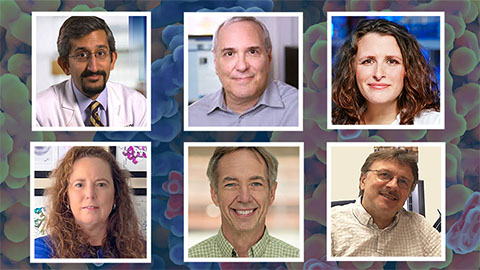
ASBMB members receive ASPET awards
The American Society for Pharmacology and Experimental Therapeutics awards Simone Brixius–Anderko, Paul Insel, Sudarshan Rajagopal, Emily Scott, Alan Smrcka and Jürgen Wess for their excellent research and mentoring work in pharmacology.
Kozul honored by Washington University
She received the 2025 Elliot L. Elson Education and Training Award.
de la Fuente honored for AI research
The award will support the development of an AI system called ApexMol, a 3D structure–informed, agentic large language model designed to create new biomolecules.