
Writing with AI turns chaos into clarity

For nearly a decade, I've taught writing to undergraduate juniors. One pattern has remained consistent: students struggle with the leap from structured assignments to the messy, open-ended world of real science communication. So, each semester I open with a quote from writer Pat Conroy:
"Good writing is the hardest form of thinking," Conroy wrote in “My Reading Life.” "It involves the agony of turning profoundly difficult thoughts into lucid form, then forcing them into the tight-fitting uniform of language."
His words capture what I believe is the central challenge of science writing: transforming the non-linear, chaotic process of discovery into something that reads as clear, compelling and even inevitable.
Using AI as a creative whiteboard
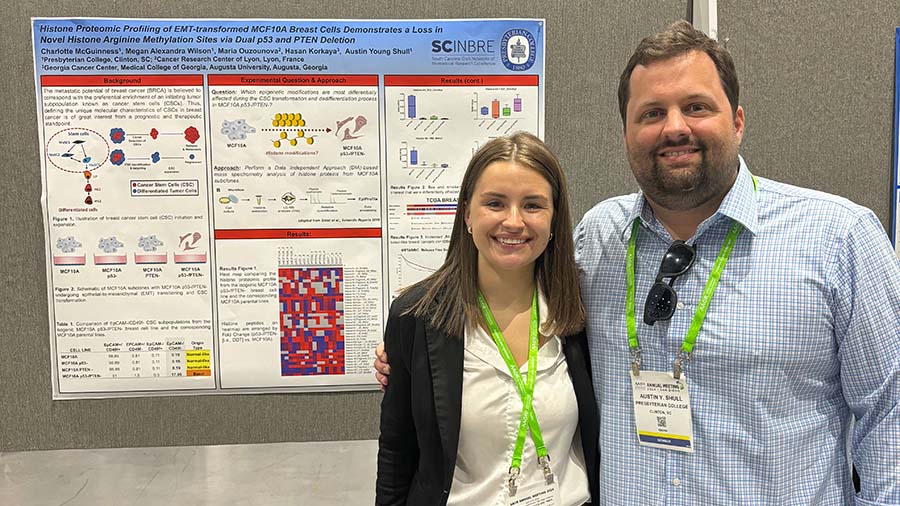
Despite common fears, I've found that generative artificial intelligence, or AI, doesn't have to short-circuit thinking but can actually enhance it. Used well, it becomes a powerful catalyst for refining ideas and strengthening clarity.
Too often, critics see AI as a shortcut. But for me, it functions more like a whiteboard, an external space where I can sketch my messy thoughts and refine them through rewriting, much like Williams Zinsser wrote in “On Writing Well.” "Rewriting is the essence of writing well.”
When I hit a wall explaining a complex mechanism, I now ask AI: "What's the clearest way to structure this explanation?" It gives me options, and I weigh them against my knowledge. This back-and-forth helps sharpen my ideas.
In one case, I was drafting a grant proposal on cellular stress responses. I had data linking oxidative damage to a cascade of proteins, but no obvious thread. I worked with AI to explore connections. While it didn't give me some magic answer on the first prompt, the back-and-forth conversational approach using generative AI helped draw on resources and discover overlapping themes from published work that enabled me to think more clearly and recognize a potential common mechanism.
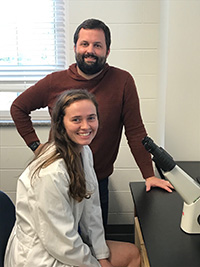
This wasn't AI thinking for me. It was a tool to help me see the shape of my own thinking more clearly, like turning a flashlight on the corners of a room I didn't realize were there. Of course, the human writer stays central. I'm the one asking the right questions, validating the answers and shaping the final voice. AI might be helpful — but I'm still driving.
Teaching scientists to use AI well
The future of science communication should not hinge on whether AI will replace us. Instead, we should focus on how to teach scientists to use these tools wisely, to amplify curiosity, not replace it. We have a responsibility to train scientists to use generative AI ethically, effectively and creatively, acknowledging, as historian Melvin Kranzberg said, "Technology is neither good nor bad; nor is it neutral."
Therefore, my hope for my students as well as for other scientists is that these non-neutral AI technologies can be used to promote clear thinking rather than being used to avoid it.
Enjoy reading ASBMB Today?
Become a member to receive the print edition four times a year and the digital edition monthly.
Learn moreFeatured jobs
from the ASBMB career center
Get the latest from ASBMB Today
Enter your email address, and we’ll send you a weekly email with recent articles, interviews and more.
Latest in Opinions
Opinions highlights or most popular articles
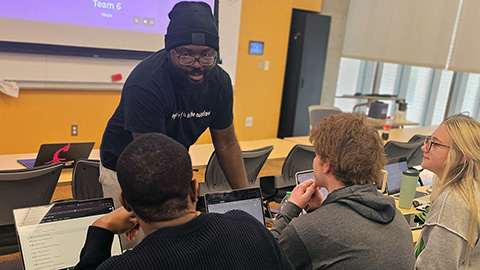
Learning can be fun: Gaming anatomy and physiology
Instructors explore how gamification and active learning transform student engagement and retention. They convey how emotion, interaction and design can make even rigorous subjects more effective and memorable.

Mentorship and uncertainty: Lessons from Telemachus
A biochemistry educator reflects on mentorship through the Greek story of Telemachus, showing how embracing uncertainty, failure and curiosity can transform teaching.
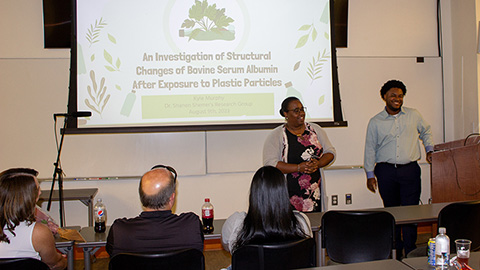
Embracing the twists and turns along the educator pathway
A biochemistry educator reflects on the challenges of early faculty life, describing how evidence-based teaching, cross-disciplinary collaboration and classroom challenges shaped her growth.
Redesigning with students in mind
Assistant professor reflects on how the shift to online teaching revealed gaps in points-based grading and led to a redesign centered on transparency and student growth.
Teaching beyond information transfer
Educator reflects on moving beyond lectures to create a biochemistry classroom centered on engagement, transparency and student ownership, showing how small shifts like “student hours” and active learning can transform understanding.
Mayday! Lessons from cellular dysfunction and group work dynamics
An upper-level biology course revealed that strong science doesn’t guarantee strong teamwork. One instructor shares how failed group dynamics reshaped their approach, leading to more structured, collaborative and effective student learning.