
This week's staff picks

Ruth Bader Ginsburg. Mitch McConnell. Donald Trump. Breonna Taylor. It’s been a tumultuous week. Sometimes we just need to turn away for a bit. Here’s what our staff has been watching, reading, listening to and doing.
Identifying generational gaps in music (Matt Daniels & Liana Sposito/The Pudding)
This delightful project seeks to define who remembers what music and what music has been forgotten. The creator writes, “I wanted to quantify … music that I assumed was culturally pervasive, but in actuality has no reason to be revered by folks outside my generation. Should I be surprised that someone born in the 2000s has never heard my childhood anthem?”
You can quiz yourself on songs from 20 years before you were born or, on later visits, any decade you please. Check out also their follow-up infographic showing how to maximize the number of wedding guests on the dance floor by playing hits that cut across the generations.
— Laurel Oldach, science writer
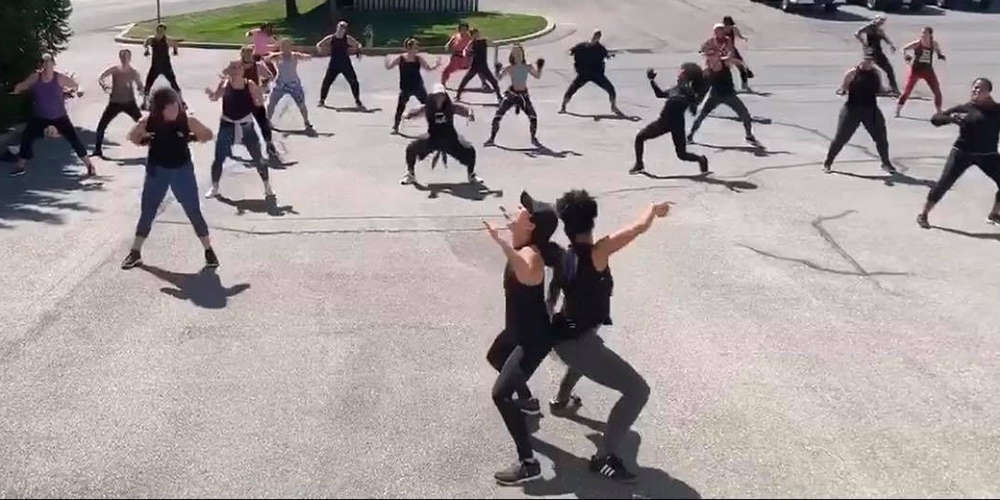
Bang™ outdoor exercise (Freedom Group Exercise)
I have been taking outdoor exercise classes, and we seem to do a lot of boxing tracks lately. It really helps get the frustrations out.
I took my first Zumba class in 2008 after watching all the non-dancers turn into dancers on my guilty pleasure show, “Dancing With the Stars.” If Cloris Leachman at age 82 (I was 46 at the time) could do it, I thought I could too. I found a local Zumba class where the instructor was considering something new, with more intensity. She started a new format, Freedom Bang. Something about all the boxing tracks makes me feel confident and strong. I have gotten myself into much better shape and have made a ton of new lifelong friends through this class, and I hope to continue dancing and working out for at least as long as Cloris Leachman did. Click this link to find an instructor near you. They might be offering outdoor classes or Zoom classes.
— Laurie Reluzco, meetings coordinator
How to lead better remote meetings (Mary Mesaglio, Smarter With Gartner)
We’ve all heard the complaining and maybe even done some of it ourselves: All these Zoom calls are exhausting! Well, it’s true. Video calls wear us out because they require our brains to process more information than in-person meetings or phone calls do. We have to follow the conversation, look at slides, interpret inconsistent audio, read facial expressions and body language that stop and start with each digital brain freeze, observe virtual and real-life backgrounds, and, of course, make sure our hair looks OK. It’s a lot. This so-called “Zoom fatigue,” as it turns out, actually makes people less productive and less creative. Though I certainly get far more out of a phone call than a video call, I know that some of my colleagues need that face-to-face interaction to feel connected and motivated. So I’ve been reading a lot of articles about how to combat Zoom fatigue and manage the demand for so many meeting performances, which is what they amount to, for me at least. Here are a few major takeaways. First, we need to get better and determining what medium is appropriate for the business at hand. Chances are we don’t even need a meeting. Second, if we must make a video call, it should be brief —half an hour tops so nobody zones out. Third, don’t invite people who don’t really need to be there. It’s rude to waste people’s time. And, finally, block out a day, or at least a good chunk of day, when you have no meetings at all. The article linked above has some other good tips.
— Angela Hopp, communications director and ASBMB Today executive editor
Virtual Book Lovers Ball (Milkweed Editions)
Milkweed Editions is hosting a virtual Book Lovers Ball on Oct. 9. It’s free (with donations welcome) and meant to be “a hopeful and inspiring event celebrating writers and the power of books in our lives!” There will be a discussion with Robin Wall Kimmerer, author of “Braiding Sweetgrass: Indigenous Wisdom, Scientific Knowledge, and the Teachings of Plants.” This book has been on my reading list for years. I’m really looking forward to the Q&A, and glad to have motivation to speed up my reading.
— Allison Frick, multimedia and social media content manager

Izzy’s Koala World (Netflix)
Yes, this show is made for children. It has lots of goofy animated hearts and sound effects. But it also has the telegenic real-life Izzy Bee, her charming off-beat parents and a crew of fuzzy koalas. Izzy lives on an Australian island and her mom is a veterinarian. Izzy and her mom rescue injured, sick and abandoned koalas, nurse them back to health and then release them back into the wild. Each episode focuses on one koala’s story with lots of cuddling and nurturing by Izzy. When she isn’t snuggling herbivorous marsupials, Izzy runs around barefoot or rides in the sidecar of her father’s motorcycle. At the end of each 20-minute episode, I feel as soothed as one of her koalas.
Enjoy reading ASBMB Today?
Become a member to receive the print edition four times a year and the digital edition monthly.
Learn moreGet the latest from ASBMB Today
Enter your email address, and we’ll send you a weekly email with recent articles, interviews and more.
Latest in Opinions
Opinions highlights or most popular articles
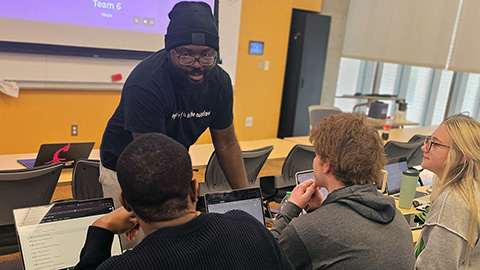
Learning can be fun: Gaming anatomy and physiology
Instructors explore how gamification and active learning transform student engagement and retention. They convey how emotion, interaction and design can make even rigorous subjects more effective and memorable.
Mentorship and uncertainty: Lessons from Telemachus
A biochemistry educator reflects on mentorship through the Greek story of Telemachus, showing how embracing uncertainty, failure and curiosity can transform teaching.
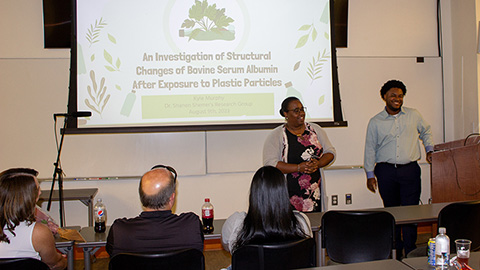
Embracing the twists and turns along the educator pathway
A biochemistry educator reflects on the challenges of early faculty life, describing how evidence-based teaching, cross-disciplinary collaboration and classroom challenges shaped her growth.
Redesigning with students in mind
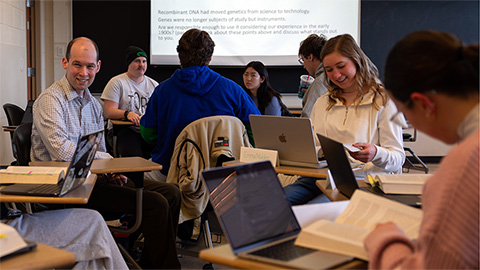
Assistant professor reflects on how the shift to online teaching revealed gaps in points-based grading and led to a redesign centered on transparency and student growth.
Teaching beyond information transfer
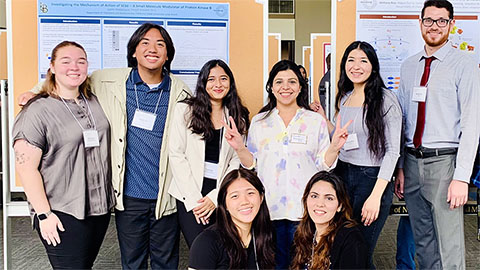
Educator reflects on moving beyond lectures to create a biochemistry classroom centered on engagement, transparency and student ownership, showing how small shifts like “student hours” and active learning can transform understanding.
Mayday! Lessons from cellular dysfunction and group work dynamics
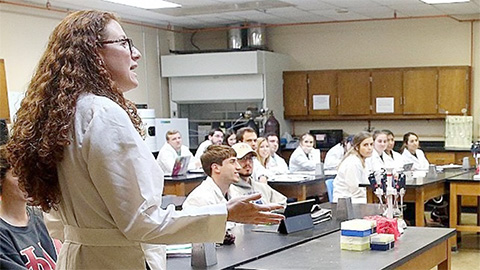
An upper-level biology course revealed that strong science doesn’t guarantee strong teamwork. One instructor shares how failed group dynamics reshaped their approach, leading to more structured, collaborative and effective student learning.