
Choosing an internship or a fellowship
If you read my first 2024 industry column (and I hope you did!), you may have noticed that some of the companies I listed with biochemistry-related job openings also offered internships and fellowships. All three of these avenues — internship, fellowship or full-time position — are a great step into an industry career, and each comes with its own benefits and potential drawbacks.
What is an industry internship?
A research internship is a great way to see if an industry career is right for you before you even complete your degree program.
An internship is usually a part-time position paid hourly that gives the intern experience in one certain part of the company. Internships often target current undergraduate and graduate students who are at least one year into their degree program. Sometimes an internship can lead to a full-time position without a second round of interviews and hiring exams if the intern is near graduation.
There are various restrictions placed on interns as employees of the company. They are hired to shadow or assist more senior researchers and will not be given projects to lead on their own. Interns are also paid at a lower rate than staff researchers.
Internships are short, lasting anywhere from three months, such as a summer internship, to a year. The length of the internship can depend on the position. For example, at Bristol Meyers Squibb, the biologics department offers both three-month summer internships and six-month co-op positions. However, its translational research department offers only summer internships, and their procurement department offers only co-op positions.
What is an industry fellowship?
I have heard a lot of misconceptions about postdoctoral fellowships in the sciences, usually about their relevance to recent graduates who would like to pursue an industry career. The term “fellowship” does not automatically mean academic positions; there are also fellowship positions at pharmaceutical and biotechnology companies.
Academic fellowships, usually hosted at a research university or research hospital, may focus on improving skills in grant writing, teaching undergraduate students and leading a graduate lab of your own. Industry fellowships often train you in leading a team of professional scientists, technical writing for procedures or internal documents, and cooperating with other teams in the company, such as quality assurance and legal.
Fellows are not typically current students because of the high level of scientific experience required. Master’s or doctoral degree holders are hired as full-time fellows for one year or more. Sometimes a fellowship must be renewed yearly but can be continued for several years.
Fellowships can be a great transition between graduate school and industry for those who want to have a career in industry in a different field than their degree research. For example, a cell biologist can get training, experience and papers in radiochemistry that will better prepare them for a radiochemical industry position.
Preparation for applying
Whether you are applying for an internship or a fellowship, there are similar application materials that you need to compile. Internship applications may not have as many prior knowledge requirements as fellowship applications, but both require regular time commitments and dedication to research.
Check out these ASBMB Today articles covering finding the right position in industry research for you, developing a stellar resume for industry and interviewing tips to get the position.
Enjoy reading ASBMB Today?
Become a member to receive the print edition four times a year and the digital edition monthly.
Learn moreFeatured jobs
from the ASBMB career center
Get the latest from ASBMB Today
Enter your email address, and we’ll send you a weekly email with recent articles, interviews and more.
Latest in Careers
Careers highlights or most popular articles
Upcoming opportunities
🗨️ Shape the conversation at ASBMB 2027 in Boston! ASBMB is seeking proposals for sessions and events that will foster collaboration, highlight exciting science and support career development across the molecular life sciences.
Upcoming opportunities
Registration is now open for this summer's Art of Science Communication course! Build your science communication skills in this 8-week online program. ➡️ Registration deadline: May 6.

Upcoming opportunities
The American Society for Biochemistry and Molecular Biology is accepting applications for the Marion B. Sewer Distinguished Scholarship for Undergraduates. Apply by April 30, 2026.
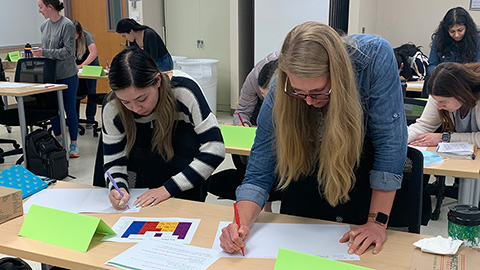
Designing scientific careers, not just experiments
Universities are rethinking how they prepare scientists for careers beyond the bench. From myIDP to Vanderbilt’s Career Architect, programs help trainees clarify values, explore options and build intentional paths forward.
Upcoming opportunities
Dive into the world of lipids! Join the ASBMB Lipid Research Division Seminar Series on April 9, 12–1 p.m. ET to hear early-career researchers explore lipid metabolism and mitochondrial biology.
Upcoming opportunities
For the summer 2026 ASBMB Today essay series, we invite scientists working in industry to share first-person reflections on their work. Submit your essay or pitch by April 15, 2026.