
Bankaitis a ‘tour de force’ in the field of lipid biology
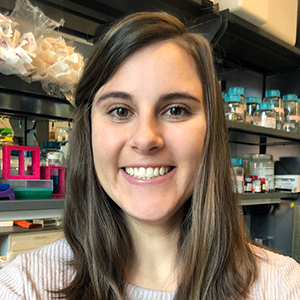
Vytas Bankaitis, a distinguished professor at the Texas A&M University College of Medicine, has been awarded the Avanti Award in Lipids by the American Society for Biochemistry and Molecular Biology. He is being recognized for his work on elucidating the role of lipid transfer and phosphatidylinositol exchange proteins in cell biology.
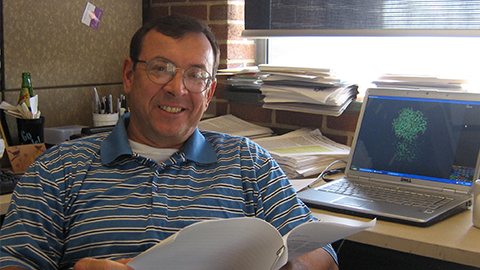 “I am deeply honored to be recognized as recipient of the Avanti Award in Lipids. This award belongs to the talented and dedicated students, postdoctoral fellows and technicians who drove our research over the years. I stand on their shoulders. It also serves as testimony to my mentors and insightful colleagues, and to the lipid community who embraced our science, that their interest and investment was worthwhile. I thank them all.” — Vytas Bankaitis
Arthur Johnson, also of Texas A&M, wrote in his letter supporting the award nomination that Bankaitis’ contributions to the field of lipid science “have profoundly influenced our understanding of the importance of lipids to so many areas.”
For 25 years, Bankaitis and his laboratory have focused on the regulation and organization of lipid signaling in eukaryotic cells. His laboratory described the first biological function for what had previously been a functionally enigmatic group of proteins, the phosphatidylinositol transfer proteins, called PITPs. These proteins bind and exchange specific phospholipids, the phosphatidylinositols, between membranes in vitro. His early research described an important and novel link between lipid metabolism and cellular trafficking when he discovered that a yeast protein called Sec14 had PITP activity. This launched a new research area at the interface of vesicle trafficking and lipid metabolism. He discovered that vesicle trafficking is, in fact, dependent on lipids, and he went on to elucidate the structure and mechanism of Sec14.
Bankaitis’ recent research indicates that PITPs are crucial for coordinating the interfaces of lipid-driven metabolic reactions and intracellular signaling. In this way, PITPs act as highly regulated coordinators of phosphatidylinositol kinase signaling in eukaryotic cells, which channels lipid kinase activities toward specific biological outcomes. When the interfaces are regulated inappropriately, it can affect membrane trafficking, growth factor receptors, cell growth and developmental pathways.
William Dowhan of the McGovern Medical School at the University of Texas Health Science Center at Houston wrote in his nomination letter that Bankaitis’ recent research is entirely novel and “is reshaping how we think about the regulation, physical organization, and diversification of lipid signaling, and it promises to rewrite the textbooks” on these subjects.
Of Bankaitis’ collective research contributions to the field of lipid science, Johnson wrote that his “creative, thorough, and comprehensive elucidation of the structure and function of PITPs and of their integration into the metabolic signaling pathways of the cell constitutes a tour de force.”
Bankaitis earned his Ph.D. in microbiology at the University of North Carolina and then worked in cell biology as a Helen Hay Whitney Foundation postdoctoral fellow at the California Institute of Technology. He subsequently joined the faculty at the University of Illinois, Urbana–Champaign, followed by positions at the University of Alabama at Birmingham and the University of North Carolina. In 2012, he joined the department of molecular and cellular medicine at the Texas A&M Health Sciences Center, where he is the E.L. Wehner-Welch foundation chair in chemistry.
Bankaitis will receive his award at the ASBMB annual meeting during the Experimental Biology 2019 conference in Orlando, where he will deliver an award lecture titled “Instructive regulation of phosphoinositide signaling by lipid transfer proteins” at 1:45 p.m. April 7 in Valencia Ballroom A at the Orange County Convention Center.
Enjoy reading ASBMB Today?
Become a member to receive the print edition four times a year and the digital edition monthly.
Learn moreGet the latest from ASBMB Today
Enter your email address, and we’ll send you a weekly email with recent articles, interviews and more.
Latest in People
People highlights or most popular articles
de la Fuente honored for AI research
The award will support the development of an AI system called ApexMol, a 3D structure–informed, agentic large language model designed to create new biomolecules.
In memoriam: Peter Roepstorff
He was a leading researcher in biological mass spectrometry, mapped protein function in living organisms and was an ASBMB member for 19 years.
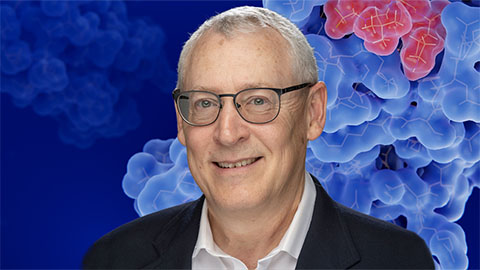
Flipping lipids and slime molds
A dull first job nearly pushed JBC associate editor Todd Graham out of science. Then a slime mold project changed his path. Now, he studies membrane biology and reflects on discovery, persistence and mentoring through uncertainty.
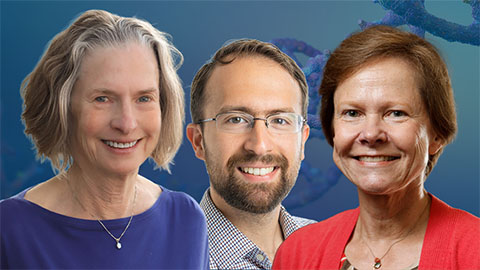
ASBMB members receive RNA Society awards
The RNA Society awards Brenda Bass, Can Cenik and Karin Musier–Forsyth for their achievements in RNA research and innovation. Winners will be recognized at the closing awards ceremony of the RNA 2026 annual meeting.
In memoriam: Richard L. Cross
He studied the enzymatic mechanisms of ATP synthase and served on the editorial board of the Journal of Biological Chemistry for 24 years.
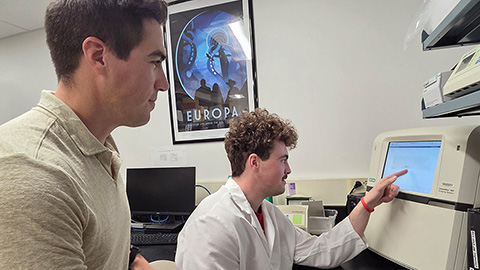
A chance encounter with the lab
Payton Stevens never planned to become a pancreatic cancer researcher. A temporary job set him on a path from rural Kentucky to leading research on Wnt signaling and metastasis, where he now pairs discovery with mentorship and science advocacy.