
From failing to acing chemistry
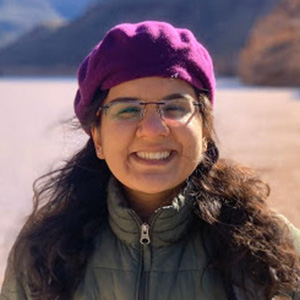
Early in high school, Carolyn J. Karns loved attending chemistry fairs and wearing her “periodic table T-shirt.” But during her junior year, she began to feel like she didn’t fit in. She wanted a different environment, so she enrolled in a community college.
Karns’ journey took an unexpected turn, however, when she failed her first chemistry class. “It was a reality check,” she said. “I had underestimated the amount of work that was needed for college studies.”
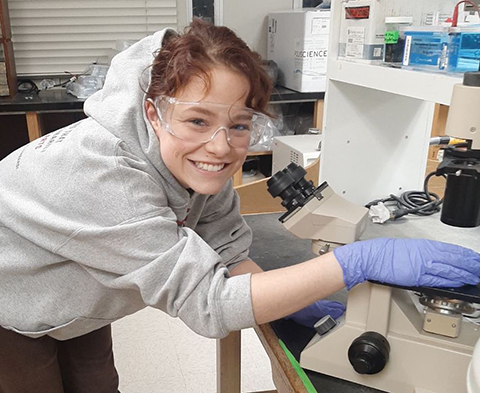
After this setback, she almost abandoned college.
While feeling uncertain about her academic future, Karns stumbled on an ad for undergraduate admissions at Eastern Illinois University. Drawn in by the campus's beauty and friendly atmosphere, she decided to give it a try.
At the university, Diane Burns, chair of the geology and geography department, noticed Karns’ curiosity and encouraged her to take science classes.
“She helped me believe in myself again,” Karns said.
With renewed confidence, Karns decided to give chemistry another shot. She later joined Michael Beck’s lab as an undergraduate researcher. Beck is the faculty adviser of the ASBMB Student Chapter at Eastern Illinois. Karns became involved in the chapter's activities in 2020 and served as its president from 2021 to 2022.
The chapter community supports students in their quest for research careers. "It has been invaluable to surround myself with like-minded individuals who share similar goals and have the ability to bounce ideas off one another,” Karns said. “I found some of my best friends here."
Karns was an organizer for what she called a "Rapid Research" event for students who were interested in research but uncertain where to begin. Professors from the biological sciences and chemistry departments gave five-minute presentations on their labs’ work. Chapter members then helped students connect with the professors for further guidance.
The chapter collaborates to organize workshops on résumé building and reviewing graduate applications. Karns has invited professionals from diverse backgrounds, including academia and industry, to share their experiences with students on campus.
"Engaging with students and conducting outreach initiatives has been instrumental in cultivating and sustaining interest in the field of sciences," she said.
Karns received an ASBMB Student Chapter travel award to share her research at the 2022 Experimental Biology conference. She was still exploring potential career paths and valued the networking opportunities in the ASBMB lounge.
"I found the interactions during the sessions to be immensely beneficial,” she said. “They helped shift my perspective from what I 'could' do in my career to what I truly 'want' to do."
Karns graduated in 2022. Now a first-year student in the master's in biological sciences program at Eastern Illinois, she’s focusing on chemical biology. In Beck’s lab, she is developing novel fluorescent chemical tools to study carboxylesterases — enzymes that play a crucial role in the metabolism of organic compounds found in drugs such as aspirin as well as narcotics like cocaine and heroin. Beck has helped Karns realize her scientific potential.
"He encouraged and nurtured my inquisitiveness,” she said, “(and) kept me going on in science."
Upon completing her master's degree, Karns is considering pivoting her focus to pursue a Ph.D. in marine biology. The ocean provides her with great solace, she said, and she also wants a new adventure. "I yearn to engage in hands-on fieldwork," she said.
Karns believes in the power of perseverance. “If you want it, you can do it all,” she said. “Have the confidence and don’t give up.”
Enjoy reading ASBMB Today?
Become a member to receive the print edition four times a year and the digital edition monthly.
Learn moreGet the latest from ASBMB Today
Enter your email address, and we’ll send you a weekly email with recent articles, interviews and more.
Latest in People
People highlights or most popular articles
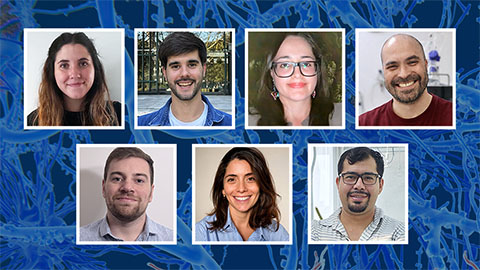
2026 PROLAB awardees announced
Each of the seven awardees will work in labs across Canada and the United States and will receive $7,000 to fund travel and living expenses.
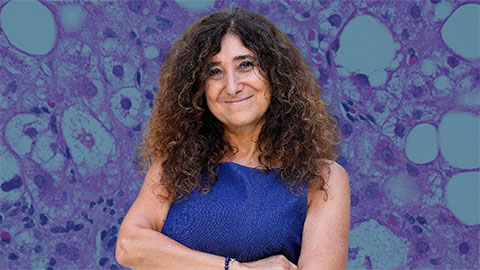
Uncovering the molecular roots of fatty liver disease
Physician–scientist Silvia Sookoian discusses her path from hepatitis C care to MASLD research, her use of multi-omics to study steatotic liver disease, and how lipid metabolism and genetics are reshaping understanding of MASH and liver health.
Kimble honored for lifetime achievement in genetics
She received the 2026 Thomas Hunt Morgan Medal and will be honored with a dedicated online profile and seminar.
Janetka named distinguished professor
Washington University awarded him the inaugural Carl Frieden Distinguished Professorship.
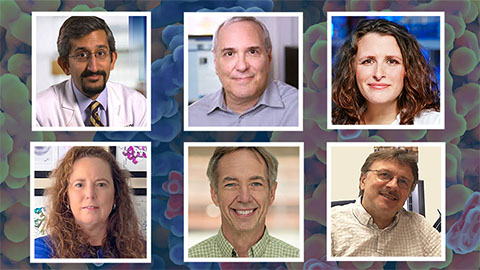
ASBMB members receive ASPET awards
The American Society for Pharmacology and Experimental Therapeutics awards Simone Brixius–Anderko, Paul Insel, Sudarshan Rajagopal, Emily Scott, Alan Smrcka and Jürgen Wess for their excellent research and mentoring work in pharmacology.
Kozul honored by Washington University
She received the 2025 Elliot L. Elson Education and Training Award.