
Soldati–Favre honored for research on Toxoplasma gondii
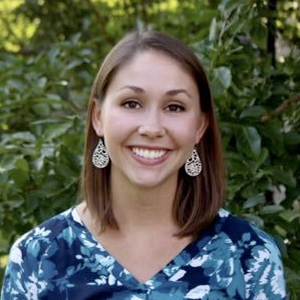
Dominique Soldati–Favre, a professor at the University of Geneva, has won the American Society for Biochemistry and Molecular Biology’s 2019 Alice and C.C. Wang Award in Molecular Parasitology. Soldati-Favre is honored for her outstanding work in Toxoplasma gondii invasion and egress.
“Alice and C.C. Wang paved the way of my education in parasitology through the insightful Bay Area Parasitology Clubs at the time of my postdoctoral training at Stanford. I am deeply honored and grateful to receive this award that I wish to share with all the talented collaborators who have built fantastic teams around me over the years. In sweet memory of C.C.’s big smile.”
— Dominique Soldati−Favre
Soldati–Favre’s research group studies intracellular parasites, specifically members of Apicomplexa, to understand how they cross biological barriers during invasion. Apicomplexan parasites cause a number of diseases in humans and animals, such as malaria, toxoplasmosis, cryptosporidiosis and coccidiosis. To address this disease burden, Soldati–Favre’s group investigates Toxoplasma to discover the mechanisms involved in host cell attachment, invasion and intracellular survival.
After obtaining her Ph.D. in 1990 from the University of Zurich, Soldati–Favre worked as a postdoctoral fellow in John Boothroyd’s laboratory at Stanford University School of Medicine. While studying Toxoplasma there, she was the first researcher to develop methodologies to apply reverse genetics in this parasite.
“Dr. Soldati–Favre is an outstanding scientist whose work has consistently broken new ground,” Boothroyd wrote in a letter of support for the award nomination. “The field of parasitology would not look the way it does were it not for her and her lab’s key contributions.”
Soldati–Favre returned to Switzerland in 2004 to build her laboratory at the University of Geneva. Seminal contributions from her research career include the establishment of a tight inducible system to study the function of essential genes in apicomplexan parasites and the characterization of the molecular machine termed “the glideosome” that powers motility and invasion.
Recently her group has unraveled the central roles played by aspartyl proteases that act as key maturases for secreted proteins involved in subversion of host cellular functions or in invasion and egress. Her laboratory also contributed to some studies on the metabolic pathways hosted by two endosymbiotic organelles, the mitochondrion and the relic of a plastid called the apicoplast, and conducted exciting cell biology projects on the mechanism of organelles biogenesis and inheritance as well as on cell–cell communication.
In addition to her research contributions, Soldati–Favre has served in editorial roles for several major journals in her field, including PLoS Pathogens and Cell Host & Microbe, and as editor of parasitology in Molecular Microbiology. Among her many awards and honors, Soldati-Favre was a Howard Hughes Medical Institute junior and senior International Research Scholar, nominated as a European Molecular Biology Organization member in 2011 and elected in 2014 as a member of the Swiss Academy of Medical Sciences. She currently serves as the vice dean for basic research of the faculty of medicine at the University of Geneva.
Henri Bounameaux, dean of the faculty of medicine at the University of Geneva, nominated Soldati–Favre for the award, writing, “Dominique is unanimously recognized among her peers as one of the most gifted Swiss scientists of her generation.”
Soldati–Favre will receive her award during the ASBMB annual meeting at the Experimental Biology 2019 conference in Orlando, where she will deliver an award lecture titled “The ins and outs of Toxoplasma invasion and egress” at 2:30 p.m. April 8 in room W307AB at the Orange County Convention Center.
Enjoy reading ASBMB Today?
Become a member to receive the print edition four times a year and the digital edition monthly.
Learn moreGet the latest from ASBMB Today
Enter your email address, and we’ll send you a weekly email with recent articles, interviews and more.
Latest in People
People highlights or most popular articles
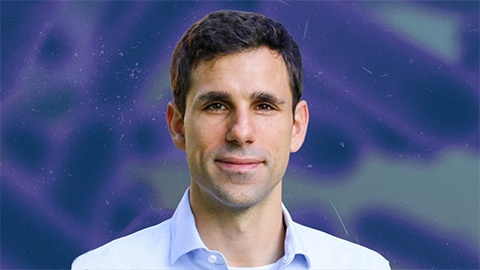
de la Fuente honored for AI research
The award will support the development of an AI system called ApexMol, a 3D structure–informed, agentic large language model designed to create new biomolecules.
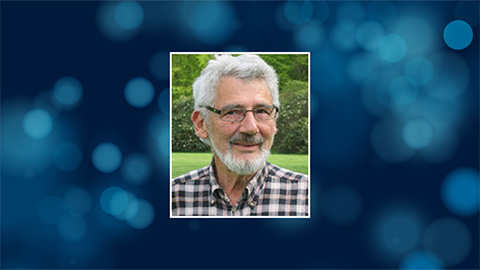
In memoriam: Peter Roepstorff
He was a leading researcher in biological mass spectrometry, mapped protein function in living organisms and was an ASBMB member for 19 years.
Flipping lipids and slime molds
A dull first job nearly pushed JBC associate editor Todd Graham out of science. Then a slime mold project changed his path. Now, he studies membrane biology and reflects on discovery, persistence and mentoring through uncertainty.
ASBMB members receive RNA Society awards
The RNA Society awards Brenda Bass, Can Cenik and Karin Musier–Forsyth for their achievements in RNA research and innovation. Winners will be recognized at the closing awards ceremony of the RNA 2026 annual meeting.
In memoriam: Richard L. Cross
He studied the enzymatic mechanisms of ATP synthase and served on the editorial board of the Journal of Biological Chemistry for 24 years.
A chance encounter with the lab
Payton Stevens never planned to become a pancreatic cancer researcher. A temporary job set him on a path from rural Kentucky to leading research on Wnt signaling and metastasis, where he now pairs discovery with mentorship and science advocacy.