
Designing scientific careers, not just experiments

You can’t live your dreams if you don’t know what they are or how to reach them, yet universities often focus on rigorous science training for their PhD students and postdocs, neglecting intentional career planning. Many early-career scientists then face challenges as they come to the end of their training, with little preparation for how to build the next phase of their careers, or even how to start thinking about what they want.
In response, educators and institutions are developing more intentional, structured approaches to career preparation.
myIDP: Addressing the need
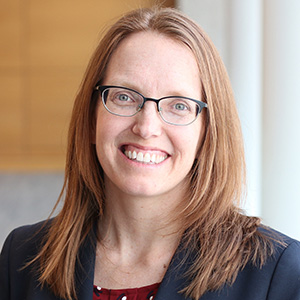
Cynthia Fuhrmann is an associate professor in the RNA Therapeutics Institute at the University of Massachusetts Chan Medical School. She has designed and implemented career preparation resources for two decades and conducts research on the pedagogy of career preparation.
Fuhrmann co-created myIDP, the Individual Development Plan for scientists, an online career planning tool hosted by the American Association for the Advancement of Science.
“University leadership is recognizing that we need to be more intentional about the career preparation of our trainees,” Fuhrmann said. She said career preparation should help young scientists see themselves as whole professionals who can contribute to the scientific ecosystem in many ways, not only as professors at research-intensive institutions.
Fuhrmann began developing myIDP with her trainee experience in mind. “I saw that it would have been very helpful to have more structured ways to think about what we enjoy doing, or what's most rewarding or important to us; things that we might not really talk about as much,” she said. “And then, crucially, to actually write down explicit goals.”
myIDP is designed to guide users through this process. Participants first take stock of themselves by ranking over a hundred science-related skills and interests, along with life and work values.
Next, the tool synthesizes this information to generate a wide-ranging list of science-related careers that may align with each user’s unique combination of skills and interests. Users are then encouraged to explore these possible paths and work with mentors to set specific, actionable goals.
They reassess their progress annually and adjust their plans as needed.
Career Architect: An alternative approach
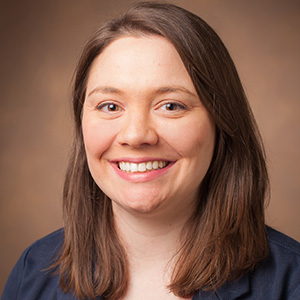
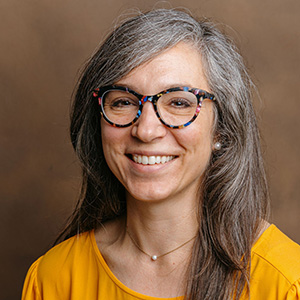
Angela Zito and Kate Stuart are assistant and associate directors, respectively, of the Biomedical Research Education and Training, or BRET, Office of Career Development at Vanderbilt University. They identified the same need for deeper introspective career preparation and pioneered a semester-long program called Career Architect to help early-career scientists design life plans.
Zito conceived of the course by combining elements of the book Designing Your Life, written by the founders of the Stanford Life Design Lab, where she’d taken a course, and combining them with the Clifton StrengthsFinder assessment, for which Stuart and Zito are certified coaches.
“We melded the two together because it's all about finding yourself and what values you have and then applying that to where you want to go with your career and with your life,” Zito said. “I saw it as a good steppingstone for grad students.”
Their course first analyzes each participant’s strengths, similar to the IDP, to help them understand themselves. The course then uses the Designing Your Life framework to guide self-discovery through activities such as graphing how rewarding daily tasks feel or identifying moments of flow.
Participants also write statements about what they believe the purpose of employment is and what constitutes a good life.
“A lot of people have said, ‘Oh, I've never really sat down and actually thought about that,’” Stuart said. She said many people have ideas about the meaning of work and life in the back of their minds, but intentionally writing them down can be eye-opening, especially when classmates produce wildly different statements.
The course then walks participants through networking strategies, career exploration and actionable planning, all through discussion and brainstorming with fellow students. One encouraged strategy is “prototyping” career ideas through small, low-risk activities before committing to a major change.
Toward deeper career preparation
To effectively plan a career, a person needs to know who they are, what they are good at, what they value in life, and what kind of careers align with those qualities. It also requires identifying next steps to learn more, gain experience, and make meaningful progress toward long-term career and life goals.
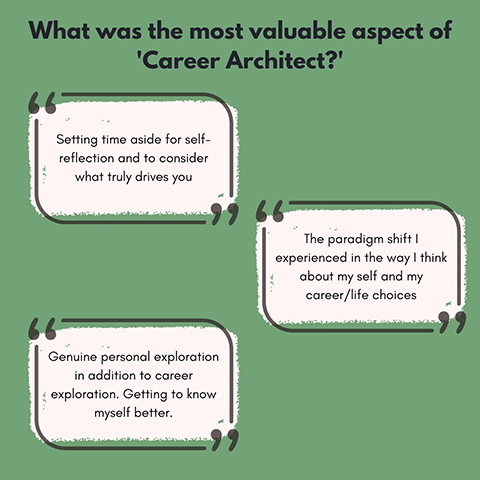
myIDP and the Career Architect program both address all stages of this process, from thinking deeply about your life and where you get meaning and happiness, through how to put this new self-knowledge into practice. This deep approach complements broad events such as career fairs, which can introduce students to potential career options.
Fuhrmann stressed that exposing students to career options alone is not enough. “Identifying one’s career interests is a complex process. For many trainees, it means re-imagining themselves in a role that may be quite different from the academic roles they are used to or what they had originally anticipated. And then there is the question: how do I get there?”
Research shows that individuals who use strategies to set and pursue career goals are more successful by several measures than those who do not. While long-term follow-up data on the effect of IDP use is still in progress, in a 2014 study, 70 percent of postdocs using an IDP reported that the tool helped with their career planning.
As the benefits of holistic career preparation become clearer, these approaches are spreading. The Stanford Life Design Lab now reaches students and staff at institutions in nearly all 50 states and worldwide, and myIDP is used by more than 400,000 scientists.
Beyond optional career preparation
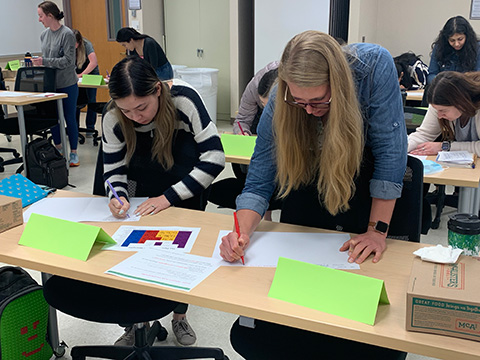
However, even the strongest resources have a common limitation: many trainees seek them out too late. “I wish people would start sooner,” Stuart said.
Fuhrmann echoed that concern, recalling graduate students who sought guidance only months before finishing their degrees. “They would say, ‘I’m a couple of months away from graduating, and I’m just wondering, how do I learn more about these types of jobs?’” she said.
Recent Ph.D. graduates may already be familiar with one way this pitfall is being addressed: many programs now require trainees to complete an IDP. Major training grants expect trainees to complete an IDP, and many PhD programs require it regardless of funding.
However, the value of creating an IDP depends largely on the effort and thought invested. Rushing through to check a box, while better than nothing, limits its usefulness.
Fuhrmann addressed this issue, too, by piloting an IDP-centered career preparedness course required for all third-year Ph.D. students at UMass Chan, which integrates peer discussion and in-person guidance.
“There was pushback at first,” Fuhrmann said. Students were initially reluctant to devote time to the course, but in end-of-term surveys, students wrote paragraphs about how helpful it actually was. It gave them confidence in their ability to build their career, and discussions with their peers were productive and made them feel less alone in their journeys.
Do you want to implement a course like Career Architect or the IDP at your institution?
Fuhrmann directs Professional Development Hub, pd|hub, an ASBMB-supported initiative filled with evidence-based usable modules that mentors and career offices can use to help teach about career prep.
The Life Design Lab offers courses for universities.
The Graduate Career Consortium also provides resources and a community for those in the career development field.
Enjoy reading ASBMB Today?
Become a member to receive the print edition four times a year and the digital edition monthly.
Learn moreFeatured jobs
from the ASBMB career center
Get the latest from ASBMB Today
Enter your email address, and we’ll send you a weekly email with recent articles, interviews and more.
Latest in Education
Education highlights or most popular articles

Lab coats and lounge chairs
ASBMB’s director of public affairs shares practical tips for talking about science outside the lab, from avoiding jargon to crafting an effective elevator pitch that builds curiosity and trust in scientific research.
Learning can be fun: Gaming anatomy and physiology
Instructors explore how gamification and active learning transform student engagement and retention. They convey how emotion, interaction and design can make even rigorous subjects more effective and memorable.
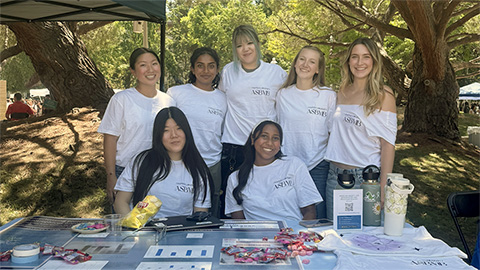
ASBMB recognizes Chapman as 2026 outstanding student chapter
The group, led by Cedric Owens, is being honored for its commitment to scientific engagement, mentorship and community building, creating meaningful opportunities for students in biochemistry and molecular biology.

Mentorship and uncertainty: Lessons from Telemachus
A biochemistry educator reflects on mentorship through the Greek story of Telemachus, showing how embracing uncertainty, failure and curiosity can transform teaching.
Embracing the twists and turns along the educator pathway
A biochemistry educator reflects on the challenges of early faculty life, describing how evidence-based teaching, cross-disciplinary collaboration and classroom challenges shaped her growth.
Redesigning with students in mind
Assistant professor reflects on how the shift to online teaching revealed gaps in points-based grading and led to a redesign centered on transparency and student growth.