
Lab coats and lounge chairs
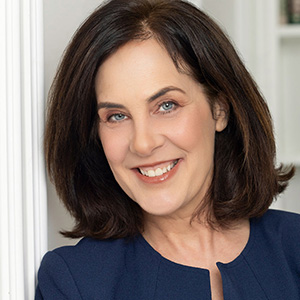
By the time you read this, Memorial Day will be upon us, which is the unofficial start to summer. We can all look forward to cookouts, pool parties, picnics and more.
Inevitably, someone will ask you about what you do for work. This is an amazing opportunity to convey the exciting science taking place in your lab! Most nonscientists don't often have the opportunity to talk directly with a scientist. They are eager to understand advances in areas such as heart disease, cancer and Alzheimer's. Your neighbors may also be wary of scientists whom they feel may have misled them on the COVID-19 vaccine. Think of this incredible opportunity you have to replace confusion or indifference with genuine curiosity and excitement.
ASBMB has resources to help you craft your approach! Our science outreach site has information on how to effectively communicate your science.
Here are some key recommendations for you.
- Skip the jargon. If someone asks what you do, don't say you study “lipid-assisted folding in membrane proteins.” That's fine at the lab water cooler, but at a backyard picnic, you'll lose them in three words.
- Focus on why it matters, not how it works. Tell them that you study biological structures that are misshaped in diseases like Parkinson’s, Alzheimer’s and certain cancers. You are trying to understand why.
- Make it personal. Connect your research to a disease, a patient population or a problem people recognize.
- Find a good analogy. A well-chosen comparison can do more work than a paragraph of explanation. For example, when a building goes up, workers use scaffolding to hold things in place while the structure comes together. Lipids act like scaffolding for membrane proteins — temporary support that makes sure everything ends up exactly where it needs to be.
Put all of this together, and you've got the foundation of an elevator speech. An elevator speech can be used everywhere: at conferences, networking events, the bar and even at the neighborhood cookout. Basically, whenever you hear “What do you do for a living?” or “What is your research on?” it is time to use your elevator pitch. You should be able to convey a sense of what you do and the exciting potential of your research in 2 to 3 minutes. ASBMB created this quick five-minute video that gives you a high-level overview of how to prepare an elevator speech.
If you have more interest in how to become an effective science communicator, ASBMB offers The Art of Science Communication course. The current course is about to start, but you can join the mailing list for future course information.
The ASBMB staff are always available to help you craft your elevator pitch. You can contact the public affairs team at publicaffairs@asbmb.org, and we will prepare you just in time for that neighborhood cookout!
Enjoy reading ASBMB Today?
Become a member to receive the print edition four times a year and the digital edition monthly.
Learn moreGet the latest from ASBMB Today
Enter your email address, and we’ll send you a weekly email with recent articles, interviews and more.
Latest in Policy
Policy highlights or most popular articles

And they’re off: Budget season begins in Congress
ASBMB’s director of public affairs explains the federal budget process after the president’s proposal, highlighting proposed cuts to science agencies, next steps in Congress and how ASBMB will advocate for research funding and mobilize members.
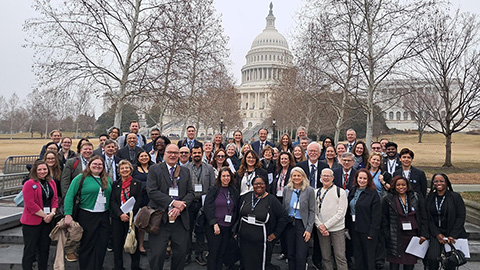
ASBMB members advocate for funding on Capitol Hill
In more than 120 meetings with lawmakers, 50 scientists called for sustained investment in NIH, NSF and DOE research programs.
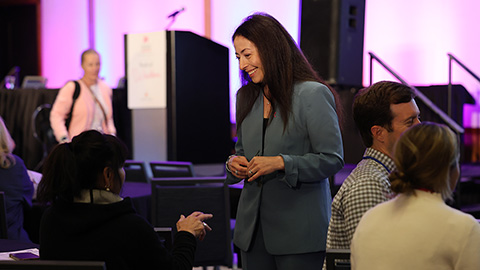
Women’s health cannot leave rare diseases behind
A physician living with lymphangioleiomyomatosis and a basic scientist explain why patient-driven, trial-ready research is essential to turning momentum into meaningful progress.

Building a stronger future for research funding
Hear from Eric Gascho of the Coalition for Health Funding about federal public health investments, the value of collaboration and how scientists can help shape the future of research funding.
Councilors advocate for science on Capitol Hill
ASBMB Councilors meet with their elected officials to advocate for basic scientific research funding and training the next generation of scientists.
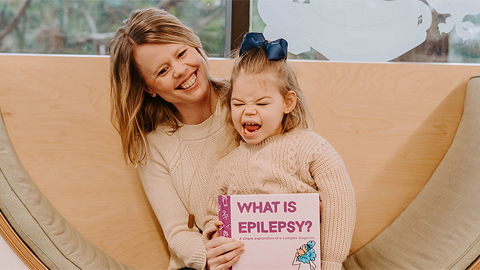
Hope for a cure hangs on research
Amid drastic proposed cuts to biomedical research, rare disease families like Hailey Adkisson’s fight for survival and hope. Without funding, science can’t “catch up” to help the patients who need it most.