
ASBMB members advocate for funding on Capitol Hill

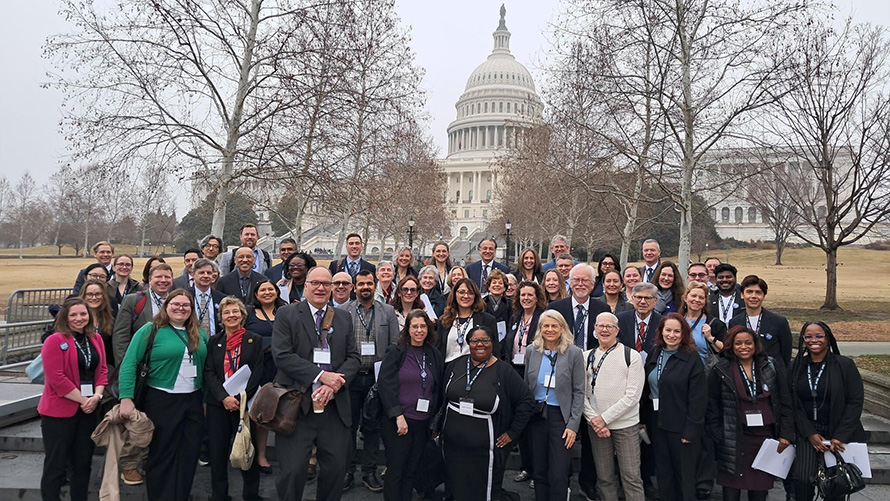
On March 6, more than 50 members of the American Society for Biochemistry and Molecular Biology convened in Washington, D.C., for the society’s annual Capitol Hill Day ahead of the 2026 Annual Meeting. They met with lawmakers and staff to call for increased federal investment in basic science via strong funding for the agencies that power U.S. scientific innovation.
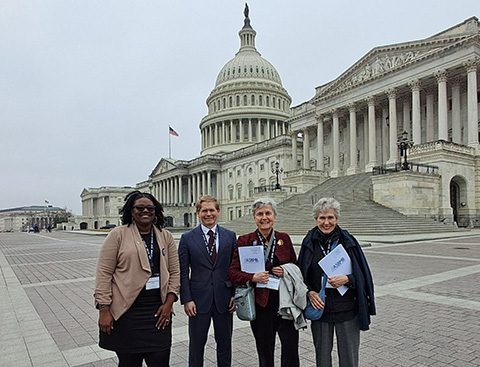
Over the course of the day, ASBMB members held more than 120 meetings with lawmakers and congressional staff, sharing firsthand perspectives on how federal research funding supports scientific discovery, workforce development and local economies.
“Capitol Hill Day is an opportunity for scientists to share directly with policymakers how federally funded research impacts their work, their institutions and their communities,” ASBMB CEO Mona Miller said. “Those conversations are essential to ensuring science remains a national priority.”
In conjunction with Hill Day, ASBMB launched its annual letter-writing campaign to help researchers across the country make their voices heard. These efforts will continue throughout the year, and you can learn more by visiting ASBMB's Advocacy Action Center.
Strengthening the research enterprise
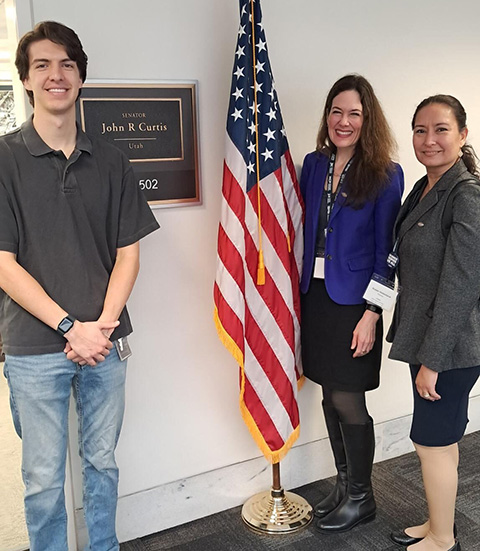
ASBMB advocates told lawmakers that federal investment in basic science research is essential for maintaining the United States’ leadership in scientific discovery and innovation.
They warned that instability in research funding and training programs can disrupt scientific progress and make it harder to retain talented scientists in the U.S.
“Uncertainty in research funding has real consequences for scientists and institutions,” said Kevin Gardner, distinguished professor and director of the Structural Biology Initiative at the City University of New York’s Advanced Science Research Center and chair of ASBMB’s Public Affairs Advisory Committee. “When support becomes unpredictable, it can delay projects, limit opportunities for trainees and really challenge sustaining the research environment that drives discovery.”
Advocates also highlighted the importance of supporting the next generation of scientists through federal training programs. These programs provide critical opportunities for students and early-career researchers to gain hands-on research experience and pursue careers in science.
“I’m advocating for continued funding for research training programs,” Jennifer Roecklein–Canfield, professor of chemistry at Simmons College and ASBMB fellow, said. “These programs allow scientists like me to train the next generation, giving students the chance to grow as future researchers.”
Advocating for scientific research
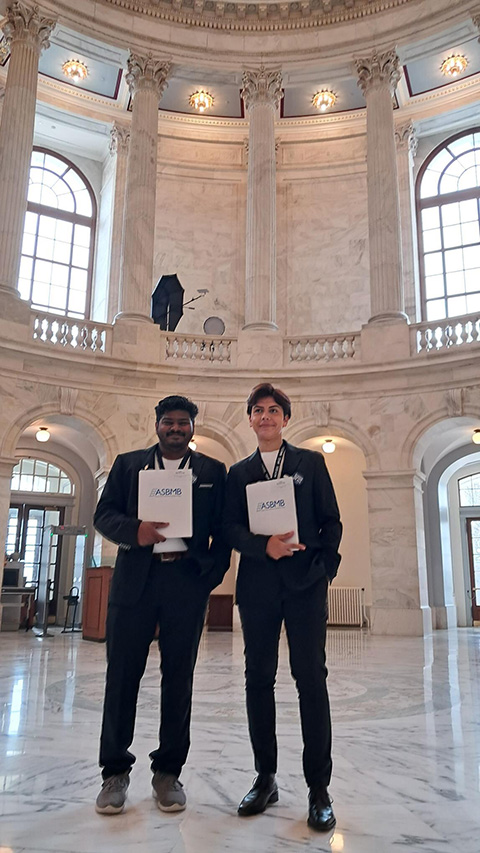
ASBMB’s Capitol Hill Day came at a pivotal moment for the research community as policymakers consider federal funding priorities for the coming fiscal year.
In meetings with congressional offices, ASBMB members advocated for strong federal funding for key science agencies and programs that support basic research across the country.
ASBMB’s fiscal year 2027 appropriations requests include:
- $51.3 billion for the National Institutes of Health to support its intramural and extramural research and training programs.
- $9.9 billion for the National Science Foundation to support foundational research in all scientific disciplines and future innovators.
- $9.5 billion for the Department of Energy’s Office of Science to support cutting-edge research at its programs, including 17 national laboratories.
Scientists also urged lawmakers to strengthen federal investments in basic science research and research training programs to keep pace with international partners and competitors.
“I feel fortunate to have benefited from decades of government investment in research that came before me,” Anne–Frances Miller, professor of chemistry at the University of Kentucky and member of ASBMB’s Publications Committee, said. “But I’m concerned that future generations may not have the same opportunities if we don’t sustain that commitment and keep pace globally.”
Ensuring thoughtful policy changes
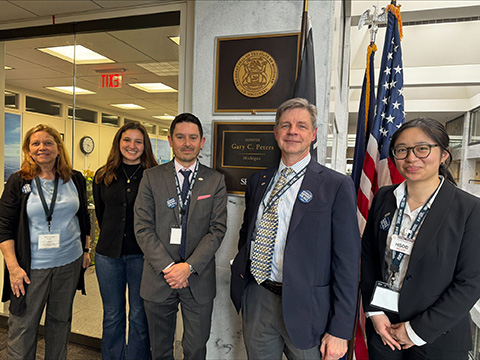
In addition to funding priorities, advocates emphasized the need for thoughtful implementation of federal science policies and any potential agency restructuring.
ASBMB members urged Congress to make any changes to federal science agencies through a deliberate and transparent process that includes congressional authorization and meaningful input from the scientific community.
Advocates also emphasized that proposals for multi-year funding approaches must include clear transition plans and adequate resources to ensure research programs can continue without disruption.
Beyond the Hill
ASBMB’s Capitol Hill Day is part of a broader effort to empower scientists to engage in advocacy and communicate the value of scientific research.
Members across the country can continue these efforts by writing to their members of Congress, scheduling meetings with lawmakers in their district offices and sharing their stories about the impact of science. For more information, visit ASBMB’s Advocacy Action Center.
“Advocating for biomedical research means showing policymakers and the public how this work, funded by taxpayer dollars, benefits their communities,” Amy J. Hawkins, assistant professor at the University of Utah School of Medicine and chair of ASBMB’s Science Outreach and Communication Committee, said. “Science serves us all.”
Gardner said the society will continue working with policymakers to ensure that federal investments in science remain strong.
“Every member of ASBMB has a role to play in protecting and advancing science,” Gardner said. “By sharing your stories, meeting with lawmakers and highlighting the impact of research in your communities, we can ensure that federal investment in science remains strong and that the next generation of scientists has the opportunities they deserve.”
Enjoy reading ASBMB Today?
Become a member to receive the print edition four times a year and the digital edition monthly.
Learn moreGet the latest from ASBMB Today
Enter your email address, and we’ll send you a weekly email with recent articles, interviews and more.
Latest in Policy
Policy highlights or most popular articles

Lab coats and lounge chairs
ASBMB’s director of public affairs shares practical tips for talking about science outside the lab, from avoiding jargon to crafting an effective elevator pitch that builds curiosity and trust in scientific research.
And they’re off: Budget season begins in Congress
ASBMB’s director of public affairs explains the federal budget process after the president’s proposal, highlighting proposed cuts to science agencies, next steps in Congress and how ASBMB will advocate for research funding and mobilize members.
Women’s health cannot leave rare diseases behind
A physician living with lymphangioleiomyomatosis and a basic scientist explain why patient-driven, trial-ready research is essential to turning momentum into meaningful progress.
Building a stronger future for research funding
Hear from Eric Gascho of the Coalition for Health Funding about federal public health investments, the value of collaboration and how scientists can help shape the future of research funding.
Councilors advocate for science on Capitol Hill
ASBMB Councilors meet with their elected officials to advocate for basic scientific research funding and training the next generation of scientists.
Hope for a cure hangs on research
Amid drastic proposed cuts to biomedical research, rare disease families like Hailey Adkisson’s fight for survival and hope. Without funding, science can’t “catch up” to help the patients who need it most.