
Don’t game the system — be the system
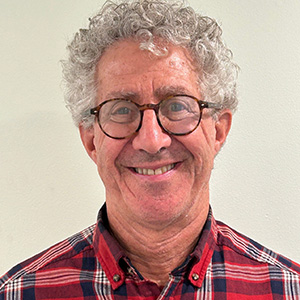
Who here is tired of exchanging tales of woe about grants not funded? Most of us, I suspect. Here I will describe how a group came together to develop a plan to give lipid-related grants a fair shake while we work to increase overall funding.
Lipid researchers often feel that their grants get dinged because of a lack of expertise in lipid biology in study sections. We know that when you are an expert in a field, you have a greater appreciation for the contributions that a particular grant can make to advance the field. With this in mind, colleagues and I started an initiative to ensure that grants with a lipid focus get the expert review that they (and all grants, really) deserve.
It is lost in the mists of time exactly when and where the idea nucleated, who was there, and why I could never get the hang of the secret handshake. But in time, a notion congealed — like a vat of warm triglyceride cooling in the breeze — that instead of kvetching about the lack of lipid expertise on the study sections, the lipid community could have a role in helping provide that expertise to the National Institutes of Health and other granting bodies.
And so the Lipid Research Division, or LRD (pronounced “lard,” of course), was born. Here, I will focus on how we have leveraged the LRD to help with grant review. The effort showcases how the LRD serves as an important voice for the lipid community within the American Society for Biochemistry and Molecular Biology.
The first step was to establish a membership. The staff of the ASBMB has been phenomenal throughout this process, both in welcoming the LRD as part of the ASBMB and in providing the information technology expertise and access to their membership database that were essential. We queried the ASBMB membership for interest in joining the LRD and also included non-ASBMB members to lasso them into the ASBMB fold. We established an LRD membership list of several hundred members.
The next step was crucial. We engaged with staffers at the Center for Scientific Review at the NIH. Our pitch was simple: We want to help provide expertise, not push for more funding for lipid grants.
Several LRD steering committee members already had informally spoken with study-section scientific review officers to see if they were receptive to getting suggestions for lipid-centric reviewers. The response was overwhelmingly positive. SROs have so much to deal with. Imagine having to tell a study section full of caffeine junkies that coffee would no longer be available at the meetings. Horrors! Only slightly less onerous is ensuring that each study section is populated by the requisite expertise to review 80 grants on diverse topics using a variety of techniques. SROs do heroic duty by attending national meetings, going through meeting programs, looking through the literature and querying their contacts. They were glad for the help.
Encouraged, we went right to the top, speaking with Richard Nakamura, who is the director of CSR. He thought the idea was sound and guided us as to the qualifications they look for in reviewers and what information they could use that would help SROs find the expertise they need.
With the help of Ed Marklin, the IT wizard at the ASBMB, we used the awesome power of Survey Monkey to see who in the LRD fit the CRS’s criteria. Close to 50 of the LRD membership had NIH-eligible reviewing experience but currently were not serving. This was a treasure trove of potential lipid expertise. We transmitted the list to one of Nakamura’s advisers at the CSR, Christine Melchior, who since has customized the list for SROs for whom she is responsible.
We are not done. We also are thinking of granting bodies outside of the NIH, such as the National Science Foundation, Department of Defense and disease-specific foundations, that could use our list. We also know there are lipid experts out there who are eluding their NIH duties. We are tracking them down.
Which brings me to my last point, which is about participating in NIH review. The review process is only as good as the reviewers who wade through the grants. If an SRO invites you to review, even though you absolutely do not have the time, make some. Give up sleeping or eating: There is plenty of time for that after you retire. See you at study section. I will bring the coffee.
Enjoy reading ASBMB Today?
Become a member to receive the print edition four times a year and the digital edition monthly.
Learn moreGet the latest from ASBMB Today
Enter your email address, and we’ll send you a weekly email with recent articles, interviews and more.
Latest in Science
Science highlights or most popular articles
Glaucoma model links immune signaling to disease progression
Researchers at Duke University determine genetic variations that could increase the risk of developing glaucoma.
Uncovering the molecular roots of fatty liver disease
Physician–scientist Silvia Sookoian discusses her path from hepatitis C care to MASLD research, her use of multi-omics to study steatotic liver disease, and how lipid metabolism and genetics are reshaping understanding of MASH and liver health.
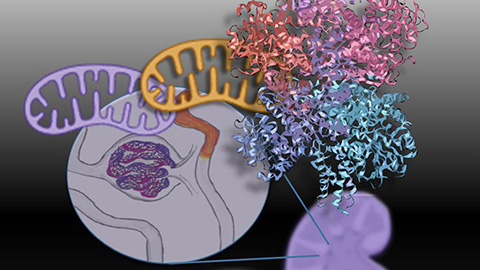
Mitochondria shape kidney cell function
Researchers at the University of Washington, Seattle present the first quantitative comparison of mitochondrial interactomes between two epithelial cell types in the kidney.
Long-chain polyunsaturated fatty acids linked to postoperative delirium risk
Researchers show that altered lipid metabolism may contribute to postoperative delirium, a condition linked to increased risk for long-term cognitive decline. The study explores potential disease mechanisms, which have yet to be understood.
Glycosylation patterns across antibody isotypes distinguish tuberculosis states
Researchers at Taipei Medical University present the first site-specific glycosylation analysis of immunoglobulins in elderly tuberculosis patients.
Blood glycome possibly predicts lifespan
Researchers at the University of Santiago de Compostela show that total serum N-glycome can predict mortality independent of traditional risk factors.