
Building on ASBMB’s strong foundation together
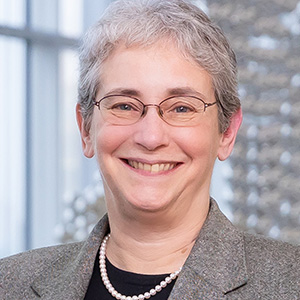
It is a great pleasure to write to you, fellow members of the American Society for Biochemistry and Molecular Biology, in my new role as president.
I’ve been a member of ASBMB since 1988. I joined shortly after earning my Ph.D. and starting my first academic position. In the decades since then, my career has included several moves around the country, but throughout, ASBMB has been a critically important constant. I’ve been delighted to serve in many roles over the years, seeing the society’s strengths from many vantage points, including through editorial board service and on the meetings and finance committees, among others.
These are exciting times for ASBMB and for our field, and I am honored to have been entrusted by you to lead the society at a time of so much scientific and organizational promise, as well as some challenges in our larger scientific society environment. As we all know too well, it has been a period of dramatic challenges and change in the larger community, with COVID-19, funding challenges and a vital focus on equity in health and research among those at the forefront.
Within the professional organization environment, all societies face dynamic emerging trends in publishing, funding, membership, education, and diversity, equity, accessibility and inclusion.
Yet, ASBMB has met these moments with strength and resilience, and I am so proud of what we’ve maintained and even built on through these years. The values-driven decision to move to open access was a particularly important moment for the society. And while it has changed many facets of our publishing work, I am deeply grateful for the leadership our editors and scientific journals continue to demonstrate in publishing outstanding fundamental science. We introduced our own Annual Meeting, which showcases emerging discoveries in biochemistry and molecular biology, writ large.
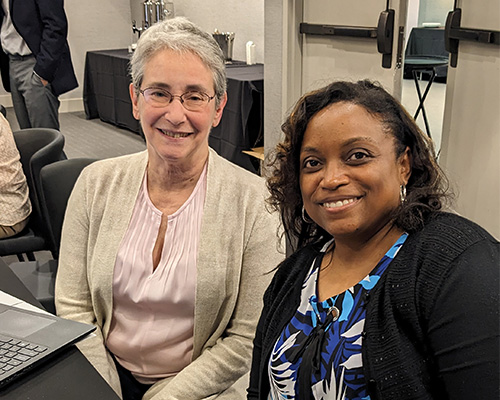
ASBMB’s advocacy work has grown as well — serving as a leading voice for basic science funding, a top ASBMB priority — while adding greater attention to the needs of emerging generations of scientists and the importance of ensuring the greatest possible access to the research workforce pipeline. Our education work also continues to shine, reaching across all career stages, including early career scientists and graduate and undergraduate students.
One of the benefits of having been with ASBMB for so long and having been involved in such different ways is being able to recognize just how far we have come. But, what motivates me to keep serving isn’t our past achievements, though there are many. What keeps me engaged is our tremendous potential.
It’s that potential — the possibilities! — that I want to focus on during my term as president.
In the coming weeks, we’ll be launching a strategic planning initiative to guide the society’s work over the next several years. With input from the membership, committees, editorial boards, fellows and more, we will seek to update ASBMB’s vision for the coming decade, affirm our values and set primary goals and objectives for three to five years. Our outcome will be a forward-looking, sound and sustainable plan that can guide our work proactively and help us be nimble in light of continued evolution in our larger environment.
Our committees will play an important role in this process. They know the work we do deeply, and they execute it with passion and care. ASBMB’s leadership is eager to hear their top priorities, concerns and ideas.We are fortunate that we are starting this planning period from a position of strength. We are 11,000 members strong. We are leaders in the open-access dissemination of research, standard setting for data collection and accessibility, excellence in BMB education, tailored professional development and advocacy for science.
In conclusion, I am proud of how much ASBMB does and how we serve science and scientists. I am deeply grateful to members of the Council and our hardworking committee members for their dedicated efforts, which have been instrumental in driving our initiatives forward. Special thanks go to Ann Stock, my predecessor, whose strong and steady leadership over the past two years has greatly contributed to our progress.
I am honored to continue building on their accomplishments and to look to the future, working with them and our members to ensure our scientific research agenda thrives. I'm looking forward to hearing from you about what you think we do well, could do more of, and/or could do better. And I look forward to supporting the extended ASBMB volunteer leadership to set the course for a future as bright as our history.
Enjoy reading ASBMB Today?
Become a member to receive the print edition four times a year and the digital edition monthly.
Learn moreGet the latest from ASBMB Today
Enter your email address, and we’ll send you a weekly email with recent articles, interviews and more.
Latest in Opinions
Opinions highlights or most popular articles
Learning can be fun: Gaming anatomy and physiology
Instructors explore how gamification and active learning transform student engagement and retention. They convey how emotion, interaction and design can make even rigorous subjects more effective and memorable.
Mentorship and uncertainty: Lessons from Telemachus
A biochemistry educator reflects on mentorship through the Greek story of Telemachus, showing how embracing uncertainty, failure and curiosity can transform teaching.
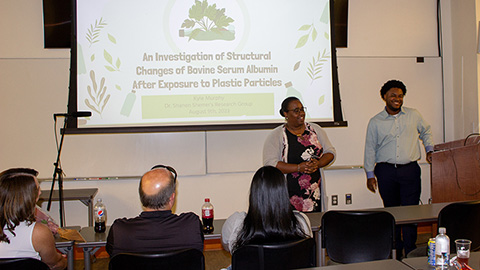
Embracing the twists and turns along the educator pathway
A biochemistry educator reflects on the challenges of early faculty life, describing how evidence-based teaching, cross-disciplinary collaboration and classroom challenges shaped her growth.
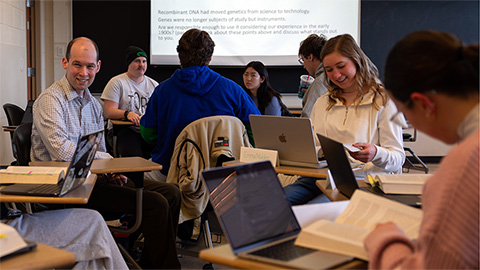
Redesigning with students in mind
Assistant professor reflects on how the shift to online teaching revealed gaps in points-based grading and led to a redesign centered on transparency and student growth.
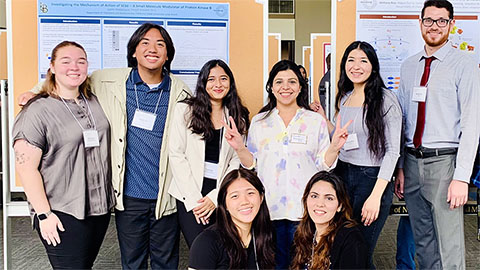
Teaching beyond information transfer
Educator reflects on moving beyond lectures to create a biochemistry classroom centered on engagement, transparency and student ownership, showing how small shifts like “student hours” and active learning can transform understanding.
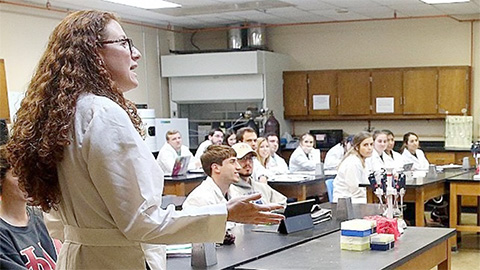
Mayday! Lessons from cellular dysfunction and group work dynamics
An upper-level biology course revealed that strong science doesn’t guarantee strong teamwork. One instructor shares how failed group dynamics reshaped their approach, leading to more structured, collaborative and effective student learning.