
Retracting publications doesn’t stop them from influencing science

What do studies on omega-3 fatty acids, hydroxyethyl starch, and COVID-19 have in common? The resulting scientific papers were all retracted.
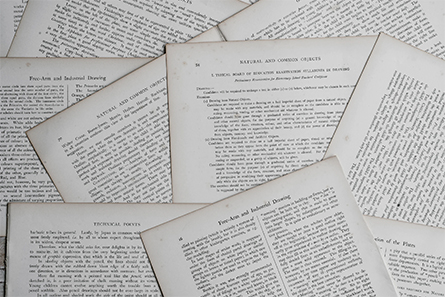
Nevertheless, they have all been cited countless times since then. As an eraser of mistakes in scientific publishing, retraction discredits the validity of a study's claims due to flawed methodology, biased interpretation, or even fabrication of data. Unfortunately, it seems it is not so easy to erase a published study from the collective scientific consciousness. A retracted study should be a relic belonging to the virtual museum of past science – but like zombies of the scientific publishing world, they are kept alive by continued citations.
A study in Science analyzed the post-retraction citations of two COVID-19 papers originally published in The Lancet and in The New England Journal of Medicine. As both studies were linked to the same dubious database as the source of their raw data, their retractions were followed by a widespread media scandal.
Despite all the attention these studies received, researchers at Science found that they have been cited more than 100 times as support for scientific findings without mentioning their retracted status. These incorrect citations showed up in even the most prominent scientific journals, such as PLOS ONE, the Proceedings of the National Academy of Sciences, and Nature Communications. Retraction does not seem to achieve its desired effect – in fact, it seems that in the long term, retraction does not have any effect on the number of citations a paper receives.
Science is influential. Since it's used to drive medical, policy, and scientific decisions, the consequences of citing retracted studies as credible science can be dire. It is essential that both authors and publishers take care to stop citing them.
Incorrect claims, stemming from the citation of a "zombie" paper, can ripple misinformation into many more new studies. Another recent study looked at the citation patterns of a paper on the use of omega-3 supplementation for COPD patients which was retracted 11 years ago due to fraud. The authors found that 96% of papers citing the study did not mention its retracted status and 41% did so while even describing the study in detail. At this point, the spread of misinformation seems inevitable, as even the authors who take care not to cite retracted studies will trust the information and continue to cite these non-retracted papers that do cite a fraudulent study.
Keeping flawed science alive can even be life-threatening – as in the case of the fraudulent studies of the infamous Joachim Boldt with 103 retractions tied to his name to date. He supported an intravenous therapy using hydroxyethyl starch to stabilize patients during and after surgery. In independent studies on the compound, its use was linked to higher patient mortality. Unfortunately, many of his studies are still being cited today.
As well as spreading misinformation and harming patients, flawed studies can have negative societal and policy consequences too. A recent article published in Nature Communications suggested that female mentorship in academia had detrimental effects on the careers of female mentees and attacked current diversity policies in academia. Following outrage from both scientists and the public, the study was shortly retracted. As well as erroneously equating co-authorship with mentorship, it also disregarded gender discrimination in science. However, if retraction cannot fully discredit the study as it should, the efforts to reach greater gender equality in academia will be damaged.
The root cause of the issue is often simple – many scientists would likely admit to having at least once copied relevant citations from another paper without reading them, just out of sheer convenience. Moreover, while the retraction notice is present on the publisher's site, it often fails to appear on other platforms, such as PubMed, making the author believe that the study is valid.
This is a major glitch in the system. We are scientists, dedicating our whole lives to painstakingly pipetting or analyzing massive databases. We should not lack the diligence to pay attention to such an important and glaring detail like whether a paper was retracted. In each and every publication, author guidelines should include that the author is needed to check all citations for possible retractions. Today numerous citation software are available to do this with ease; such as Zotero, scite.ai, and RedacTek alert users for any retracted papers in the reference list. As well as more care from authors, preventing post-retraction citations is a responsibility of publishers too. Along with double-checking the reference list of papers to be published, they should also make sure that retraction notices appear on all platforms where the study is available.

Enjoy reading ASBMB Today?
Become a member to receive the print edition four times a year and the digital edition monthly.
Learn moreGet the latest from ASBMB Today
Enter your email address, and we’ll send you a weekly email with recent articles, interviews and more.
Latest in Opinions
Opinions highlights or most popular articles

Learning can be fun: Gaming anatomy and physiology
Instructors explore how gamification and active learning transform student engagement and retention. They convey how emotion, interaction and design can make even rigorous subjects more effective and memorable.

Mentorship and uncertainty: Lessons from Telemachus
A biochemistry educator reflects on mentorship through the Greek story of Telemachus, showing how embracing uncertainty, failure and curiosity can transform teaching.
Embracing the twists and turns along the educator pathway
A biochemistry educator reflects on the challenges of early faculty life, describing how evidence-based teaching, cross-disciplinary collaboration and classroom challenges shaped her growth.
Redesigning with students in mind
Assistant professor reflects on how the shift to online teaching revealed gaps in points-based grading and led to a redesign centered on transparency and student growth.
Teaching beyond information transfer
Educator reflects on moving beyond lectures to create a biochemistry classroom centered on engagement, transparency and student ownership, showing how small shifts like “student hours” and active learning can transform understanding.
Mayday! Lessons from cellular dysfunction and group work dynamics
An upper-level biology course revealed that strong science doesn’t guarantee strong teamwork. One instructor shares how failed group dynamics reshaped their approach, leading to more structured, collaborative and effective student learning.