
Moving forward together

Another year has come and gone. Though the pandemic continues and hardships remain, this is a good time to reflect on the bright spots and, indeed, the wins of the past year — and to take note of what lies ahead of us.
In 2021, we shared new ways of meeting and teaching students where they are. We advocated for support for early-career scientists. We stood up for international collaborations and in opposition to racial profiling. We weighed in on various pieces of legislation and a proposal to create a new U.S. health research agency.
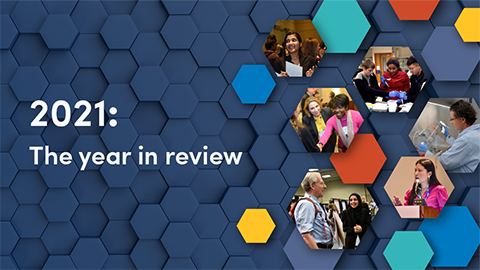
We elected new society leaders, celebrated our inaugural class of fellows, doubled our diversity scholarships and wrapped up a full year of open-access publishing.
Thanks to wide availability of effective COVID-19 vaccines, we were able to slowly and carefully return to some in-person activities.
2022 will be my last year as president of the ASBMB, and I'm excited about what’s to come. I recently presided over a meeting of the society's governing Council, at which we discussed how wonderful it will be to finally have the entire community in one place in April: to share experiences and to attend lectures and poster sessions in person. For the health and safety of our members and community, we are requiring that all attendees be fully vaccinated for COVID-19, and we will be taking into consideration state and local guidelines for mask requirements. This in-person ASBMB annual meeting in Philadelphia is sure to be a memorable event that you won’t want to miss! After so long apart, we’ve all been longing for company and connection.
The Council also discussed all the opportunities having a stand-alone meeting in 2023 will offer: more flexible scheduling, more time for specialized sessions, and more networking events designed to strengthen our relationships, invigorate our research and advance the careers of our students and postdocs. I can’t wait to share the details for this first-of-its-kind meeting later this year.
I hope you'll take a little time to browse this year’s annual report highlighting the society’s programs and impact. Our advocacy efforts, education and diversity initiatives, professional-development events and publications are all made possible thanks to your support. I think you’ll be as proud as I am of the important work being done to advance our field and support the researchers in it.
I wish you all a safe and happy holiday season and my best wishes for 2022.
Enjoy reading ASBMB Today?
Become a member to receive the print edition four times a year and the digital edition monthly.
Learn moreGet the latest from ASBMB Today
Enter your email address, and we’ll send you a weekly email with recent articles, interviews and more.
Latest in Opinions
Opinions highlights or most popular articles
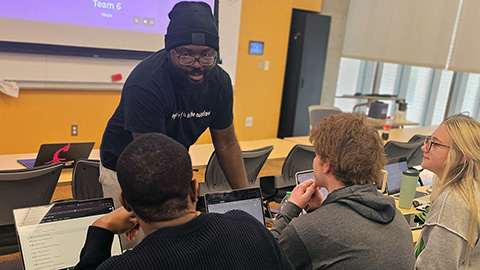
Learning can be fun: Gaming anatomy and physiology
Instructors explore how gamification and active learning transform student engagement and retention. They convey how emotion, interaction and design can make even rigorous subjects more effective and memorable.
Mentorship and uncertainty: Lessons from Telemachus
A biochemistry educator reflects on mentorship through the Greek story of Telemachus, showing how embracing uncertainty, failure and curiosity can transform teaching.
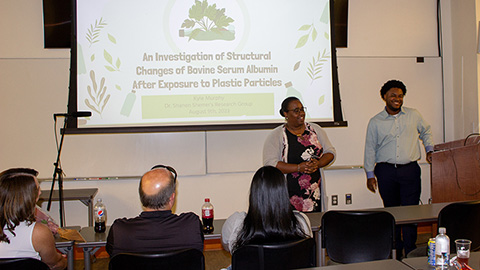
Embracing the twists and turns along the educator pathway
A biochemistry educator reflects on the challenges of early faculty life, describing how evidence-based teaching, cross-disciplinary collaboration and classroom challenges shaped her growth.
Redesigning with students in mind
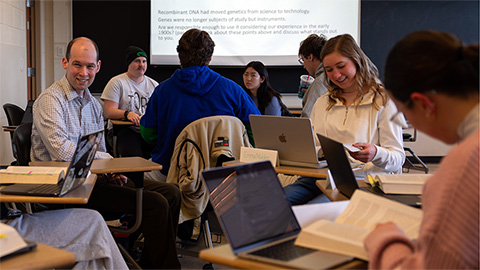
Assistant professor reflects on how the shift to online teaching revealed gaps in points-based grading and led to a redesign centered on transparency and student growth.
Teaching beyond information transfer
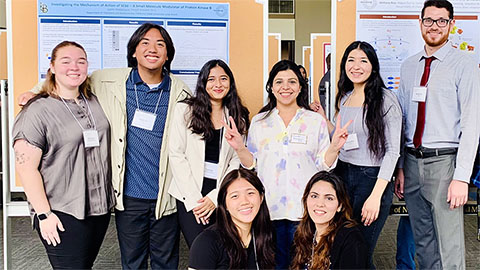
Educator reflects on moving beyond lectures to create a biochemistry classroom centered on engagement, transparency and student ownership, showing how small shifts like “student hours” and active learning can transform understanding.
Mayday! Lessons from cellular dysfunction and group work dynamics
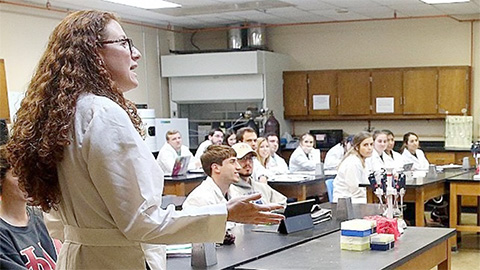
An upper-level biology course revealed that strong science doesn’t guarantee strong teamwork. One instructor shares how failed group dynamics reshaped their approach, leading to more structured, collaborative and effective student learning.