
A primer to starting grad school
Summer is here — which means many recent graduates are about to embark on a new journey in grad school. No matter what program you’re starting, the first couple weeks (and maybe months) of grad school may be a challenging transition. There can be a lot to navigate between classes starting, thinking about program requirements and possibly moving to a new city. Although everyone will have a different experience, I wanted to offer a few tips for making your first month or so go well.
Figure out the basics

First, I recommend familiarizing yourself with campus and key resources. For me, this meant walking around the campus to locate the buildings where my classes would be, my program’s offices, the library … you get the idea. I would call myself directionally challenged, so knowing exactly where I had to go before our first 9 a.m. class helped ease my mind.
I also made sure to stop by my program coordinator’s office (I’ve written before about the benefits of getting to know your program coordinator). I introduced myself again (even if you meet your coordinator at orientation, it can be a blur) and asked questions about what to expect for the upcoming semester.
I also made sure I had access to all the resources I needed for classes — my campus email, online course tools, etc. If you’re commuting to campus, make sure you know where to park. If you need accommodations, it’s a good idea to check in with the office of accommodations or the accessibility office to make sure you’re all set (and stay tuned for an upcoming article about how to seek accommodations in grad school).
The start of classes
Class structures vary by program. At my school, students across all the life sciences graduate programs started with the same semester-long core course that served as the basis of our future coursework. This intensive class was our only course during that first semester outside of departmental seminars.
I needed to get into the groove of attending classes and staying on top of the material to set the right tone for the rest of the semester. This can be challenging if you’ve been out of school and are out of the habit of studying, or if you’re used to the pace of undergrad courses. Use the first month or so to figure out what balance of studying works for you. It’s easier to stay on top of the coursework and reading instead of catching up after falling behind, so I recommend starting off with strong study habits while the material and course work are lighter.
Think about organization
While it may seem trivial early on in grad school, think about how you are going to keep your materials organized. Keeping coursework in folders or using tools such as OneNote can make studying easier.
Try out reference programs or software, find one you like and start to build your publication database. This will make it easier down the line when you are actually working on research papers.
Also, if you really want to stay on top of things, consider how you will organize your emails. By the end of grad school, I had over 10,000 emails in my inbox, and I really wished I’d been better about sorting them into folders or deleting unnecessary emails. A periodic digital declutter can help you stay organized throughout your studies.
Make and keep connections
Lastly, I recommend getting to know your fellow grad students. Study buddies help you stay accountable to a schedule, and study group resource sharing could be a valuable way to ensure you understand the course work. Even if you like to study solo, having pals to provide much-needed study breaks can be valuable. Plus, a support system of others who are going through grad school can be helpful when the going gets tough.
Remember to maintain your important connections outside grad school as well. It’s easy to get academic tunnel vision, especially when course work is intense, but balancing your school work with your non–grad-school life will help you maintain balance in the long run.
Enjoy reading ASBMB Today?
Become a member to receive the print edition four times a year and the digital edition monthly.
Learn moreFeatured jobs
from the ASBMB career center
Get the latest from ASBMB Today
Enter your email address, and we’ll send you a weekly email with recent articles, interviews and more.
Latest in Education
Education highlights or most popular articles
Lab coats and lounge chairs
ASBMB’s director of public affairs shares practical tips for talking about science outside the lab, from avoiding jargon to crafting an effective elevator pitch that builds curiosity and trust in scientific research.
Learning can be fun: Gaming anatomy and physiology
Instructors explore how gamification and active learning transform student engagement and retention. They convey how emotion, interaction and design can make even rigorous subjects more effective and memorable.
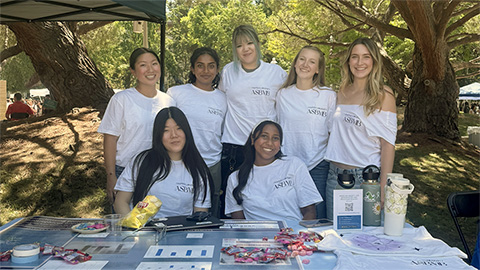
ASBMB recognizes Chapman as 2026 outstanding student chapter
The group, led by Cedric Owens, is being honored for its commitment to scientific engagement, mentorship and community building, creating meaningful opportunities for students in biochemistry and molecular biology.

Mentorship and uncertainty: Lessons from Telemachus
A biochemistry educator reflects on mentorship through the Greek story of Telemachus, showing how embracing uncertainty, failure and curiosity can transform teaching.
Embracing the twists and turns along the educator pathway
A biochemistry educator reflects on the challenges of early faculty life, describing how evidence-based teaching, cross-disciplinary collaboration and classroom challenges shaped her growth.
Redesigning with students in mind
Assistant professor reflects on how the shift to online teaching revealed gaps in points-based grading and led to a redesign centered on transparency and student growth.