

The monopoly defined: Who holds the power of science communication?
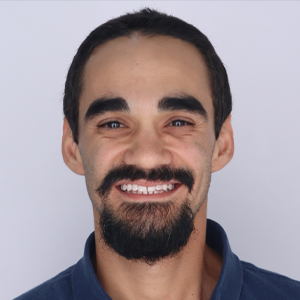
Early in 2024, I had prepared extensively for a three-minute thesis competition at my first major scientific conference in the U.S., but I was not selected to compete. While this was disappointing, I accepted the decision and focused on making the most of all the opportunities the conference offered, determined to share my research in other ways.
At the official competition, out of 12 presenters, only two were from R2 institutions, and the other 10 were from R1 institutions. And just two had distinguishable non-American accents.

Based on feedback from my lab colleagues and my own observations, I felt my talk was polished and effectively communicated my research, potentially matching or even surpassing some of the selected presentations. I was a postdoctoral fellow at the University of Texas at San Antonio, an R1 research institution. However, I am from Brazil, and I speak English with an accent.
A significant portion of internationally recognized research originates from a few wealthy nations — predominantly the U.S., China and countries in Europe. Researchers in developing countries face challenges such as limited funding, scarce resources and institutional bias. Even when their work addresses pressing issues such as public health, agriculture or climate change, they often struggle to achieve the same visibility as studies produced by more privileged institutions. This phenomenon is called affiliation bias, where research from prestigious institutions is more likely to be accepted and cited, regardless of its intrinsic quality. Language bias further exacerbates the problem.
The rise of digital platforms, including blogs, podcasts and social media, is helping to democratize science communication. With these platforms, researchers can bypass traditional gatekeepers and connect directly with the public. I’ve seen scientists from underrepresented communities build audiences and share their work through these channels, reaching people who might never have encountered their research through academic journals or mainstream media.
I follow a professor from the Federal University of Vales do Jequitinhonha e Mucuri in Brazil, who hasn’t published in top journals or participated in globally recognized conferences. She uses Instagram to share her research and has built a strong and engaged following. As a result, her research group has established collaborations with industries across Brazil, and many of her students have gone on to work as scientists at well-known companies such as Novo Nordisk.
Inspired by her example, I continued to communicate about science, contributing essays to ASBMB Today, giving talks to prospective graduate students and sharing my progress on platforms such as Instagram and Facebook.
After my disappointment at the start of 2024, life took a surprising turn. When I registered for the ASBMB Annual Meeting in San Antonio, I expected to present my work as a poster. However, to my surprise, my abstract was selected for a spotlight talk in the Enzyme Chemistry and Catalysis category, with the theme of "Cool and Novel Enzymes." The feeling was indescribable. The icing on the cake came when the abstract was published in the Journal of Biological Chemistry.
Reflecting on my experiences, I realize that breaking the monopoly on science communication requires more than new platforms. It demands a conscious effort to include diverse voices by supporting and providing mentorship for underrepresented scientists, funding outreach projects such as prioritize open-access publications that don’t rely on paywalls since many OA journals offer fee waivers or discounts for underrepresented scientists and those from low-income economies, easing the financial burden.
A shift in focus from elite institutions to a more inclusive system is needed, providing more opportunities for researchers from smaller institutions to share their work. For instance, conference organizers could dedicate specific time slots for presentations from primarily undergraduate institutions, ensuring that voices from outside R1 universities are given the attention they deserve.
The monopoly on science communication is complex but not insurmountable. By promoting diverse representation in conferences and on editorial boards, and supporting inclusive platforms, we can ensure that science serves and includes all of us.
Enjoy reading ASBMB Today?
Become a member to receive the print edition four times a year and the digital edition monthly.
Learn moreFeatured jobs
from the ASBMB career center
Get the latest from ASBMB Today
Enter your email address, and we’ll send you a weekly email with recent articles, interviews and more.
Latest in Careers
Careers highlights or most popular articles
Upcoming opportunities
The ASBMB Annual Awards celebrate researchers, educators and leaders whose work advances science and strengthens the field through innovation, mentorship, teaching and service. 📅 Nominations close June 8.
Upcoming opportunities
🗨️ Shape the conversation at ASBMB 2027 in Boston! ASBMB is seeking proposals for sessions and events that will foster collaboration, highlight exciting science and support career development across the molecular life sciences.
Upcoming opportunities
Registration is now open for this summer's Art of Science Communication course! Build your science communication skills in this 8-week online program. ➡️ Registration deadline: May 6.

Upcoming opportunities
The American Society for Biochemistry and Molecular Biology is accepting applications for the Marion B. Sewer Distinguished Scholarship for Undergraduates. Apply by April 30, 2026.
Designing scientific careers, not just experiments
Universities are rethinking how they prepare scientists for careers beyond the bench. From myIDP to Vanderbilt’s Career Architect, programs help trainees clarify values, explore options and build intentional paths forward.
Upcoming opportunities
Dive into the world of lipids! Join the ASBMB Lipid Research Division Seminar Series on April 9, 12–1 p.m. ET to hear early-career researchers explore lipid metabolism and mitochondrial biology.