
Double vision
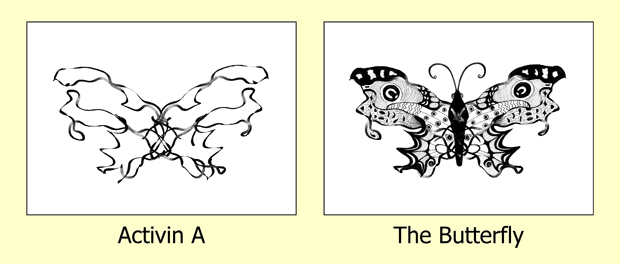
She was searching for something to contribute to a professor’s birthday symposium when she started noticing images in the protein structures he had published: a birthday present, then a cat bringing a birthday cake. She made a simple animation of the images using PowerPoint so that she could contribute something to the celebration. “It was not very artistic in the beginning,” she recalls.
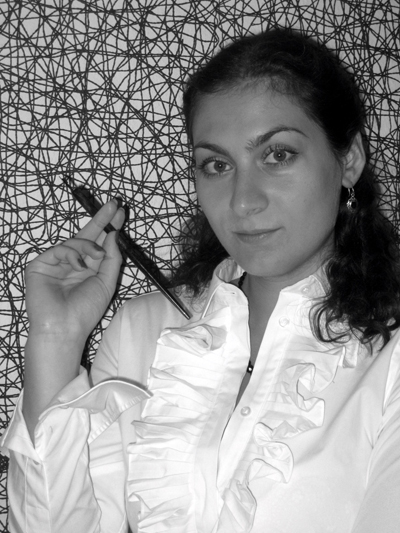
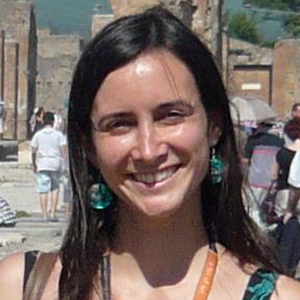
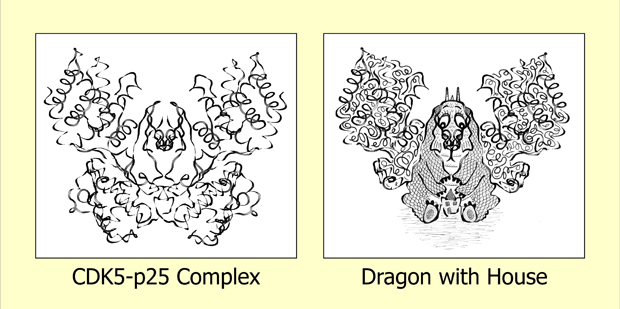
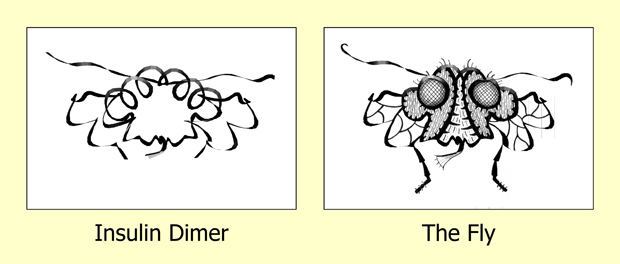
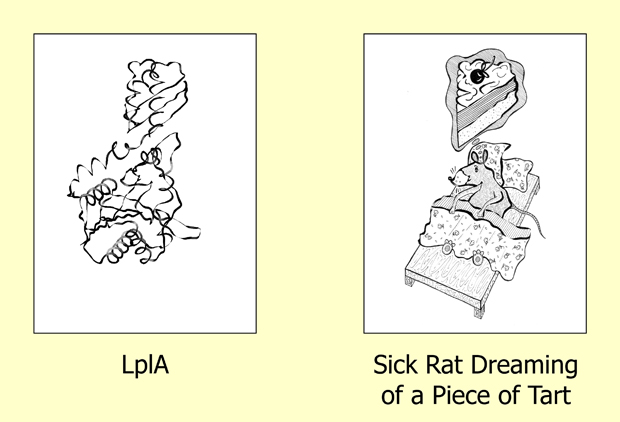
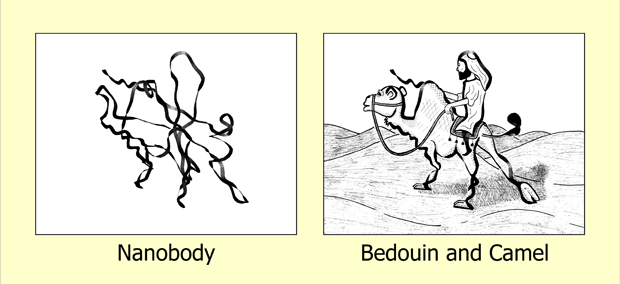
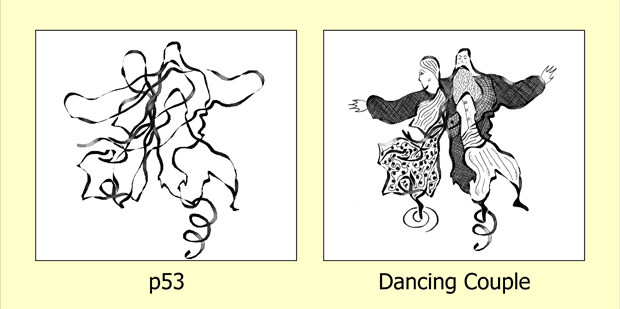
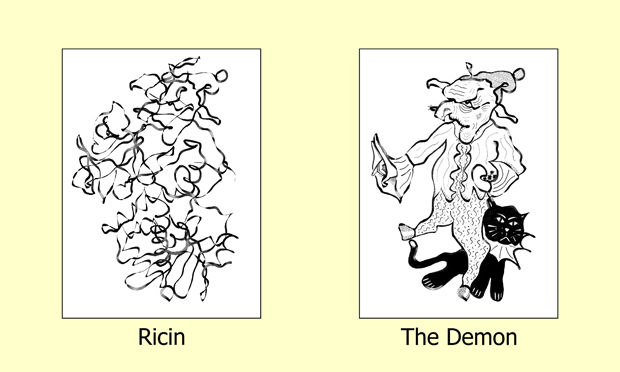
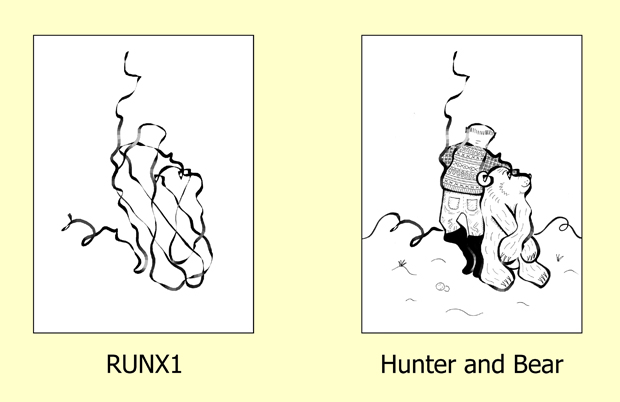
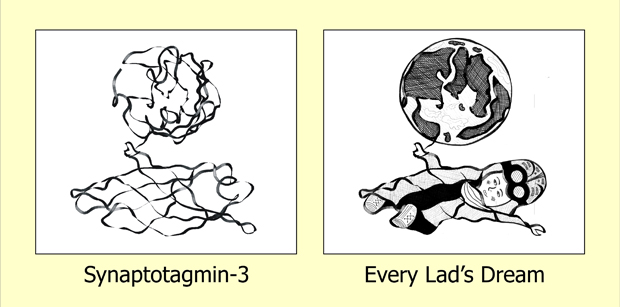
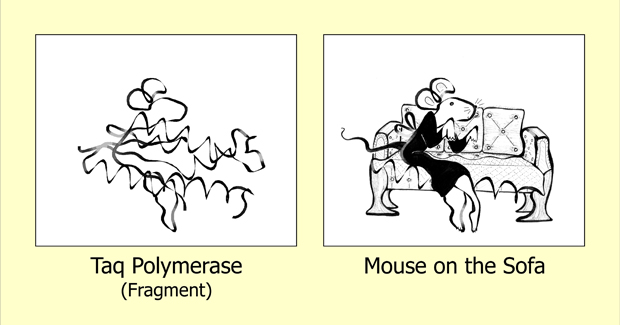
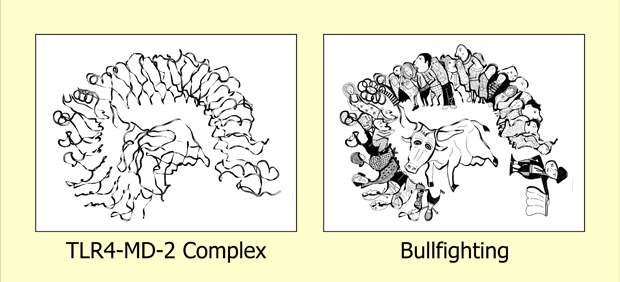
Most biochemists look to the Protein Data Bank for structural data, but Maja Klevanski looks to it for artistic inspiration. Klevanski, a graduate student at the University of Heidelberg, first got the idea of translating the ribbon models of protein structures into art when she was preparing her diploma thesis at Harvard.
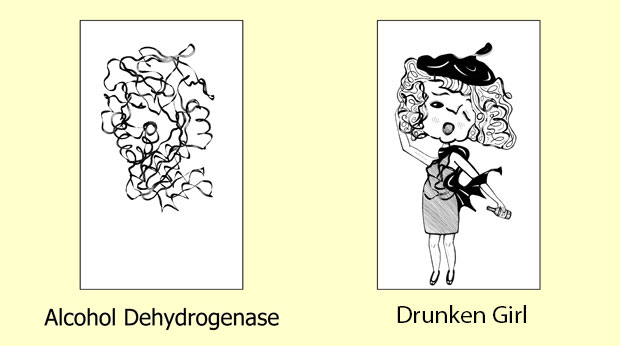
But over time, her method has become more elaborate. To find her images, she rotates protein structures until she begins to see something interesting and then begins a painstaking process of drawing over the structure, redrawing and tweaking the rotation until the image in her mind is fully realized on the page.
Last year, a collage of her work titled “Nature playing chess” reached the top 10 in the illustration category of the 2012 International Science and Engineering Visualization Challenge. She says she hopes to publish a book one day that combines her art with the science behind it. “But, first of all, I have to finish my Ph.D.!” she says.
You can find more of her work at her website, where she also takes requests to re-imagine your favorite protein: www.protein-art.com.
Enjoy reading ASBMB Today?
Become a member to receive the print edition four times a year and the digital edition monthly.
Learn moreGet the latest from ASBMB Today
Enter your email address, and we’ll send you a weekly email with recent articles, interviews and more.
Latest in People
People highlights or most popular articles
Kimble honored for lifetime achievement in genetics
She received the 2026 Thomas Hunt Morgan Medal and will be honored with a dedicated online profile and seminar.
Janetka named distinguished professor
Washington University awarded him the inaugural Carl Frieden Distinguished Professorship.
ASBMB members receive ASPET awards
The American Society for Pharmacology and Experimental Therapeutics awards Simone Brixius–Anderko, Paul Insel, Sudarshan Rajagopal, Emily Scott, Alan Smrcka and Jürgen Wess for their excellent research and mentoring work in pharmacology.
Kozul honored by Washington University
She received the 2025 Elliot L. Elson Education and Training Award.
de la Fuente honored for AI research
The award will support the development of an AI system called ApexMol, a 3D structure–informed, agentic large language model designed to create new biomolecules.
In memoriam: Peter Roepstorff
He was a leading researcher in biological mass spectrometry, mapped protein function in living organisms and was an ASBMB member for 19 years.