
Fierke works as a catalyst for change
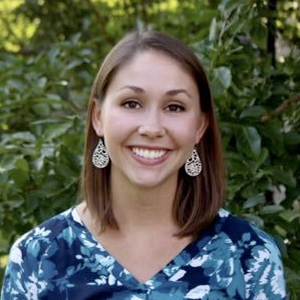
When she was a professor at the University of Michigan, Carol Fierke helped draft a proposal to increase diversity in the chemistry department. With funding from the National Science Foundation Michigan ADVANCE program, Fierke and her colleagues developed strategies to make the department more welcoming for women and minorities.
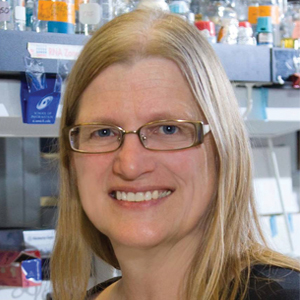
Building her knowledge of social science literature was crucial to modifying the culture, Fierke said. She worked with a universitywide committee to develop a workshop to teach faculty about the literature and to train search committees on best practices. The Michigan chemistry department faculty went from a low of 8% to now almost 30% women.
“We completely changed the face of the department,” she said.
Now provost and executive vice president of Texas A&M University, Fierke is a distinguished enzymologist who continues her work on behalf of underrepresented groups. Scientists like Mildred Cohn, the first woman to hold the presidency of the American Society for Biochemistry and Molecular Biology, opened doors for women in the sciences and inspired her to follow their example, Fierke said, so it is fitting that she will receive the ASBMB’s 2020/2021 Mildred Cohn Award in Biological Chemistry.
Fierke’s experience as an advocate for diversity influences the way she mentors her students, particularly women and underrepresented minorities, who often struggle with building confidence.
“I tell my students you don’t have to be confident, just act confidently — eventually you become confident because people see you that way,” she said.
She encourages her students to learn skills beyond the bench and do some soul searching to find careers in which they can thrive.
“I know that when I was a doctoral student, I thought there was one career pathway, but that’s not true,” she said. “There are lots of pathways to get to a final goal.”
Fierke’s advocacy continues at Texas A&M, where she aims to increase faculty diversity, enhance interdisciplinary research and increase student success.
Analyzing protein deacetylase mechanisms
Biological catalysts have unique active sites that determine the specificity and efficiency of substrate binding. Carol Fierke’s research has focused on understanding how metal ions in the enzyme active site can regulate catalytic mechanisms. Her award lecture during the ASBMB 2020 annual meeting will highlight her work on a group of enzymes known as protein deacetylases.
Deacetylase enzymes are involved in removing specific post-translational modifications from proteins. Fierke uses her expertise in catalysis and metal homeostasis to answer questions about which metal ions are physiologically important for the function of the enzymes. Additionally, she has made strides in understanding how metal ion switching may regulate biological function. Her lab is developing a toolbox of methods to identify the pathways and substrates utilized by these deacetylases.
The Food and Drug Administration has approved several histone deacetylase inhibitors as anticancer compounds, but the inhibitors often have serious side effects. Findings by Fierke and others may contribute to the development of new histone deacetylase inhibitors with reduced side effects and enhanced efficacy as therapeutic agents.
Enjoy reading ASBMB Today?
Become a member to receive the print edition four times a year and the digital edition monthly.
Learn moreGet the latest from ASBMB Today
Enter your email address, and we’ll send you a weekly email with recent articles, interviews and more.
Latest in People
People highlights or most popular articles
ASBMB members receive ASPET awards
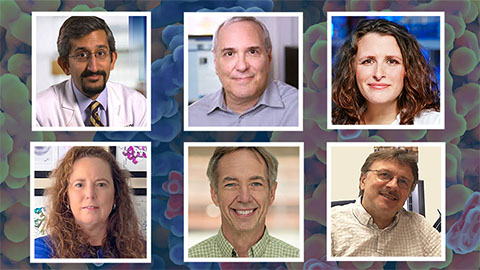
The American Society for Pharmacology and Experimental Therapeutics awards Simone Brixius–Anderko, Paul Insel, Sudarshan Rajagopal, Emily Scott, Alan Smrcka and Jürgen Wess for their excellent research and mentoring work in pharmacology.
Kozul honored by Washington University
She received the 2025 Elliot L. Elson Education and Training Award.
de la Fuente honored for AI research
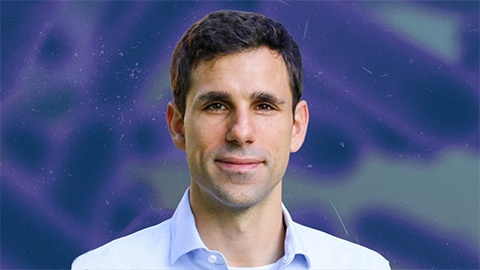
The award will support the development of an AI system called ApexMol, a 3D structure–informed, agentic large language model designed to create new biomolecules.
In memoriam: Peter Roepstorff
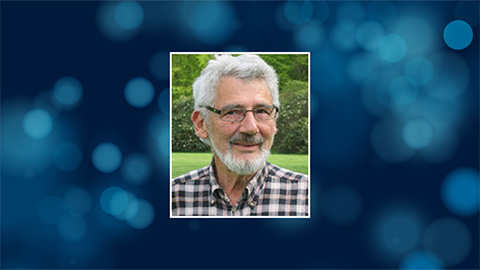
He was a leading researcher in biological mass spectrometry, mapped protein function in living organisms and was an ASBMB member for 19 years.
Flipping lipids and slime molds
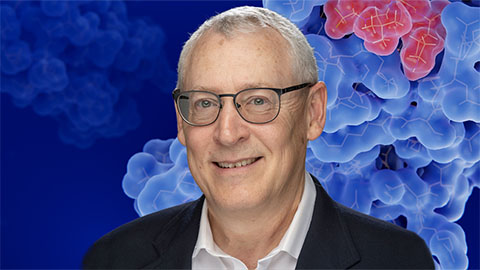
A dull first job nearly pushed JBC associate editor Todd Graham out of science. Then a slime mold project changed his path. Now, he studies membrane biology and reflects on discovery, persistence and mentoring through uncertainty.
ASBMB members receive RNA Society awards
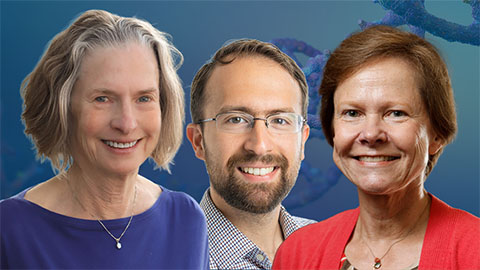
The RNA Society awards Brenda Bass, Can Cenik and Karin Musier–Forsyth for their achievements in RNA research and innovation. Winners will be recognized at the closing awards ceremony of the RNA 2026 annual meeting.