

A place with plentiful research support
I
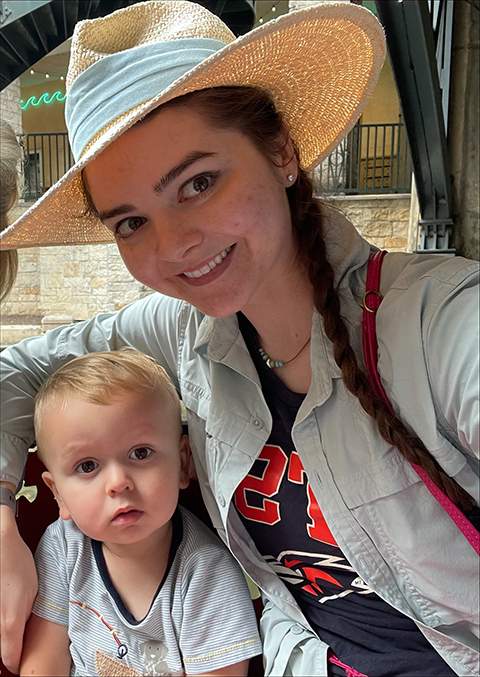
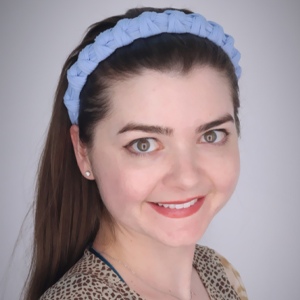
I was born and raised in southeast Texas. After receiving my Ph.D. from the University of Texas Medical Branch in Galveston, I made the move to central Texas for my postdoc. I have worked and lived in San Antonio for about a year, and I love everything this great city has to offer.
UTSA was proud to be designated an R1 institution in 2022. To maintain this honor, the university offers postdocs, graduate students and faculty lots of support for their research. The university has a variety of facilities that help me accelerate my biochemical research, including the Center for Innovative Drug Discovery and the pharmacology, mass spectroscopy, nuclear magnetic resonance and microscopy cores.
Outside the lab, San Antonio has something to offer people of all ages. When I was a child, my family would visit the city and I have fond memories of our time on the historic River Walk. I am now a parent of a young child and a resident of this amazing city, so I enjoy taking my son to the Witte Museum, the San Antonio Zoo and the San Antonio Aquarium for him to make fond family memories of his own.
Submit an abstract
Discover BMB, the annual meeting of the American Society for Biochemistry and Molecular Biology, will be held March 23–26 in San Antonio. Abstracts for poster presentations and spotlight talks will be accepted through Nov. 30. See the poster categories and spotlight talk themes.
Enjoy reading ASBMB Today?
Become a member to receive the print edition four times a year and the digital edition monthly.
Learn moreGet the latest from ASBMB Today
Enter your email address, and we’ll send you a weekly email with recent articles, interviews and more.
Latest in People
People highlights or most popular articles
Uncovering the molecular roots of fatty liver disease
Physician–scientist Silvia Sookoian discusses her path from hepatitis C care to MASLD research, her use of multi-omics to study steatotic liver disease, and how lipid metabolism and genetics are reshaping understanding of MASH and liver health.
Kimble honored for lifetime achievement in genetics
She received the 2026 Thomas Hunt Morgan Medal and will be honored with a dedicated online profile and seminar.
Janetka named distinguished professor
Washington University awarded him the inaugural Carl Frieden Distinguished Professorship.
ASBMB members receive ASPET awards
The American Society for Pharmacology and Experimental Therapeutics awards Simone Brixius–Anderko, Paul Insel, Sudarshan Rajagopal, Emily Scott, Alan Smrcka and Jürgen Wess for their excellent research and mentoring work in pharmacology.
Kozul honored by Washington University
She received the 2025 Elliot L. Elson Education and Training Award.
de la Fuente honored for AI research
The award will support the development of an AI system called ApexMol, a 3D structure–informed, agentic large language model designed to create new biomolecules.