
In memoriam: German A. Camejo
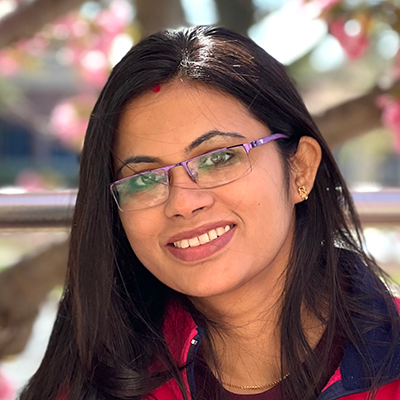
German A. Camejo, a globally recognized researcher in the field of lipoproteins who started a new era in atherosclerosis research, died Nov. 29, 2021, at the age of 85 in Gothenburg, Sweden.
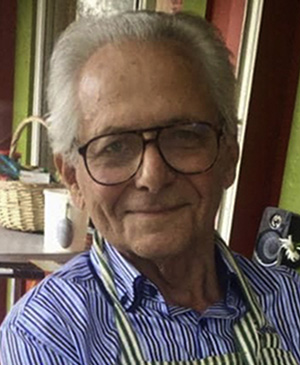
Camejo was born in Venezuela in 1936. At the Universidad Central de Venezuela in Caracas, he studied with Werner G. Jaffé as an undergraduate. He moved to New York to obtain his Ph.D. from Albert Einstein College of Medicine, then returned to Caracas where he started his academic career at the Central University of Venezuela. He moved to the Venezuelan Research Institute as a principal researcher and deputy director; with the help of his lab’s dedicated research, the institute achieved international recognition.
In 1986, Camejo and his wife, Eva, visited the Wallenberg Laboratory at Sahlgrenska University Hospital at the University of Gothenburg, Sweden on a sabbatical leave and decided to stay there. He joined the lab as a professor of clinical biochemistry. In 1990, he joined AstraZeneca as a principal investigator in metabolism and head of the department of biochemistry. After his retirement from AstraZeneca at the age of 75, he joined the department of clinical chemistry at the Karolinska Institute, Stockholm, as an associate researcher.
Camejo spent his entire career studying the lipoprotein–proteoglycan interaction; his findings about the ionic interaction between positively charged apolipoproteins and the negatively charged surface of proteoglycans opened up a new avenue for studying atherosclerosis. He was also a leader in the development and characterization of PPAR modulators as a PI at AstraZeneca.
Among the awards Camejo received for his work were the Medal Francisco de Miranda for Academic Merit in 1988 and the Humberto Fernandez Moran Medal for Science Achievements in 2009. He also served as the president of the Venezuelan Atherosclerosis Society.
Camejo joined the American Society for Biochemistry and Molecular Biology in 2011. He was a member of the Journal of Lipid Research editorial board for more than 20 years, and the journal honored him with a tribute article in May. Throughout his research career, he published more than 200 research articles in peer-reviewed journals with 8,307 citations.
In addition to his scientific life, Camejo loved to spend his time cooking and trekking in the forests of Sweden.
He is survived by his wife, Eva, and children, Teobaldo, German A. Jr., Maqui and Sarah Elena, and their families.
Enjoy reading ASBMB Today?
Become a member to receive the print edition four times a year and the digital edition monthly.
Learn moreGet the latest from ASBMB Today
Enter your email address, and we’ll send you a weekly email with recent articles, interviews and more.
Latest in People
People highlights or most popular articles
de la Fuente honored for AI research
The award will support the development of an AI system called ApexMol, a 3D structure–informed, agentic large language model designed to create new biomolecules.
In memoriam: Peter Roepstorff
He was a leading researcher in biological mass spectrometry, mapped protein function in living organisms and was an ASBMB member for 19 years.
Flipping lipids and slime molds
A dull first job nearly pushed JBC associate editor Todd Graham out of science. Then a slime mold project changed his path. Now, he studies membrane biology and reflects on discovery, persistence and mentoring through uncertainty.
ASBMB members receive RNA Society awards
The RNA Society awards Brenda Bass, Can Cenik and Karin Musier–Forsyth for their achievements in RNA research and innovation. Winners will be recognized at the closing awards ceremony of the RNA 2026 annual meeting.
In memoriam: Richard L. Cross
He studied the enzymatic mechanisms of ATP synthase and served on the editorial board of the Journal of Biological Chemistry for 24 years.
A chance encounter with the lab
Payton Stevens never planned to become a pancreatic cancer researcher. A temporary job set him on a path from rural Kentucky to leading research on Wnt signaling and metastasis, where he now pairs discovery with mentorship and science advocacy.