
In memoriam: Andrew Wright
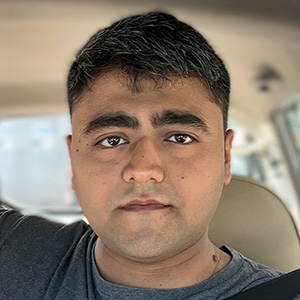
Andrew Wright, a biochemist who studied cell cycles and spent almost five decades at Tufts University, died Oct. 9, 2023. He had been a member of the American Society of Biochemistry and Molecular Biology since 1971.
Born in Portobello, Scotland, on Jan. 28, 1935, to Annie and William Wright, he completed his B. S. in chemistry from Heriot–Watt University where he met Greta Landles. They married, and he earned his Ph.D. in biochemistry at University of Edinburgh.
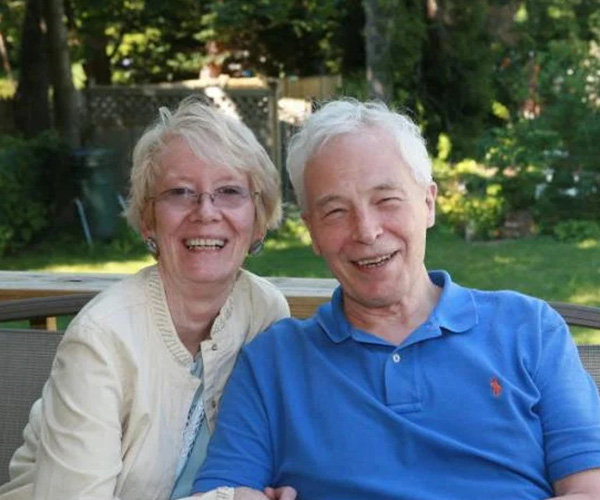
Wright took a research position at Honeywell in Minnesota, and the couple moved to the United States in 1960. In 1963, after adopting their first daughter, Fiona, the Wrights moved to Boston, where Wright took a postdoctoral position at the Massachusetts Institute of Technology. He joined the Tufts faculty as an associate professor in the microbiology department in 1967 and retired in 2014 as professor emeritus in the Graduate School of Biomedical Sciences.
In 1996, Wright received a Distinguished Faculty Award from Tufts University. He worked abroad at labs in Israel, Japan and Denmark, and he received the Newton-Abraham Visiting Professorship at Oxford University in 2005.
Wright’s research interests covered many areas, starting with O-antigen conversion by lysogenic phage. He then diversified into DNA replication and transcriptional regulation along with microbial pathogenesis, namely E. coli. In the later stage of his career, Wright worked on cell growth throughout cell cycles and generations of bacterial cells. This work revealed long-term stability of growth in E. coli where the mother cell and daughter cells exhibit weak correlation between two consecutive cell cycles. In simpler terms, his study showed that cells forget how fast they were growing in the previous cell cycle.
Wright was a core member of his department and mentored hundreds of students throughout his career. To honor his legacy, a former student, Fariba Houman, now a research compliance officer at Boston Children’s Hospital, started the Andrew and Greta Wright Fund, which supports trainees in the microbiology program at Tufts.
In an article about the fund, Houman recalled Wright’s support before a presentation of her graduate research. “Andrew spent the entire session before my presentation walking with me and saying, ‘It’s okay. I get nervous, too,’” she said. “For him, a high-level scientist, to take the time to be with me and calm my anxiety was a powerful lesson in true mentorship.
Outside of lab, Wright’s interests included Scottish country dancing, rugby, and mountain climbing. In his younger years, he was an avid rugby fan and the founder and captain of the Boston Rugby Club.
Enjoy reading ASBMB Today?
Become a member to receive the print edition four times a year and the digital edition monthly.
Learn moreGet the latest from ASBMB Today
Enter your email address, and we’ll send you a weekly email with recent articles, interviews and more.
Latest in People
People highlights or most popular articles
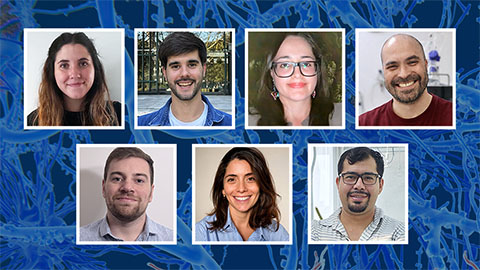
2026 PROLAB awardees announced
Each of the seven awardees will work in labs across Canada and the United States and will receive $7,000 to fund travel and living expenses.
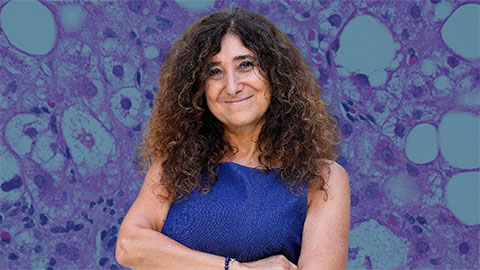
Uncovering the molecular roots of fatty liver disease
Physician–scientist Silvia Sookoian discusses her path from hepatitis C care to MASLD research, her use of multi-omics to study steatotic liver disease, and how lipid metabolism and genetics are reshaping understanding of MASH and liver health.
Kimble honored for lifetime achievement in genetics
She received the 2026 Thomas Hunt Morgan Medal and will be honored with a dedicated online profile and seminar.
Janetka named distinguished professor
Washington University awarded him the inaugural Carl Frieden Distinguished Professorship.
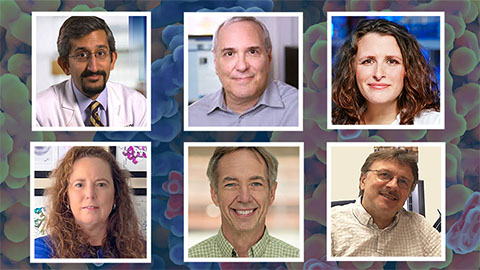
ASBMB members receive ASPET awards
The American Society for Pharmacology and Experimental Therapeutics awards Simone Brixius–Anderko, Paul Insel, Sudarshan Rajagopal, Emily Scott, Alan Smrcka and Jürgen Wess for their excellent research and mentoring work in pharmacology.
Kozul honored by Washington University
She received the 2025 Elliot L. Elson Education and Training Award.