
How to have a successful informational interview

Are you in a career transition, or do you just want to learn about a new field? Informational interviews are a good way to learn about science jobs.
With daylight saving time just beginning and spring around the corner, it is a good time to explore your options. Commencement is near and more jobs are being posted. Why not take the time to go on an informational interview?
Whether you want to explore academia, industry or an alternative career path, informational interviews help you make informed career decisions.

What is an informational interview?
An informational interview is an informal interview to gain information about a career you are interested in.
This is not a job interview; it is a simply a research and networking tool that will help you during your job search process.
Even though it is not a job interview, you should prepare for it. Let the interviewee do most of the talking because you are interviewing them. Pay attention to the flow of the conversation to determine what type of questions you should ask next.
Benefits of an informational interview
- Gain very specific information that suits your career needs.
- Go deeper into a career path you want to explore.
- Expand your network.
- Learn about what skills you need for the career you want.
How to have a successful informational interview
Note: Even though you initiated the informational interview, the interviewee might ask you to re-introduce yourself.
1. Do your research: This is the most important step. Look on LinkedIn or Twitter or ask a mutual colleague to introduce you to a person in the field or position you are interested in. Find keywords in their profile, read their latest research/projects, and see what part of what they do sparks your interest. Find common ground. This will help you formulate questions to get the most out of the interview.
I went on two informational interviews, and both people recommended I meet their colleague. Now that person is my mentor.
Tip: Read their latest paper or news of their organization that excites you.
2. Have good questions ready: Informational interviews are short (15 to 30 minutes long), so you don't want to waste any time. Come up with a list your top questions that are specific to the field, position and person.
The key is finding questions that you cannot find the answer to online. You want questions that will show you what to expect in the job and how it, or the path to it, aligns with your goals.
By the time the interview is over, you should have a clear understanding of the interviewee’s career, to know what skills are needed and, hopefully, to have made a meaningful connection.
Example question: How can I apply my experience as a researcher to transition to a nonbench position?
3. Leave with a takeaway/next steps: After an informational interview, you should have notes, insights and a plan for the next steps you need to take. Whether it is connecting with someone suggested by the interviewee, learning career strategies or going back to the drawing board (which is OK — sometimes you realize that the career is not for you), you want to leave with valuable information. Take action ASAP while the information is fresh in your mind, and develop a plan that works for you.
Example action item: Attend NIH Office of Intramural Training & Education Train the Trainer Event this summer.
4. Show your appreciation: Just like with job interviews, you need to be polite; this means thanking the interviewee for taking the time to speak with you. Not everyone accepts informational interview requests, so it is important for you to express your appreciation.
If the informational interview went well, the interviewee might respond to your thank-you note with suggestions for other potential contacts. This would be a win!
Tips: Follow up less than 24 hours after your interview, and let them know about your job-hunt successes.
5. Be patient: Going on informational interviews and job searching can be intense, but it is worth it. Every time you put yourself out there, connect with others and develop your skills, you are that much closer to achieving your career goals. Don't get discouraged.
As Sharon Milgram said in her Planning for Career Satisfaction & Success presentation, “One in 12 informational interviews leads to a job offer – the best odds you have!” Remember to keep pushing for what you want, because successful careers take time.
Check out the ASBMB career resources and job postings. There is information available for all types of scientists at all levels.
Enjoy reading ASBMB Today?
Become a member to receive the print edition four times a year and the digital edition monthly.
Learn moreFeatured jobs
from the ASBMB career center
Get the latest from ASBMB Today
Enter your email address, and we’ll send you a weekly email with recent articles, interviews and more.
Latest in Careers
Careers highlights or most popular articles
Upcoming opportunities
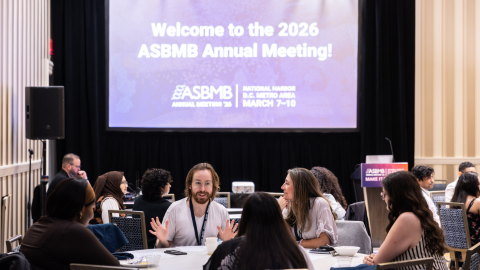
🗨️ Shape the conversation at ASBMB 2027 in Boston! ASBMB is seeking proposals for sessions and events that will foster collaboration, highlight exciting science and support career development across the molecular life sciences.
Upcoming opportunities
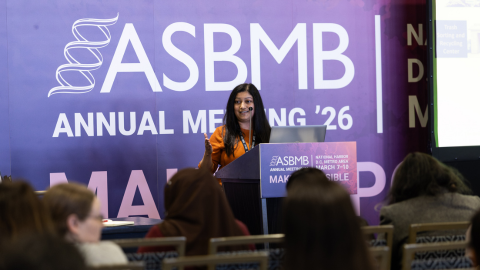
Registration is now open for this summer's Art of Science Communication course! Build your science communication skills in this 8-week online program. ➡️ Registration deadline: May 6.

Upcoming opportunities
The American Society for Biochemistry and Molecular Biology is accepting applications for the Marion B. Sewer Distinguished Scholarship for Undergraduates. Apply by April 30, 2026.
Designing scientific careers, not just experiments
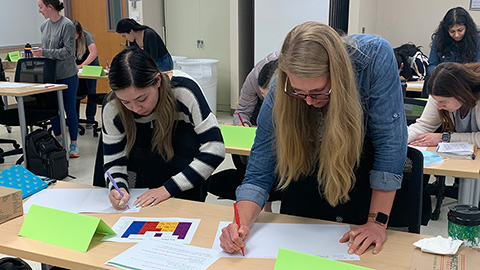
Universities are rethinking how they prepare scientists for careers beyond the bench. From myIDP to Vanderbilt’s Career Architect, programs help trainees clarify values, explore options and build intentional paths forward.

Upcoming opportunities
Dive into the world of lipids! Join the ASBMB Lipid Research Division Seminar Series on April 9, 12–1 p.m. ET to hear early-career researchers explore lipid metabolism and mitochondrial biology.
Upcoming opportunities
For the summer 2026 ASBMB Today essay series, we invite scientists working in industry to share first-person reflections on their work. Submit your essay or pitch by April 15, 2026.