

A place for growth and collaboration
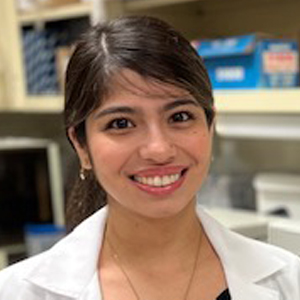
I am a senior research assistant at the University of Texas Health Science Center at San Antonio. I grew up in Houston, and I am the first in my family to attend college; I earned a bachelor of science in biochemistry at the University of Texas at San Antonio, the city’s largest university with more than 34,000 students.
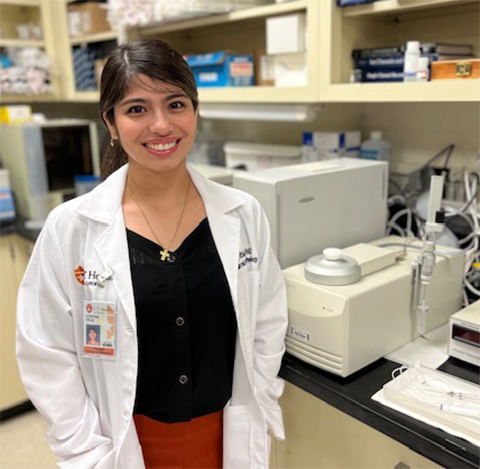
I am a biochemist for the physiology department, and we study ion channels using biophysical approaches such as isothermal titration calorimetry to help determine binding affinity and biomolecular interactions of any two molecules in a label-free environment by measuring thermodynamic parameters including affinity, stoichiometry, enthalpy and entropy. Working in the lab is exciting and suspenseful — every day I do different tasks and experiments, and their results are often unpredictable. For instance, we believed that phosphorylation would disrupt the high affinity of the protein complex and block the binding site to prevent it from interacting with other molecules; much to our surprise we detected binding of the protein complex in a calcium-free environment. This was unexpected and very exciting.
With its interconnected universities, San Antonio has great opportunities for growth. There are lots of collaborations through health care and among universities. At UT Health, which is in the heart of San Antonio’s medical center, students can shadow and work with certified professionals in hospitals, and doctors paired with researchers help treat patients at Mays Cancer Center with cutting-edge technology and research. So far, I have collaborated with students from the University of Texas and the University of the Incarnate Word. San Antonio also offers academic and industry opportunities.
Besides career options, San Antonio has beautiful and relaxing scenery composed of hills, nice skies and trees. There is so much to do in the city, such as Six Flags Fiesta Texas, shopping at the Shops at La Cantera (an open-air mall), dining in at various restaurants and unique and fun night spots including Top Golf and JazzTX.
Submit an abstract
Discover BMB, the annual meeting of the American Society for Biochemistry and Molecular Biology, will be held March 23–26 in San Antonio. Abstracts for poster presentations and spotlight talks will be accepted through Nov. 30. See the poster categories and spotlight talk themes.
Enjoy reading ASBMB Today?
Become a member to receive the print edition four times a year and the digital edition monthly.
Learn moreGet the latest from ASBMB Today
Enter your email address, and we’ll send you a weekly email with recent articles, interviews and more.
Latest in People
People highlights or most popular articles
Uncovering the molecular roots of fatty liver disease
Physician–scientist Silvia Sookoian discusses her path from hepatitis C care to MASLD research, her use of multi-omics to study steatotic liver disease, and how lipid metabolism and genetics are reshaping understanding of MASH and liver health.
Kimble honored for lifetime achievement in genetics
She received the 2026 Thomas Hunt Morgan Medal and will be honored with a dedicated online profile and seminar.
Janetka named distinguished professor
Washington University awarded him the inaugural Carl Frieden Distinguished Professorship.
ASBMB members receive ASPET awards
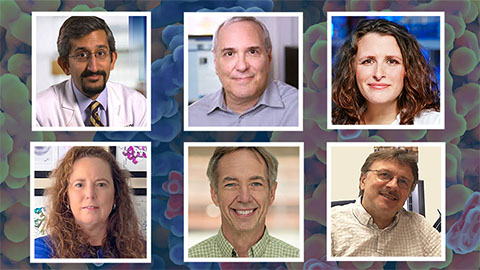
The American Society for Pharmacology and Experimental Therapeutics awards Simone Brixius–Anderko, Paul Insel, Sudarshan Rajagopal, Emily Scott, Alan Smrcka and Jürgen Wess for their excellent research and mentoring work in pharmacology.
Kozul honored by Washington University
She received the 2025 Elliot L. Elson Education and Training Award.
de la Fuente honored for AI research
The award will support the development of an AI system called ApexMol, a 3D structure–informed, agentic large language model designed to create new biomolecules.