
Professorships for Booker; scholarship for Entzminger

Booker appointed to honorary professorships
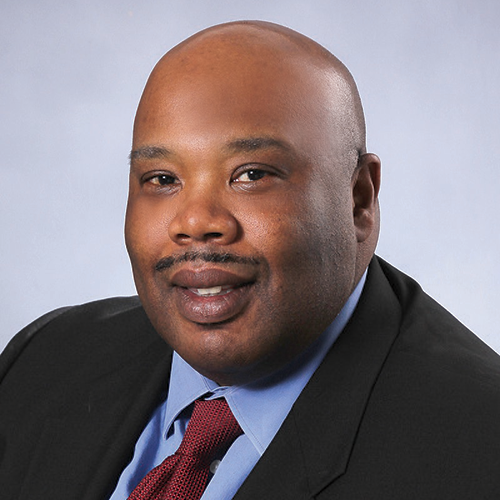
Squire Booker of Penn State University has been appointed the Richard Perry University Professor in the School of Arts and Sciences and the Perelman School of Medicine and the Penn Integrates Knowledge professor. Perry established this professorship in 2005 and is the president and CEO of Perry Capital, a private investment management firm that he cofounded. The Penn Integrates Knowledge professorships are awarded to faculty who hold appointments in two or more schools at Penn and draw on their breadth of knowledge to collaborate with colleagues.
Booker is a professor of chemistry, biochemistry and molecular biology and a Howard Hughes Medical Institute investigator. His lab studies biosynthetic enzymes that use S-adenosylmethionine and iron–sulfur clusters as radical catalysts.
A member of the American Society for Biochemistry and Molecular Biology for more than two decades, Booker has led the ASBMB Maximizing Access Committee and served on the Nominating Committee, Meetings Committee, Finance Committee and Program Planning Committee. He established the ASBMB Interactive Mentoring Activities for Grantsmanship Enhancement, or IMAGE, workshop and has been a mentor for the Maximizing Opportunities for Scientific and Academic Independent Careers, or MOSAIC, program. In 2022, he received both the ASBMB Ruth Kirschstein Diversity in Science Award and the ASBMB–Merck Award. Booker has also received the Percy L. Julian Award from the National Organization for the Professional Advancement of Black Chemists and Chemical Engineers and the Hans Neurath Award from the Protein Society. He is a member of the National Academy of Sciences and the American Academy of Arts and Sciences.
Entzminger awarded scholarship
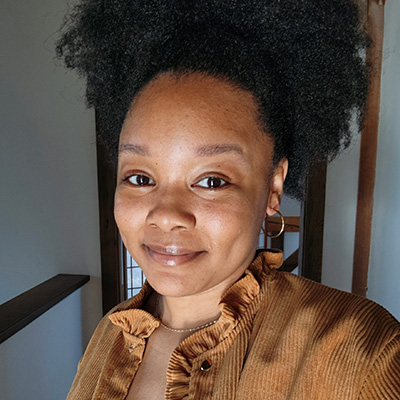
Inayah Entzminger has been awarded a BestColleges scholarship to support their sixth year in the biochemistry Ph.D. program at the City University of New York Graduate Center. The $6,000 scholarship is for students who identify as a cisgender, transgender or as gender nonconforming Black women in science-related fields.
Entzminger is a careers columnist for ASBMB Today. They also have served as a facilitator for the American Society for Biochemistry and Molecular Biology’s Art of Science Communication course and an adjunct lecturer at Hunter College. Entzminger studies viral translation initiation mechanisms in the barley yellow dwarf virus, which can reduce the yields of common crops such as wheat, barley and oats. They earned their bachelor’s degree in biochemistry and molecular biology and performed postbaccalaureate research at the University of Maryland Baltimore County.
Enjoy reading ASBMB Today?
Become a member to receive the print edition four times a year and the digital edition monthly.
Learn moreGet the latest from ASBMB Today
Enter your email address, and we’ll send you a weekly email with recent articles, interviews and more.
Latest in People
People highlights or most popular articles
Kimble honored for lifetime achievement in genetics
She received the 2026 Thomas Hunt Morgan Medal and will be honored with a dedicated online profile and seminar.
Janetka named distinguished professor
Washington University awarded him the inaugural Carl Frieden Distinguished Professorship.
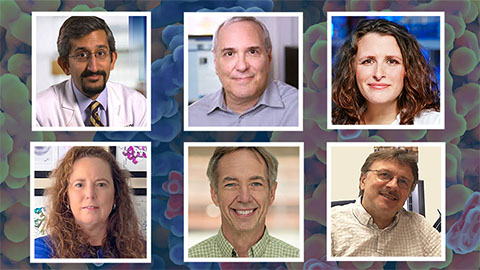
ASBMB members receive ASPET awards
The American Society for Pharmacology and Experimental Therapeutics awards Simone Brixius–Anderko, Paul Insel, Sudarshan Rajagopal, Emily Scott, Alan Smrcka and Jürgen Wess for their excellent research and mentoring work in pharmacology.
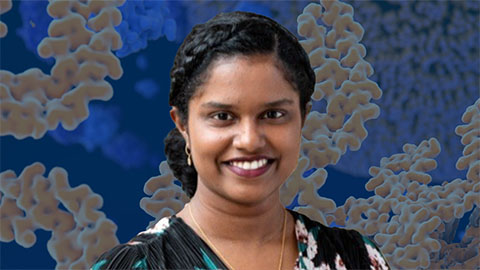
Kozul honored by Washington University
She received the 2025 Elliot L. Elson Education and Training Award.
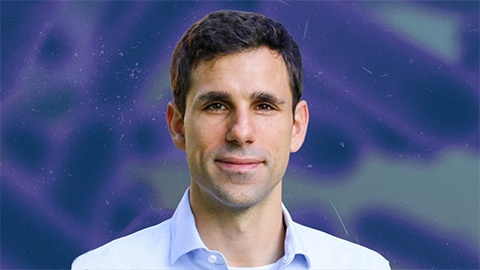
de la Fuente honored for AI research
The award will support the development of an AI system called ApexMol, a 3D structure–informed, agentic large language model designed to create new biomolecules.
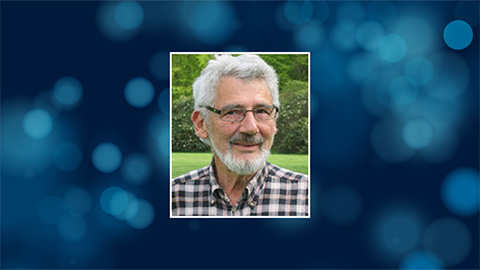
In memoriam: Peter Roepstorff
He was a leading researcher in biological mass spectrometry, mapped protein function in living organisms and was an ASBMB member for 19 years.