

Being on the outside of the inside
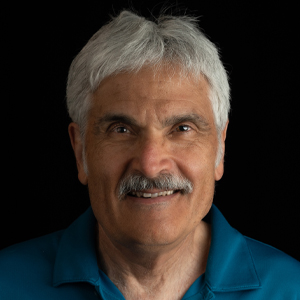
I spent all but the first few months of my childhood in South America, living first in Colombia, then in Venezuela, so I was woefully unprepared when, shortly after I turned 17, I traveled from Caracas to Madison, Wisconsin, to start my freshman year of college.
I had never been to Madison and had only lived in the U.S. for a few months after I was born. We made several family trips to New York City, and I spent a summer in Maine at a camp where I was bullied for being a “spic.” My preparation for college was poor: three years in a high school with a minimal curriculum and poorly trained teachers. I had no career counseling and didn’t know what I wanted to study. In short, I was not well prepared for or aware of all the changes that awaited me. Neither of my parents were college-educated so they could not counsel me.
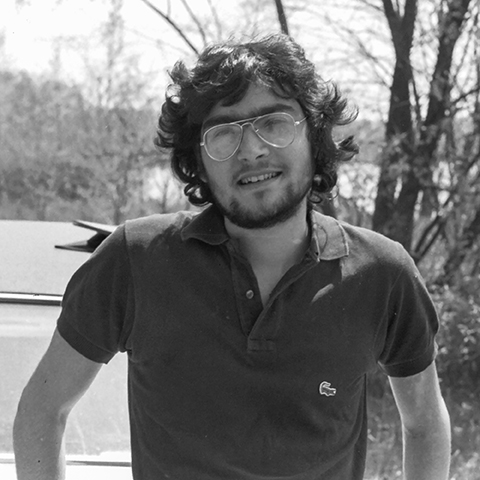
In college, I felt like an outsider. I’m somewhere between South American, American, Middle Eastern, and Sephardic–Spanish, so I didn’t have a succinct answer to the question, “Where are you from?” This made it challenging for me to fully melt into the American melting pot.
Upon my arrival in Madison, I was assigned to a dorm room with a student from Zaire who became a lifelong friend. I met another student from Pakistan who also became a lifelong friend. I had some immediate surprises. I discovered that among many American boys, sports were an obsession. I had no idea what they were talking about when they shared their common lore of famous athletes and historic games. Alcohol was also big; on weekends, many kids would drink to get drunk. A lot of social activity was centered in bars.
In the dorm, I lived next to a sophomore student named Michael Green. Michael was over-the-top brilliant, very funny and was extremely motivated to become an academic scientist, like his virologist father. He loved snakes and persuaded many of us to acquire them, so our dorm floor in Ogg Hall was soon teaming with snakes.
Michael was so enthusiastic about studying for his science classes that I had a Tom Sawyer fence-whitewashing moment. Like Tom’s friends, I had to try it out, and I signed up for science courses. At first, I struggled because I had never before had to cultivate good study habits. But, after I took a cell biology course from a wonderful instructor, Ann Burgess, I was smitten. Michael’s model of intensity and hard work served as my beacon.
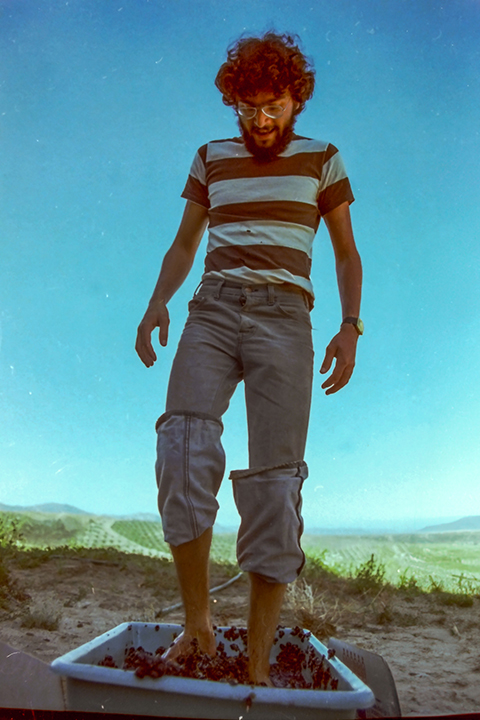
In graduate school at the University of California San Diego, I developed self-confidence and hit my stride, working long hours in the lab, while also enjoying outside activities, including backpacking, scuba diving, folk dancing and winemaking. I developed lifelong friendships among my peers and mentors, and a strong sense of community with colleagues I met at conferences — friendships that would endure throughout my career. From my experience as a teaching assistant, I developed a love of teaching and made mental notes on how I would teach my own classes once I landed a faculty position.
Ten years after I arrived at Madison to start college, I returned to become an assistant professor without going to another lab for a postdoc. I had the illusion that I was surrounded by what I thought of as “perfect people”: people who grew up in perfect homes, lived perfect lives and were perfectly prepared for their jobs. I felt like I crashed a party, my version of imposter syndrome.
Michael Green went on to become a famous molecular biologist. He unexpectedly died last year. His younger brother, Eric, also a renowned scientist, invited me to pay tribute to Michael at a memorial at the University of Massachusetts, where he was a department chair and director of the cancer center. While planning my presentation, I felt a surge of gratitude to Michael, my many friends and colleagues, my department, my great university, my trainees, my wife and life itself. I realized that autonomy is an illusion; these influences were crucial to my development into a scientist and teacher.
I have never completely purged my imposter syndrome. Instead, I have come to realize that it is not without advantages. It has given me the humility to question my judgment, to seek advice from my friends and colleagues and to learn from the trainees and staff scientists in my own lab. It still allows me to look from the outside in. I am now able to redefine and embrace it.
Enjoy reading ASBMB Today?
Become a member to receive the print edition four times a year and the digital edition monthly.
Learn moreGet the latest from ASBMB Today
Enter your email address, and we’ll send you a weekly email with recent articles, interviews and more.
Latest in Opinions
Opinions highlights or most popular articles
Learning can be fun: Gaming anatomy and physiology
Instructors explore how gamification and active learning transform student engagement and retention. They convey how emotion, interaction and design can make even rigorous subjects more effective and memorable.
Mentorship and uncertainty: Lessons from Telemachus
A biochemistry educator reflects on mentorship through the Greek story of Telemachus, showing how embracing uncertainty, failure and curiosity can transform teaching.
Embracing the twists and turns along the educator pathway
A biochemistry educator reflects on the challenges of early faculty life, describing how evidence-based teaching, cross-disciplinary collaboration and classroom challenges shaped her growth.
Redesigning with students in mind
Assistant professor reflects on how the shift to online teaching revealed gaps in points-based grading and led to a redesign centered on transparency and student growth.
Teaching beyond information transfer
Educator reflects on moving beyond lectures to create a biochemistry classroom centered on engagement, transparency and student ownership, showing how small shifts like “student hours” and active learning can transform understanding.
Mayday! Lessons from cellular dysfunction and group work dynamics
An upper-level biology course revealed that strong science doesn’t guarantee strong teamwork. One instructor shares how failed group dynamics reshaped their approach, leading to more structured, collaborative and effective student learning.