
Biochem, with a side of advocacy
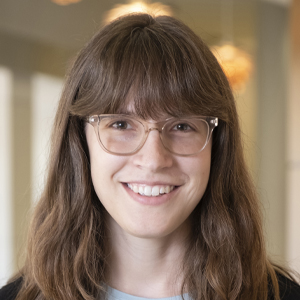
Kelly McAleer, a rising senior at the College of New Jersey, has turned her longstanding passion for science and science advocacy into action. Last fall, she founded an American Society for Biochemistry and Molecular Biology Student Chapter at TCNJ that supports both current and potential students as well as research in general.
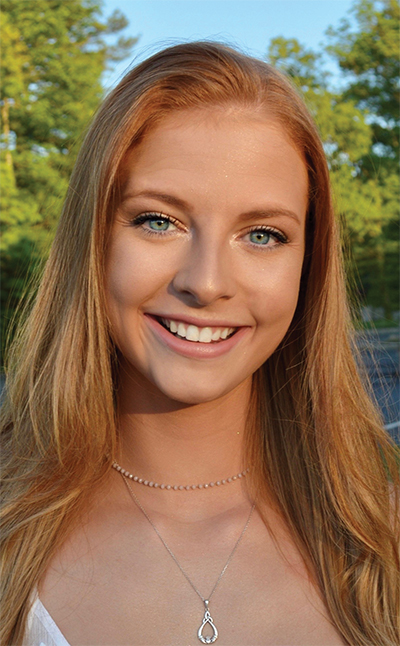 Kelly McAleer founded the ASBMB Student Chapter at the College of New Jersey with an eye to both advocacy and community outreach.COURTESY OF KELLY McALEER
In the summer of 2018, McAleer participated in the first session of the ASBMB’s Advocacy Training Program. Two months into the training, she realized that an ASBMB chapter at TCNJ could provide opportunities and resources for students to take action on political issues that affect research. In addition, she thought a chapter would fill a specific niche at TCNJ, since the college has biology and chemistry departments but no distinct biochemistry department. So, without missing a beat, McAleer organized a meeting in October to gauge interest, and the chapter was officially founded in December with McAleer as president.
McAleer launched the chapter with an eye to both advocacy and community outreach. “I think if we don’t advocate for science, there will be no science,” she said. “We need our government and our representatives to realize the importance of federal funding for science.”
To this end, the new ASBMB chapter held a Government 101 information session where students learned the basics of how government works, from how budgets are made to how a bill becomes a law.
“If people want to advocate at the federal level, they need to understand those bare basics,” McAleer said.
Chapter members also hosted a Donuts and Policy event where they talked about the current Congress. They have been brainstorming a trip to Washington, D.C., for a day on Capitol Hill (modeled on the ASBMB’s annual Hill Day) when the students would speak directly with their representatives about government support of science.
On the community outreach side of things, many chapter members volunteer at a nearby high school, acting as tutors and mentors in science classes. McAleer knows how important mentors and teachers can be to future scientists who otherwise wouldn’t know a science career is possible. She describes having no connection to any scientists when she was growing up, no family or friends who were scientists.
“My first real exposure to science came from the classroom,” she said. “I had a lot of really great teachers, and in high school I began to become serious about pursuing an education in science.”
All this planning, coordinating and organizing, in addition to her studies and playing violin in the college orchestra, doesn’t seem to tire McAleer out in the least. She finds it energizing to lead others and see her vision become a reality. Her time in college and her work with the ASBMB have expanded her idea of what is possible in her life, she said, and she has become interested in a wider range of biomedical careers. Becoming a physican–scientist, for example, is intriguing her now.
“It’s always been medicine,” she said of her goals. “It still is — but it’s not just that now.”
Enjoy reading ASBMB Today?
Become a member to receive the print edition four times a year and the digital edition monthly.
Learn moreGet the latest from ASBMB Today
Enter your email address, and we’ll send you a weekly email with recent articles, interviews and more.
Latest in People
People highlights or most popular articles
Kimble honored for lifetime achievement in genetics
She received the 2026 Thomas Hunt Morgan Medal and will be honored with a dedicated online profile and seminar.
Janetka named distinguished professor
Washington University awarded him the inaugural Carl Frieden Distinguished Professorship.
ASBMB members receive ASPET awards
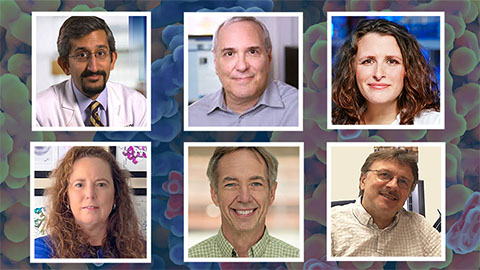
The American Society for Pharmacology and Experimental Therapeutics awards Simone Brixius–Anderko, Paul Insel, Sudarshan Rajagopal, Emily Scott, Alan Smrcka and Jürgen Wess for their excellent research and mentoring work in pharmacology.
Kozul honored by Washington University
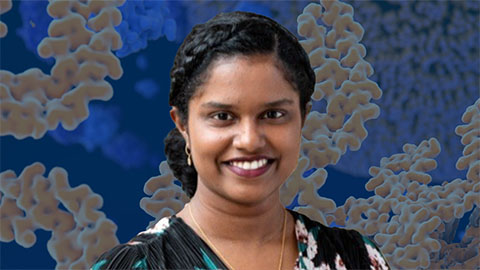
She received the 2025 Elliot L. Elson Education and Training Award.
de la Fuente honored for AI research
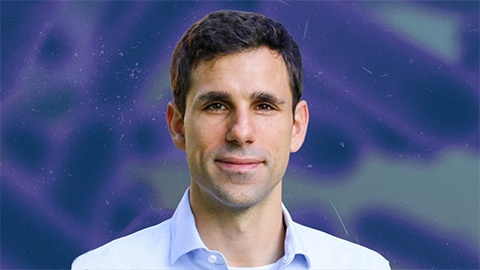
The award will support the development of an AI system called ApexMol, a 3D structure–informed, agentic large language model designed to create new biomolecules.
In memoriam: Peter Roepstorff
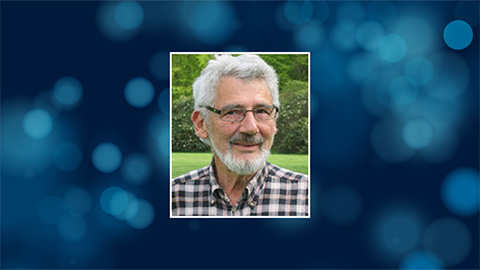
He was a leading researcher in biological mass spectrometry, mapped protein function in living organisms and was an ASBMB member for 19 years.