

‘The perfect place to do science’
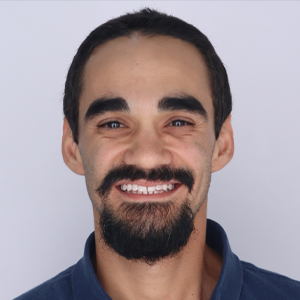
I have always been passionate about nature and its perfect synchrony and balance. When I was 6 years old, I received a mini microscope, as a Christmas gift; that changed my view of the world and defined my professional path. Seeing particles that were invisible to human eyes led me to an interesting observation: Every macro structure also exists in the microenvironment, and both exist in similar systems.
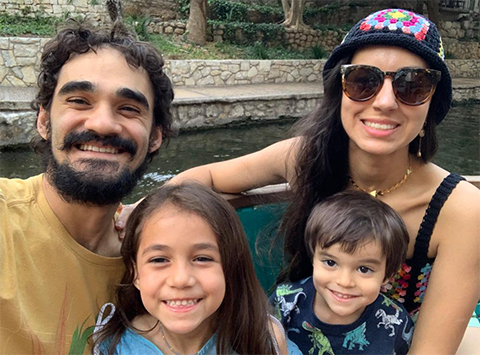
I completed my Ph.D. in biochemistry at the University of Sao Paulo, Brazil. In 2021, I moved to San Antonio with my family to join Audrey Lamb`s lab as a postdoctoral research fellow in the chemistry department at the University of Texas at San Antonio. Our lab studies the metallophore biosynthetic pathway, including an enzyme that generates nicotianamine, a natural product that sequesters iron from the environment. I am particularly interested in how to use nicotianamine to increase iron composition in food crops and make plants hardier to climate change. Nicotianamine also has properties that make it a potential therapeutic for Alzheimer’s disease, hypertension and coronavirus infections.
When I learned we would be moving from Brazil to San Antonio, I started working to improve my English. Soon after we arrived, I was shopping for canned beans in Walmart, and I had my conversation memorized to make sure I’d do great with my English pronunciation. I asked the man at customer service, “Excuse me, sir, would you show me where I can find the canned beans?” I was surprised when the attendant answered in Spanish, and I quickly let my guard down since Spanish is close to my native language — Portuguese. We had a nice conversation.
On that day, I figured out that the street language in San Antonio isn’t just English, but Spanish, Tagalog, Arabic, Chinese (both Mandarin and Cantonese), Vietnamese, Hindi, German, Portuguese, Korean, Italian, and so on. This mixed soup of languages and cultures makes San Antonio an amazing, special city. With its strong universities, beautiful sights and welcoming people, it’s the perfect place to do science.
Submit an abstract
Discover BMB, the annual meeting of the American Society for Biochemistry and Molecular Biology, will be held March 23–26 in San Antonio. Abstracts for poster presentations and spotlight talks will be accepted through Nov. 30. See the poster categories and spotlight talk themes.
Enjoy reading ASBMB Today?
Become a member to receive the print edition four times a year and the digital edition monthly.
Learn moreGet the latest from ASBMB Today
Enter your email address, and we’ll send you a weekly email with recent articles, interviews and more.
Latest in People
People highlights or most popular articles
ASBMB members receive ASPET awards
The American Society for Pharmacology and Experimental Therapeutics awards Simone Brixius–Anderko, Paul Insel, Sudarshan Rajagopal, Emily Scott, Alan Smrcka and Jürgen Wess for their excellent research and mentoring work in pharmacology.
Kozul honored by Washington University
She received the 2025 Elliot L. Elson Education and Training Award.
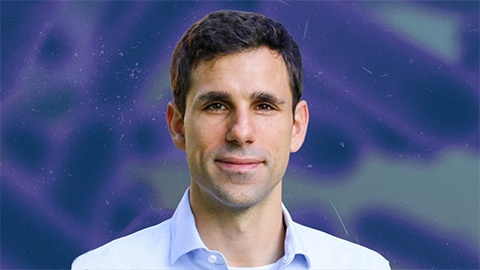
de la Fuente honored for AI research
The award will support the development of an AI system called ApexMol, a 3D structure–informed, agentic large language model designed to create new biomolecules.
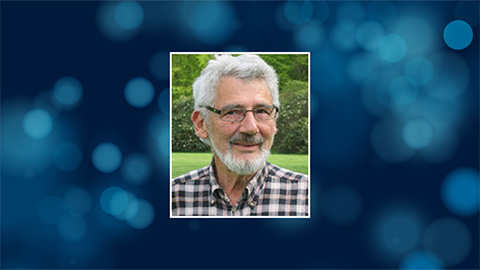
In memoriam: Peter Roepstorff
He was a leading researcher in biological mass spectrometry, mapped protein function in living organisms and was an ASBMB member for 19 years.
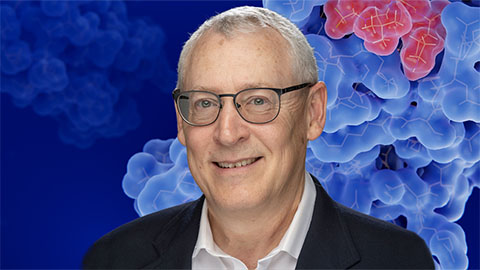
Flipping lipids and slime molds
A dull first job nearly pushed JBC associate editor Todd Graham out of science. Then a slime mold project changed his path. Now, he studies membrane biology and reflects on discovery, persistence and mentoring through uncertainty.
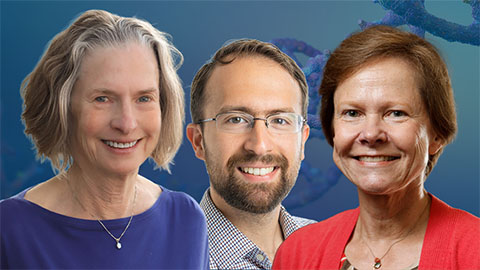
ASBMB members receive RNA Society awards
The RNA Society awards Brenda Bass, Can Cenik and Karin Musier–Forsyth for their achievements in RNA research and innovation. Winners will be recognized at the closing awards ceremony of the RNA 2026 annual meeting.