

Bakers and mentors help a MOSAIC scholar change her life
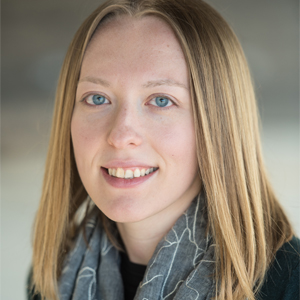
Joanna-Lynn Borgogna took her first microbiology class when she was studying prenursing at a community college in Southern California. “I remember thinking, ‘this is so awesome, I love it,’ but I didn’t have any understanding that you could be a microbiologist,” she said.
Borgogna had grown up in a small California border town as one of nine children in a large Hispanic family. Homeschooled by her mother, she was always interested in the science she learned but didn’t know what career paths were available.
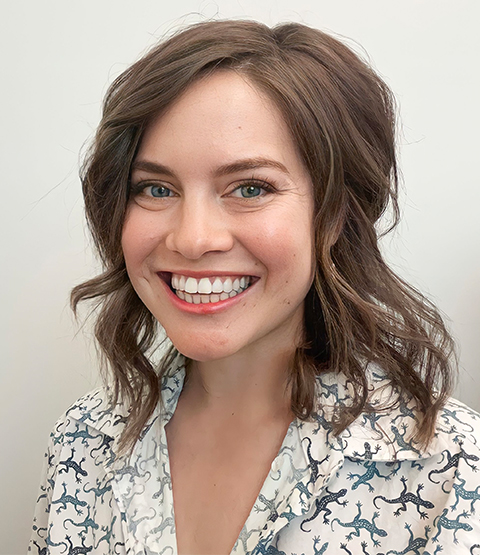
A few years in, financial hardship forced Borgogna to drop out of college and take a job at a Safeway bakery, where she would chat with her coworkers about her love of microbiology. When she applied for a scholarship for managerial training to advance at the bakery, her manager agreed to write a recommendation — but only if Borgogna also applied to some biology programs. She was accepted to study science, not management, at Point Loma Nazarene University in San Diego.
“That acceptance changed the whole trajectory of my life,” she said.
At Point Loma, Borgogna crossed paths with Ryan Botts, a mathematics professor who encouraged her to pursue a minor in computational biology. Under Botts’ guidance, she discovered research and decided to pursue a Ph.D.
Borgogna went to Montana State University where she joined Carl Yeoman’s lab. Her work there focused on understanding the relationship between the vaginal microbiome, the metabolome and the development of gynecological disorders in reproductive-aged women.
This research formed the foundation of her application for a Maximizing Opportunities for Scientific and Academic Independent Careers, or MOSAIC, award. The American Society for Biochemistry and Molecular Biology MOSAIC program, funded by the National Institutes of Health, provides Borgogna with two years of postdoctoral funding, followed by three years of R01-level funding to launch an independent faculty career.
She is now investigating the genitourinary syndrome of menopause, or GSM, and how changes to the vaginal microbiome, metabolome and immunoproteomic response may be involved. GSM disproportionately affects members of ethnic and racial minority groups that are underrepresented in research. Borgogna’s studies aim to focus on these populations to address these disparities. This work is supported by mentorship from Yeoman and Jovanka Voyich at MSU and Michelle Shardell at the University of Maryland School of Medicine.
“It felt like oxygen,” Borgogna said about receiving the MOSAIC award. “I didn't even really know what to do with the news. I remember I got my score and started to cry. I was so happy.”
With the award, she plans to launch her independent research career while continuing to work with students. Borgogna is particularly committed to mentoring students from underrepresented and marginalized groups because she knows firsthand the transformative difference this can make.
“I had a lot of mentors,” she said, “My university mentor changed my life. All my mentors were really hands-on, always had an open door … I want to be the same way as I mentor my own students.”
Enjoy reading ASBMB Today?
Become a member to receive the print edition four times a year and the digital edition monthly.
Learn moreGet the latest from ASBMB Today
Enter your email address, and we’ll send you a weekly email with recent articles, interviews and more.
Latest in People
People highlights or most popular articles
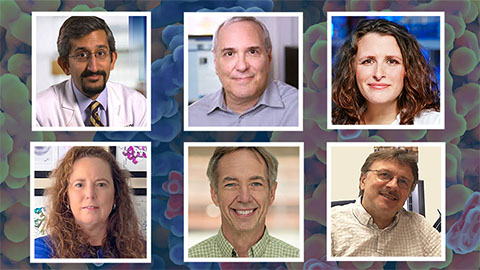
ASBMB members receive ASPET awards
The American Society for Pharmacology and Experimental Therapeutics awards Simone Brixius–Anderko, Paul Insel, Sudarshan Rajagopal, Emily Scott, Alan Smrcka and Jürgen Wess for their excellent research and mentoring work in pharmacology.
Kozul honored by Washington University
She received the 2025 Elliot L. Elson Education and Training Award.
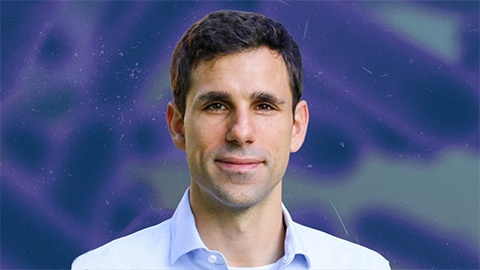
de la Fuente honored for AI research
The award will support the development of an AI system called ApexMol, a 3D structure–informed, agentic large language model designed to create new biomolecules.
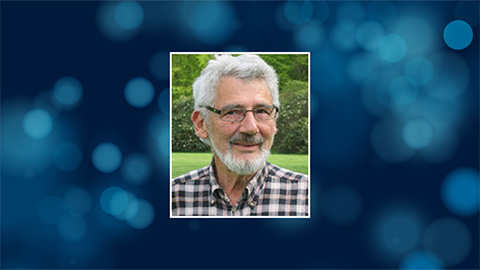
In memoriam: Peter Roepstorff
He was a leading researcher in biological mass spectrometry, mapped protein function in living organisms and was an ASBMB member for 19 years.
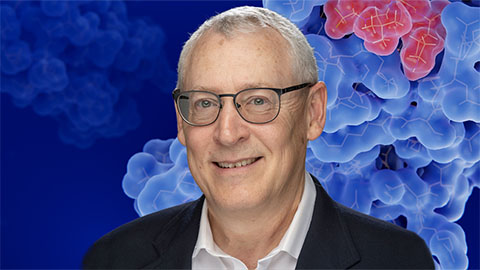
Flipping lipids and slime molds
A dull first job nearly pushed JBC associate editor Todd Graham out of science. Then a slime mold project changed his path. Now, he studies membrane biology and reflects on discovery, persistence and mentoring through uncertainty.
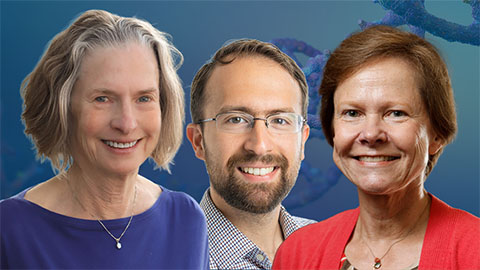
ASBMB members receive RNA Society awards
The RNA Society awards Brenda Bass, Can Cenik and Karin Musier–Forsyth for their achievements in RNA research and innovation. Winners will be recognized at the closing awards ceremony of the RNA 2026 annual meeting.