
Huttenhain, Peng win HUPO awards
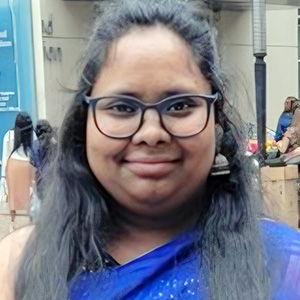
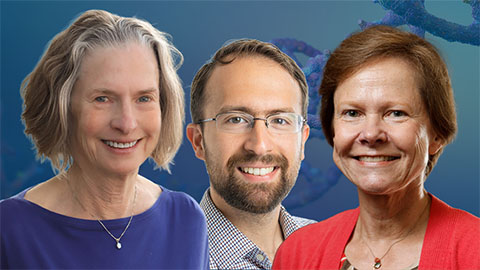
Two members of the American Society for Biochemistry and Molecular Biology, Ruth Huttenhain and Junmin Peng, have been honored by the Human Proteome Organization, or HUPO. HUPO is an international scientific organization dedicated to developing and applying proteomics technologies for the enhancement of biological knowledge, global health and wellness. Huttenhain received the Distinguished Service Award, which recognizes her dedication to building a dynamic early-career researcher, or ECR, community and increasing visibility of ECRs within HUPO. Peng received the Clinical and Translational Proteomics Award for his achievements in mass spectrometry-based proteomics, connecting laboratory discoveries to clinical applications.
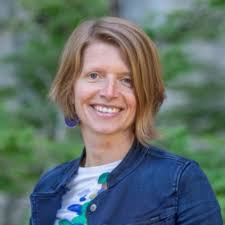
Huttenhain is an assistant professor in the department of molecular and cellular physiology at Stanford University. Her lab studies how cells interpret extracellular signals through G protein-coupled receptors or GPCRs, the largest family of signaling receptors in humans and major drug targets. Using quantitative proteomics and functional genomics tools such as proximity biotin labeling, her team maps protein interaction networks in living cells to uncover new dimensions of GPCR signaling and guide the development of more precise therapeutics. Huttenhain earned her Ph.D. in systems biology from ETH Zurich, where she developed targeted proteomics strategies and received the ETH Medal and completed postdoctoral training at the University of California, San Francisco, where she advanced proteomics approaches to study protein network dynamics in GPCR signaling and HIV infection. She received fellowships from the Human Frontier Science Program and the Swiss National Science Foundation.
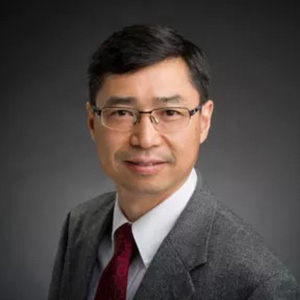
Peng is a full member and professor in the departments of structural biology and developmental neurobiology at St. Jude Children's Research Hospital. His lab uses mass spectrometry-based proteomics and multi-omics approaches to uncover molecular mechanisms of diseases such as cancer and Alzheimer’s disease, integrating genomic, transcriptomic, proteomic, metabolomic and interactome data to identify key disease networks. His team develops analytical and computational tools to study protein modifications and structure, advancing target–decoy strategies, ubiquitin signaling research and the discovery of disease-associated proteins. He has trained more than 100 lab members. Peng earned his Ph.D. in biochemistry from the University of Iowa and completed postdoctoral training as a Jane Coffin Childs Fellow at Harvard Medical School, where he advanced proteomics studies of ubiquitination and the synaptic proteome. Before joining St. Jude Children’s Research Hospital, he was a faculty member at Emory University, where he developed high-throughput proteomics and systems biology approaches for neurodegenerative studies.
Enjoy reading ASBMB Today?
Become a member to receive the print edition four times a year and the digital edition monthly.
Learn moreGet the latest from ASBMB Today
Enter your email address, and we’ll send you a weekly email with recent articles, interviews and more.
Latest in People
People highlights or most popular articles
ASBMB members receive ASPET awards
The American Society for Pharmacology and Experimental Therapeutics awards Simone Brixius–Anderko, Paul Insel, Sudarshan Rajagopal, Emily Scott, Alan Smrcka and Jürgen Wess for their excellent research and mentoring work in pharmacology.
Kozul honored by Washington University
She received the 2025 Elliot L. Elson Education and Training Award.
de la Fuente honored for AI research
The award will support the development of an AI system called ApexMol, a 3D structure–informed, agentic large language model designed to create new biomolecules.
In memoriam: Peter Roepstorff
He was a leading researcher in biological mass spectrometry, mapped protein function in living organisms and was an ASBMB member for 19 years.
Flipping lipids and slime molds
A dull first job nearly pushed JBC associate editor Todd Graham out of science. Then a slime mold project changed his path. Now, he studies membrane biology and reflects on discovery, persistence and mentoring through uncertainty.
ASBMB members receive RNA Society awards
The RNA Society awards Brenda Bass, Can Cenik and Karin Musier–Forsyth for their achievements in RNA research and innovation. Winners will be recognized at the closing awards ceremony of the RNA 2026 annual meeting.