
In memoriam: Carl Bernofsky

Carl Bernofsky, a former research biochemist at Tulane University and a member of the American Society for Biochemistry and Molecular Biology for 50 years, died Feb. 12, 2021, at his home in Shreveport Louisiana, after battling lymphoma. He was 87.
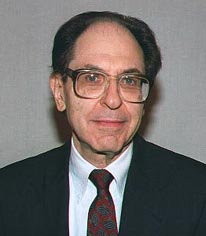
Born Nov. 22, 1933 in Brooklyn, New York, Bernofsky attended Brooklyn College and the University of Chicago, then worked briefly as a research assistant at the American Meat Institute Foundation before earning a Ph.D. in biochemistry at the University of Kansas in 1963. After a postdoctoral fellowship at Case Western Reserve University, he joined the faculty of the Mayo Medical School and did research at the Mayo Clinic for about eight years.
In 1975, Bernofsky moved with his wife and two daughters to New Orleans, where he took a faculty position at the Tulane University School of Medicine. There, he taught energy transduction processes for 16 years. His research interests included mechanisms of inflammatory tissue damage, spin trapping of biologically important free radicals, tumor-specific nucleases, and pyridine nucleotide chemistry and metabolism.
After he was dismissed from Tulane in 1995, Bernofsky filed a series of lawsuits against the school and others, alleging discrimination because he was Jewish and other offenses. He detailed his legal actions on a website, tulanelink.com and became an advocate for judicial reforms. Bernofsky’s home in New Orleans was destroyed by flood waters during Hurricane Katrina. He and his wife then moved to Shreveport.
Bernofsky was an author on some 60 scientific articles. In 1998, he patented a human monocyte leukemia cell line. In addition to the ASBMB, he was a member of the American Association for the Advancement of Science, the American Chemical Society and other professional organizations. Later in his life, he became an advocate for alternative energy, specifically, replacing coal with plant-based tallowfuel.
Bernofsky is survived by his wife, Shirley Goodman Bernofsky; his daughters, Susan and Lauren Bernofsky; and his grandchildren, Nicholas and Julia Irmscher.
Enjoy reading ASBMB Today?
Become a member to receive the print edition four times a year and the digital edition monthly.
Learn moreGet the latest from ASBMB Today
Enter your email address, and we’ll send you a weekly email with recent articles, interviews and more.
Latest in People
People highlights or most popular articles
de la Fuente honored for AI research
The award will support the development of an AI system called ApexMol, a 3D structure–informed, agentic large language model designed to create new biomolecules.
In memoriam: Peter Roepstorff
He was a leading researcher in biological mass spectrometry, mapped protein function in living organisms and was an ASBMB member for 19 years.
Flipping lipids and slime molds
A dull first job nearly pushed JBC associate editor Todd Graham out of science. Then a slime mold project changed his path. Now, he studies membrane biology and reflects on discovery, persistence and mentoring through uncertainty.
ASBMB members receive RNA Society awards
The RNA Society awards Brenda Bass, Can Cenik and Karin Musier–Forsyth for their achievements in RNA research and innovation. Winners will be recognized at the closing awards ceremony of the RNA 2026 annual meeting.
In memoriam: Richard L. Cross
He studied the enzymatic mechanisms of ATP synthase and served on the editorial board of the Journal of Biological Chemistry for 24 years.
A chance encounter with the lab
Payton Stevens never planned to become a pancreatic cancer researcher. A temporary job set him on a path from rural Kentucky to leading research on Wnt signaling and metastasis, where he now pairs discovery with mentorship and science advocacy.