
What we’re asking for — on your behalf
The American Society for Biochemistry and Molecular Biology’s Public Affairs Advisory Committee and public affairs office advocate for robust funding and policies that provide flexibility to scientists, ensure the sustainability of the American research enterprise, and support scientists from all backgrounds and at all institutions.
Here’s what we’ve been up to. (You can read all of our position statements and letters at asbmb.org/advocacy.)
Our NIH budget recommendations
Sustained increases to the National Institutes of Health’s budget are essential. We provided written testimony to be included at a hearing about the federal budget for fiscal year 2023 by the U.S. House Committee on Labor, Health and Human Services, Education, and Related Agencies.We requested:
- $49.05 billion for the NIH base budget.
- $3.25 billion for the National Institute for General Medicines within the NIH.
- $430.5 million for the NIH to direct specifically to the Institutional Development Awards program.
Virtual Capitol Hill Day: A real success
Members of the PAAC and others met with their representatives and senators on May 11. Participants urged policymakers to:
- Separate funding for the Advanced Research Projects Agency for Health, or ARPA-H, from funding for the NIH.
- Pass pro-science provisions in the competitiveness bills moving through Congress.
- Support a “Dear Colleague” letter (a document used by members of Congress to encourage their colleagues to support specific issues) to increase funding for STEM training programs at the Department of Energy, the National Science Foundation and the NIGMS.
Twenty-six participants located in 19 states had 59 meetings.
Compelling the NIH to deal with harassment
We sent a letter on May 25 to U.S. Sens. Patty Murray, D-Wash., and Roy Blunt, R-Miss., and Reps. Rosa DeLauro, D-Conn., and Tom Cole, R-Okla., requesting that language be included in appropriations legislation requiring the NIH to create a strategic plan and timeline to address workplace toxicity and harassment at the agency’s intramural campus.
Pro-science provisions are now law
The CHIPS and Science Act, signed into law Aug. 9, is the outcome of reconciling two bills in Congress: the America COMPETES Act of 2022, which passed the U.S. House in February, and the U.S. Innovation and Competition Act of 2021, which passed the Senate in June 2021. The CHIPS and Science Act outlines historic investments in scientific research and development to keep the U.S. a global leader in scientific discovery. There are multiple provisions that will modernize scientific infrastructure, address systemic barriers faced by the next generation of scientists, and combat sexual harassment in science, technology, engineering and mathematics. The ASBMB continues to advocate to ensure that funding promised in the bill are ultimately appropriated.
Enjoy reading ASBMB Today?
Become a member to receive the print edition four times a year and the digital edition monthly.
Learn moreGet the latest from ASBMB Today
Enter your email address, and we’ll send you a weekly email with recent articles, interviews and more.
Latest in Opinions
Opinions highlights or most popular articles
Learning can be fun: Gaming anatomy and physiology
Instructors explore how gamification and active learning transform student engagement and retention. They convey how emotion, interaction and design can make even rigorous subjects more effective and memorable.
Mentorship and uncertainty: Lessons from Telemachus
A biochemistry educator reflects on mentorship through the Greek story of Telemachus, showing how embracing uncertainty, failure and curiosity can transform teaching.
Embracing the twists and turns along the educator pathway
A biochemistry educator reflects on the challenges of early faculty life, describing how evidence-based teaching, cross-disciplinary collaboration and classroom challenges shaped her growth.
Redesigning with students in mind
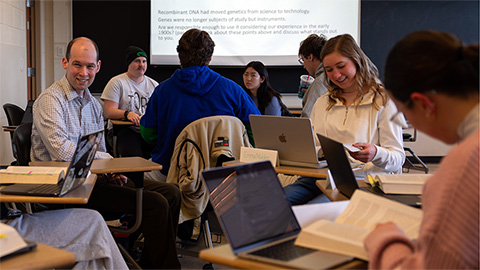
Assistant professor reflects on how the shift to online teaching revealed gaps in points-based grading and led to a redesign centered on transparency and student growth.
Teaching beyond information transfer
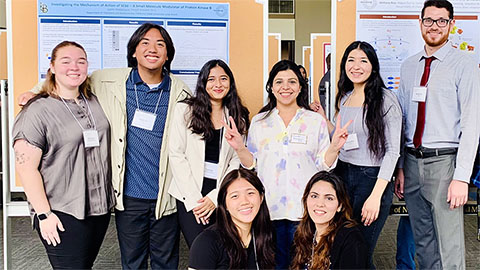
Educator reflects on moving beyond lectures to create a biochemistry classroom centered on engagement, transparency and student ownership, showing how small shifts like “student hours” and active learning can transform understanding.
Mayday! Lessons from cellular dysfunction and group work dynamics
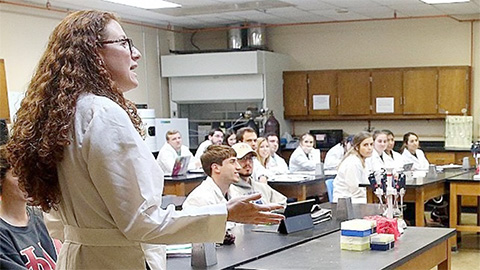
An upper-level biology course revealed that strong science doesn’t guarantee strong teamwork. One instructor shares how failed group dynamics reshaped their approach, leading to more structured, collaborative and effective student learning.