

Take a breath
Like a lot of people, since mid-March 2020 I’ve had some trouble sleeping. I’ll conk out as soon as I turn the light off, only to wake up again at 2:30 a.m. At first, my cat got very excited, hoping this was a tweak in her breakfast schedule.
I know I should avoid doom-scrolling on my phone, so I opt for a Sudoku or a soothing novel. After half an hour or so, I turn the light off again and focus on slow, shallow breathing. It doesn’t always help me get back to sleep, but I’ve begun thinking a lot about the act of inhaling and exhaling.
Several of the articles and essays in our January wellness issue of ASBMB Today touch on breathing — what it can do for our minds and bodies and even for our ability to support and care for the people around us.
Breathing, like wellness, isn’t something I do just for myself. If I’m going to contribute anything to the world, I need to have a functioning (loosely defined) brain and body. Sometimes I glance at fitness websites and roll my eyes at the sheer narcissism of all that sculpting and supplementing. And, sure, it’s about looking good and living long.
But at the heart of it, I think we all take care of ourselves as a gift to those around us as much as to ourselves. If we feel good, we can be more thoughtful, more helpful, more a part of the world.
And it all starts with being sure we have air.
Enjoy reading ASBMB Today?
Become a member to receive the print edition four times a year and the digital edition monthly.
Learn moreGet the latest from ASBMB Today
Enter your email address, and we’ll send you a weekly email with recent articles, interviews and more.
Latest in Opinions
Opinions highlights or most popular articles
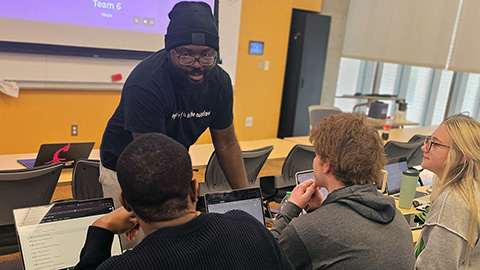
Learning can be fun: Gaming anatomy and physiology
Instructors explore how gamification and active learning transform student engagement and retention. They convey how emotion, interaction and design can make even rigorous subjects more effective and memorable.

Mentorship and uncertainty: Lessons from Telemachus
A biochemistry educator reflects on mentorship through the Greek story of Telemachus, showing how embracing uncertainty, failure and curiosity can transform teaching.
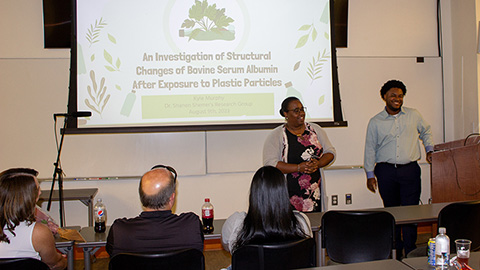
Embracing the twists and turns along the educator pathway
A biochemistry educator reflects on the challenges of early faculty life, describing how evidence-based teaching, cross-disciplinary collaboration and classroom challenges shaped her growth.
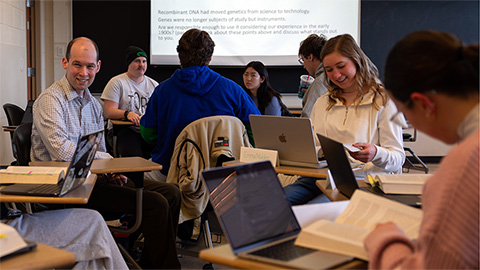
Redesigning with students in mind
Assistant professor reflects on how the shift to online teaching revealed gaps in points-based grading and led to a redesign centered on transparency and student growth.
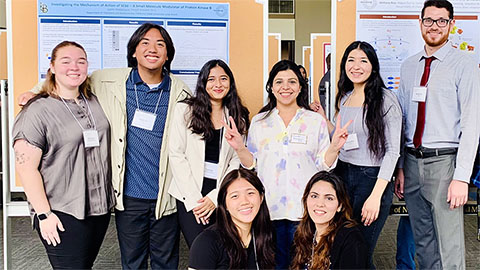
Teaching beyond information transfer
Educator reflects on moving beyond lectures to create a biochemistry classroom centered on engagement, transparency and student ownership, showing how small shifts like “student hours” and active learning can transform understanding.
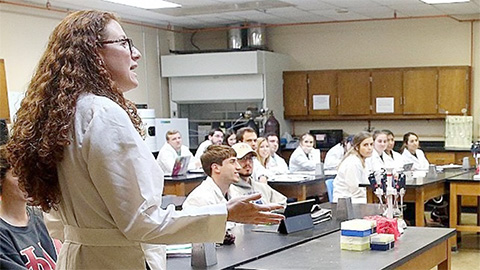
Mayday! Lessons from cellular dysfunction and group work dynamics
An upper-level biology course revealed that strong science doesn’t guarantee strong teamwork. One instructor shares how failed group dynamics reshaped their approach, leading to more structured, collaborative and effective student learning.