

Guiding my sister through cancer
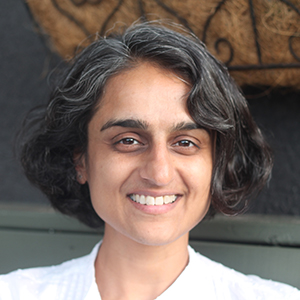
My sister, Sukhy, was diagnosed with breast cancer just before the pandemic and went through surgery, chemo and radiation therapy while navigating COVID-19 precautions. She had just been given the all-clear when, in August 2022, we learned the reason for her continuing chest pain: Her cancer had metastasized. Tumors had spread to her liver and bones. The doctors told us her disease was now incurable.
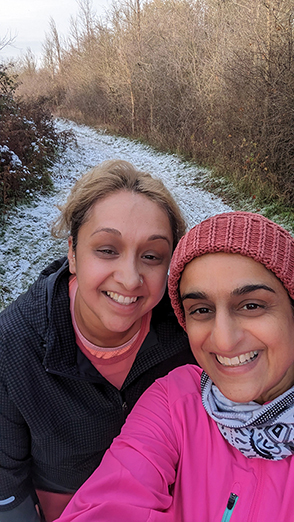
As a scientist and communicator, I made it my mission to help Sukhy understand her disease. Along with my husband David, a cancer researcher, I immediately started scouring the internet for information on secondary breast cancer and treatment options. I moved back to the U.K. to support her and my family and started attending as many of her hospital appointments as I could.
We knew that her diagnosis meant Sukhy would be on treatment for the rest of her life. This news came with a barrage of information, but little I — or any of us — could control. However, I can help her understand what’s happening to her body and how the therapies work. I can reassure her that, thanks to the complexities of biology, certain test results don’t always mean bad news.
When I go with her to appointments, I’ve noticed that physicians sometimes share incorrect information or appear to misunderstand the underlying biology. For example, Sukhy was being recruited for a clinical trial involving a targeted antibody-conjugated chemotherapy. She asked her oncologist whether hair loss might be one of the side effects. The oncologist replied sadly that, yes, it would. I had read through the paperwork for the trial, and I knew the benefits of this treatment are reduced side effects thanks to its specificity for a particular protein.
I was frustrated and I wanted to correct the doctor. As a communicator, I always want to supply people with the best information possible. But is that always necessary?
Stepping back, I considered what was most important in this situation: I wanted my sister to receive the best care possible and leave an appointment feeling positive.
So, I could point out that this doctor is not up to date with the research or argue about her treatment options. But would that change the standard of care? No. In fact, it might leave Sukhy feeling anxious or stressed about her care team, undermining my goal.
On days she’s upset about the progression of her disease, Sukhy’s not interested in a TED talk on tumor evolution. She needs comfort. On those days, I’m there with hugs in place of words.
I will always advocate for my sister and explain concepts she doesn’t understand. I would never knowingly omit information I thought she needed. But considering the bigger picture, sometimes there’s greater value in what I choose not to say.
Enjoy reading ASBMB Today?
Become a member to receive the print edition four times a year and the digital edition monthly.
Learn moreGet the latest from ASBMB Today
Enter your email address, and we’ll send you a weekly email with recent articles, interviews and more.
Latest in Opinions
Opinions highlights or most popular articles
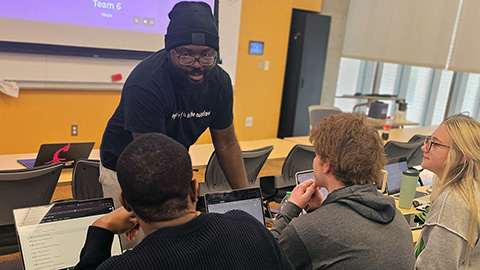
Learning can be fun: Gaming anatomy and physiology
Instructors explore how gamification and active learning transform student engagement and retention. They convey how emotion, interaction and design can make even rigorous subjects more effective and memorable.

Mentorship and uncertainty: Lessons from Telemachus
A biochemistry educator reflects on mentorship through the Greek story of Telemachus, showing how embracing uncertainty, failure and curiosity can transform teaching.
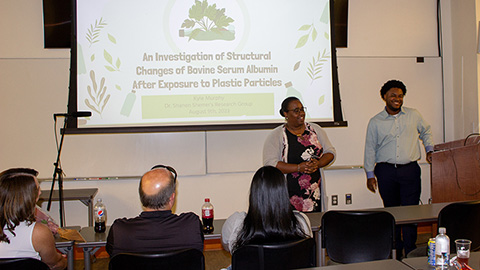
Embracing the twists and turns along the educator pathway
A biochemistry educator reflects on the challenges of early faculty life, describing how evidence-based teaching, cross-disciplinary collaboration and classroom challenges shaped her growth.
Redesigning with students in mind
Assistant professor reflects on how the shift to online teaching revealed gaps in points-based grading and led to a redesign centered on transparency and student growth.
Teaching beyond information transfer
Educator reflects on moving beyond lectures to create a biochemistry classroom centered on engagement, transparency and student ownership, showing how small shifts like “student hours” and active learning can transform understanding.
Mayday! Lessons from cellular dysfunction and group work dynamics
An upper-level biology course revealed that strong science doesn’t guarantee strong teamwork. One instructor shares how failed group dynamics reshaped their approach, leading to more structured, collaborative and effective student learning.