
How to get the accommodations you need in grad school
Graduate school can involve challenges of many kinds, from research experiments to qualifying exams to course work. Everyone has a different experience and faces different hurdles — you can lower some of these hurdles by getting the academic accommodations you need.
Graduate schools typically provide support and accommodations to ensure that the education they offer is accessible to all. Understanding who to talk to and when can be confusing, so this week I spoke to an expert to learn how the process works.
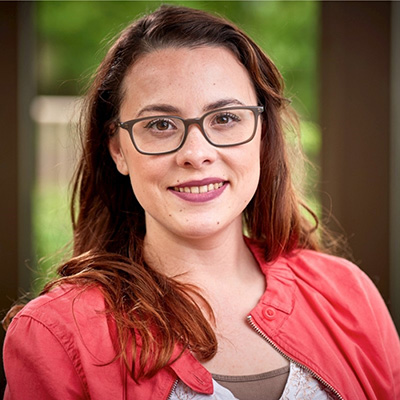
Nathalie Weissman is an access specialist within the office of student life disability services at Ohio State University. She answered key questions about accommodations in grad school. I have paraphrased most of her answers here.
What are accommodations?
Broadly speaking, accommodations are measures taken to ensure that a student can fully participate in their educational environment. They will vary from person to person based on their need and the educational program they are in. During grad school, accommodations may touch on various areas throughout the grad school experience — coursework, exams, dissertations, lab work and more.
What accommodations may be available to me in grad school?
“Accommodations are specific to students’ needs,” Weissman said.
Universities consider each case independently, and your university’s accessibility office should work with you to identify what accommodations you need and ensure they are implemented during course work, lab work and in other settings as needed. Your accommodations needs may also change throughout grad school, and your school should work with you to make sure you are supported throughout your studies.
Who should I reach out to about accommodations?
Your university’s webpage for accessibility is a good place to learn the basics about accommodations. The exact office names will vary among schools, but they may include educational support, disability services, accessibility or student life. If you’re already in touch with your graduate program coordinator or director, they may be able to point you in the right direction as well.
OSU requires students seeking accommodations to register online, Weissman said. Then, her office handles the official review of each request and gathers any necessary documentation.
Each school will have their own documentation guidelines for requesting accommodations, and students should look at the accessibility/disability services sites to review what may be necessary to apply for academic accommodations.
The office may also provide official communications and information for instructors, lab mentors or other personnel to explain the accommodations, but it might also be beneficial for you to reach out to key personnel on your own.
“We encourage students to speak with their faculty regarding accommodations,” Weissman said.
Is getting grad school accommodations different than the undergrad processes?
Weissman said the general process for seeking accommodations as a graduate student is the same as for undergraduate students, but the details may vary.
“Accommodations may have specific processes based on the graduate level program,” she said.
At OSU, grad students discuss these specific accommodations with the assigned access specialist. Programs may have different processes, but if you requested accommodations during your undergraduate studies, the process is probably similar for graduate school.
When should I ask about accommodations?
In general, reaching out early is a good idea to make sure everything is set before you start your program. At some universities, students can register for accommodations before they start classes. For students starting in the fall, appointments to discuss the details may start in the summer or right before classes are slated to start.
At OSU, Weissman said she recommends that students reach out to their office as soon as they enroll, although they can register and request accommodations at any point throughout their time there.
Enjoy reading ASBMB Today?
Become a member to receive the print edition four times a year and the digital edition monthly.
Learn moreFeatured jobs
from the ASBMB career center
Get the latest from ASBMB Today
Enter your email address, and we’ll send you a weekly email with recent articles, interviews and more.
Latest in Careers
Careers highlights or most popular articles
Upcoming opportunities
🗨️ Shape the conversation at ASBMB 2027 in Boston! ASBMB is seeking proposals for sessions and events that will foster collaboration, highlight exciting science and support career development across the molecular life sciences.
Upcoming opportunities
Registration is now open for this summer's Art of Science Communication course! Build your science communication skills in this 8-week online program. ➡️ Registration deadline: May 6.

Upcoming opportunities
The American Society for Biochemistry and Molecular Biology is accepting applications for the Marion B. Sewer Distinguished Scholarship for Undergraduates. Apply by April 30, 2026.
Designing scientific careers, not just experiments
Universities are rethinking how they prepare scientists for careers beyond the bench. From myIDP to Vanderbilt’s Career Architect, programs help trainees clarify values, explore options and build intentional paths forward.

Upcoming opportunities
Dive into the world of lipids! Join the ASBMB Lipid Research Division Seminar Series on April 9, 12–1 p.m. ET to hear early-career researchers explore lipid metabolism and mitochondrial biology.
Upcoming opportunities
For the summer 2026 ASBMB Today essay series, we invite scientists working in industry to share first-person reflections on their work. Submit your essay or pitch by April 15, 2026.