
Brixius–Anderko joins Pitt; Dowhan wins BPS award

Brixius–Anderko joins Pitt
Simone Brixius–Anderko was appointed as an assistant professor at the University of Pittsburgh this past fall. She started a lab at the pharmacy school to study the role of cytochrome P450 enzymes in cancer-related fatty acid metabolism and microbiome-mediated biotransformation of compounds in the human body.
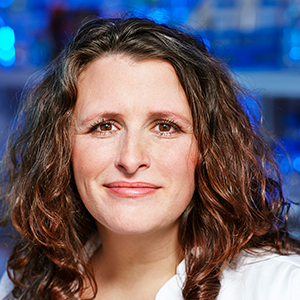
Brixius–Anderko earned her Ph.D. in biochemistry in Rita Bernhardt’s lab at Saarland University in Germany. During that time, she collaborated with industry scientists to develop a sustainable process for generating steroids that exploit P450s. She stayed at the Bernhardt lab for a postdoctoral fellowship, during which time she focused on prostate cancer drugs’ effects on P450-mediated steroid production.
Next, as a postdoc in Emily Scott’s lab at the University of Michigan, she pursued her interest in P450 structure–function relationships and trained in X-ray crystallography.
"In my lab, I intend to implement a diverse working environment for training and mentoring the next generation of scientists and to accelerate research for using cytochrome P450 enzymes as drug targets," Brixius–Anderko said.
Dowhan receives Biophysical Society award
William Dowhan, a professor at the University of Texas–Houston Medical School, will receive the Biophysical Society's 2022 Anatrace Membrane Protein Award.
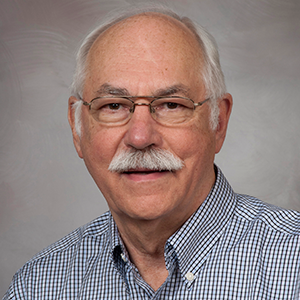
Dowhan studies how lipids regulate the topology of integral membrane proteins and how changes in a membrane's phospholipid composition can alter membrane protein structure and number of transmembrane domains. His lab also studies cardiolipin, a lipid found only in mitochondria, and how it contributes to the formation of the respiratory supercomplexes that enable efficient oxidative phosphorylation. Read more about his work in this Journal of Biological Chemistry Classic article.
Dowhan earned his Ph.D. in biochemistry at the University of California, Berkeley, and conducted postdoctoral research with lipid scientist Eugene Kennedy at Harvard University. He joined the UT–Houston faculty in 1972 and has held visiting professorships at the University of Basel and Stanford University.
He's a fellow of the American Academy of Microbiology and in 2021 was named a member of the inaguaral class of American Society for Biochemistry and Molecular Biology fellows. In addition, he is a past recipient of the ASBMB's Avanti Award in Lipids.
The Biophysical Society award is funded by the lipid reagent supply company Anatrace to recognize an investigator who has made a significant contribution to membrane protein research. It consists of a $3,000 prize and an honorary lecture.
Enjoy reading ASBMB Today?
Become a member to receive the print edition four times a year and the digital edition monthly.
Learn moreGet the latest from ASBMB Today
Enter your email address, and we’ll send you a weekly email with recent articles, interviews and more.
Latest in People
People highlights or most popular articles
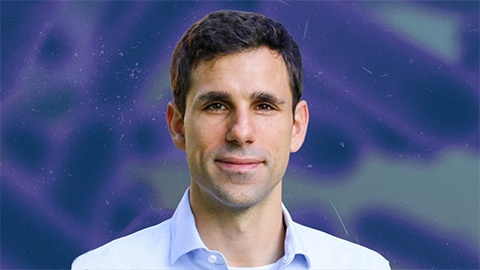
de la Fuente honored for AI research
The award will support the development of an AI system called ApexMol, a 3D structure–informed, agentic large language model designed to create new biomolecules.
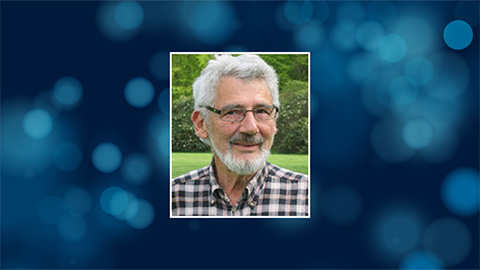
In memoriam: Peter Roepstorff
He was a leading researcher in biological mass spectrometry, mapped protein function in living organisms and was an ASBMB member for 19 years.
Flipping lipids and slime molds
A dull first job nearly pushed JBC associate editor Todd Graham out of science. Then a slime mold project changed his path. Now, he studies membrane biology and reflects on discovery, persistence and mentoring through uncertainty.
ASBMB members receive RNA Society awards
The RNA Society awards Brenda Bass, Can Cenik and Karin Musier–Forsyth for their achievements in RNA research and innovation. Winners will be recognized at the closing awards ceremony of the RNA 2026 annual meeting.
In memoriam: Richard L. Cross
He studied the enzymatic mechanisms of ATP synthase and served on the editorial board of the Journal of Biological Chemistry for 24 years.
A chance encounter with the lab
Payton Stevens never planned to become a pancreatic cancer researcher. A temporary job set him on a path from rural Kentucky to leading research on Wnt signaling and metastasis, where he now pairs discovery with mentorship and science advocacy.